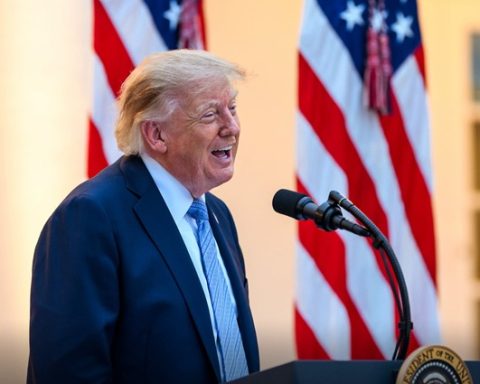
A second installment of Vanity Fair’s extensive insider reporting on Donald Trump’s second presidency reveals an administration increasingly defined by political backlash, conspiracy-driven pressures, and the personal authority of White House chief of staff Susie Wiles. Drawn from months of interviews conducted by Vanity Fair writer Chris Whipple, the account expands on how Wiles has become the central figure managing a presidency that operates largely on instinct, grievance, and relentless escalation.
The reporting situates Wiles at a critical political moment on November 4, 2025, as voters across the country headed to the polls in a series of off-year elections widely seen as a referendum on Trump’s second term. Speaking over lunch in her West Wing office, Wiles acknowledged the stakes and predicted a difficult night for Republicans, a forecast that proved accurate when Democrats swept key races and advanced ballot measures aimed at countering Republican gerrymandering. According to Vanity Fair, Wiles believed voter anxiety over the cost of living should have pushed Trump to focus less on foreign affairs and more on domestic economic concerns, a shift she said the president has struggled to make.
The article paints a striking physical and symbolic picture of Trump’s White House, including the recent demolition of the East Wing to make way for a massive ballroom project championed by the president. Wiles brushed off criticism, hinting at further undisclosed changes and reinforcing the sense of a presidency unconcerned with convention or precedent. Her refusal to elaborate underscored both her discretion and the expansive ambitions of a president reshaping the White House in his own image.
Vanity Fair’s reporting delves deeply into one of the most politically volatile issues of Trump’s second term: the handling of the Jeffrey Epstein files. Wiles conceded she underestimated how central the issue would become for a segment of Trump’s coalition, particularly younger voters, podcast audiences, and conspiracy-minded supporters who expected sweeping revelations. She acknowledged that Trump appears in Epstein-related records but insisted there is no evidence of wrongdoing, directly contradicting claims Trump himself has made about political rivals. The mishandling of the files, including the release of binders containing no new information, is described as a self-inflicted wound that alienated a crucial slice of the president’s support.
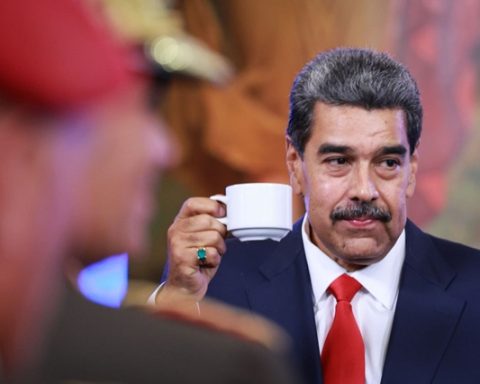
The Vanity Fair account also chronicles the administration’s increasingly aggressive posture abroad, particularly Trump’s lethal campaign against drug trafficking tied to Venezuela. Wiles openly stated that the president’s strategy was to apply overwhelming force until Venezuelan president Nicolás Maduro capitulated, remarks that appear to contradict official claims that the strikes were purely about drug interdiction. As civilian deaths mounted and lawmakers raised concerns about possible war crimes, Wiles defended the operations as part of a new kind of war on drugs, one that does not yet require congressional approval.
Trump’s foreign policy contradictions extend further, according to the reporting, with Wiles describing a complicated and often contradictory relationship between the president and Russian leader Vladimir Putin. While Trump publicly pursued ceasefire talks in Ukraine, Wiles revealed that privately he believed Putin ultimately wanted to seize the entire country. The administration’s chaotic handling of Ukraine, including the infamous Oval Office confrontation with President Volodymyr Zelenskyy, is portrayed as a predictable outcome of simmering tensions and poor judgment exacerbated by the presence of television cameras.
Throughout the article, Vanity Fair emphasizes the dual role Wiles plays as both enabler and buffer. She does not deny Trump’s fixation on retribution against perceived enemies, acknowledging that while he may not wake up each day seeking revenge, he is willing to pursue it when opportunities arise. The indictments of figures like former FBI director James Comey and New York Attorney General Letitia James, later dismissed by a federal judge, are presented as emblematic of an administration willing to test legal boundaries in pursuit of political score-settling.
At the same time, Wiles insists she is not merely facilitating chaos. She describes frequent conversations with Trump, though often over smaller tactical issues rather than fundamental constitutional concerns. Unlike chiefs of staff in past administrations who confronted presidents over existential decisions, Wiles suggests Trump entered his second term with a fixed agenda shaped by four years out of office, leaving her to choose carefully when and how to intervene.
As the 2026 midterm elections loom, Vanity Fair frames Wiles as the thin line between a presidency that could be remembered as transformative or disastrous. Trump has openly toyed with talk of a third term, a provocation Wiles dismisses as deliberate trolling, insisting he understands the constitutional limits. Yet the broader portrait that emerges is of a president governing by whim, surrounded by loyalists, and relying heavily on one figure to translate impulse into action.
In the end, Vanity Fair’s two-part portrait leaves an unresolved question hanging over Trump’s second term. Is Susie Wiles a stabilizing force preventing catastrophe, or a highly skilled operator enabling a presidency that continues to push democratic guardrails to their breaking point? Even Wiles concedes that history will be the judge.