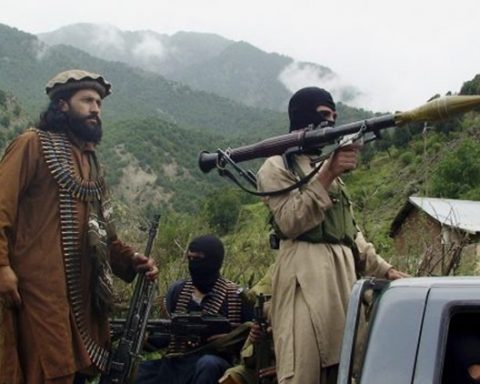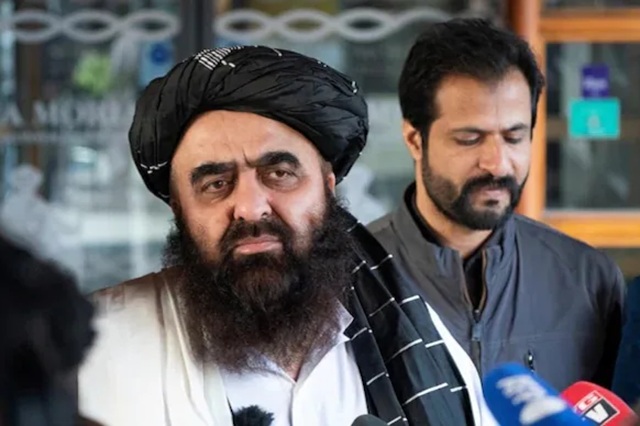
On December 21, 2025, a Taliban fighter, identified as Amanullah was killed in the Jurm District of Badakhshan Province in an intra-Taliban skirmish, when a confrontation broke out between individuals affiliated with Mawlawi Mahboob Hamed, Taliban’s Deputy Governor in Ghor, and two other Taliban members, over control of a gold mine near the village of Iskan.
On December 13, 2025, at least three people were wounded in an armed clash between Taliban intelligence fighters and Taliban guards at the Badakhshan Provincial Hospital in Fayzabad, the provincial capital.
On October 12, 2025, at least 10 Taliban fighters were killed in fighting between rival factions of the group in the Yalor village of Yaftal District in Badakhshan Province over control of a gold mine. The clashes erupted between Taliban fighters from Helmand and local Taliban members from Badakhshan.
On October 25, 2025, a Taliban fighter, Amauddin Karimi, was arrested in the Abjam village of Ragh District in Badakhshan Province, following escalating internal disputes within the group.
After the return of the Taliban on August 15, 2021, according to Institute for Conflict Management (ICM), the first incident of Taliban in-fighting in Badakhshan occurred on December 27, 2021, in which a Taliban commander, Qari Abdul Rahman, and one of his bodyguards were injured in a clash with fellow Taliban men in Police District (PD) 1 of Fayzabad city, the provincial capital of Badakhshan. Since then, according to partial data collated by ICM, 10 incidents have occurred in the province, in which 15 Taliban operatives have been killed, 17 injured, and four have been arrested (data till December 23, 2025).
The main Districts in Badakhshan where intra-Taliban friction and violence have been reported are Fayzabad, Kishim, Yaftal, Argo, Khowahan, and Jurm.
Badakhshan, is a rugged and rocky, pre-dominantly non-Pashtun province in northeastern Afghanistan. After the takeover in 2021, the Taliban leadership, mistrustful of the local Taliban commanders from Tajik and other ethnic backgrounds, and fearing that they might not remain loyal to the central emirate, sought to counter any problems by deploying Pashtun-origin Taliban fighters, many from southern provinces like Helmand and Kandahar. As reported on June 12, 2023, around 300 Taliban operatives were stationed in Fayzabad, the capital of Badakhshan. These operatives, belonging to Taliban’s special forces, underwent specialized military training and carried out complex operations in Pakistan.
There were also cases of skirmishes within Taliban ranks due to the ethnic factor. For instance, on May 29, 2025, tensions among local Taliban commanders flared in Jurm District after efforts by senior Taliban commanders to detain a fellow commander of Tajik ethnicity failed. The fallout prompted senior figures within the Taliban, including their Army Chief of Staff Fasihuddin Fitrat and top commander Amanuddin, to intervene in an effort to defuse the tensions.
A major point of this intra-Taliban dispute has been the control of Badakhshan’s rich mineral resources, especially gold mines. For instance, On October 27, 2025, Taliban forces clashed in the Payan-Mor area of Shahr-e-Buzurg District, over control of a gold mine. Fighting erupted between Abdul Rahman Ammar, the former head of Badakhshan’s Mining Department, and Shafiqullah Hafizi, the current Head of Mines. Both men are influential Taliban figures in the province. Earlier, on October 13, 2025, heavy fighting broke out in the Yalor village of Yaftal District, between local Badakhshani Taliban and Taliban fighters from Helmand, over control of a gold mine. 10 Taliban fighters were killed (including eight from Helmand and two locals) in the incident. In Badakhshan, gold mines are to be found the Raghistan, Yaftal, Fayzabad, Baharak, and Shahr-e-Buzurg Districts, among others.
Additionally, poppy cultivation in Badakhshan has become a flashpoint of intra-Taliban conflict, Taliban banned opium poppy cultivation nationwide in 2022, but Badakhshan continued and expanded poppy farming because of economic desperation and weak enforcement. This has fueled violence between local farmers, local Taliban units, and central Taliban enforcement teams. The reason these disputes turn violent is that central Taliban directives to eradicate poppy cultivation clash with local Taliban commanders and farmers, who rely on the crop in the absence of viable alternatives. Thus, a June 23, 2025 report states that the local Taliban in Shahr-e-Buzurg District were not considered fully loyal to main Taliban leadership. These local Taliban generally support the people, and are unhappy with the central Taliban, especially in matters like opium cultivation, and other local issues. In many other districts, local Taliban have instructed and advised people to arm themselves, if the pressure grows further. On June 29, 2025 in Khash District, local residents engaged in armed clashes with Taliban forces trying to eradicate poppy fields, leaving four dead and ten wounded. Earlier, on May 13, 2024, in the Barlas Shalmar village of Argo District, clashes erupted when Taliban units sent to destroy poppy fields faced resistance from villagers throwing stones to protect crops.
The recurring inter-Taliban clashes, and armed confrontations in Badakhshan underline the deep structural fragility within the Taliban’s post-2021 power arrangement. Ethnic fault lines, competition over poppy cultivation and mineral resources, and resistance to top-down centralization, have resulted in continuous sporadic violence. The dependence on brute force against fellow Taliban operatives and civilians reflects the absence of reliable dispute-resolution mechanisms within the regime, which can only contribute to future escalation.