A new study led by researchers at Imperial College London has found that same-sex sexual behaviour is a recurring feature of primate life, challenging the long-held notion that sex among animals is solely for reproduction. The analysis, which examined data from almost 500 non-human primate species, revealed evidence of such behaviour in 59 species ranging from lemurs to great apes, Times UK reported.
The researchers identified clear patterns: same-sex sexual behaviour is more common among long-lived primates, species with pronounced physical differences between males and females, and those living in complex social groups. It is also more prevalent in environments with scarce food, harsh conditions, or persistent predator threats—situations in which strong social bonds and cooperation are critical for survival.
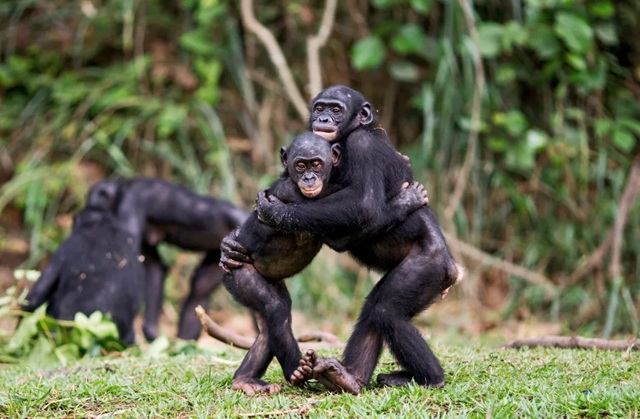
The study suggests that sexual behaviour in these contexts serves to reduce aggression, build alliances, and reinforce social cohesion. For example, Japanese macaques often form close bonds while soaking together in hot springs, and bonobos are known to engage in sexual interactions of all kinds—including male-to-male encounters—as a tool for managing group dynamics. In these societies, maintaining relationships over many years is vital, and behaviours that ease tension or strengthen bonds may improve a group’s overall chances of coping with challenges.
The researchers stressed that their findings relate to animal behaviour and do not directly address human sexual identity. However, they noted that early human ancestors likely faced similar pressures, such as scarce resources and complex social hierarchies. While speculative, the study raises the possibility that such pressures may have influenced the emergence of same-sex sexual behaviour in human evolution.
The research also highlights that this behaviour is not confined to primates. Observations suggest it occurs in roughly 1,500 animal species overall, indicating that sexual activity often serves purposes beyond reproduction, including maintaining social harmony.
Times UK highlighted that the findings, published in Nature Ecology & Evolution, underscore the importance of considering the social and environmental contexts of sexual behaviour across species, revealing new insights into the evolution of cooperation and social bonding in the animal kingdom.