In a feat that would once have belonged firmly to science fiction, a 33-year-old man has survived for 48 hours without lungs, kept alive by an external artificial organ while doctors raced to secure a transplant. The case, reported in the journal Med and highlighted by Nature, marks a striking advance in transplant medicine and raises the possibility that critically ill patients who would otherwise die could be sustained long enough to receive life-saving organs.
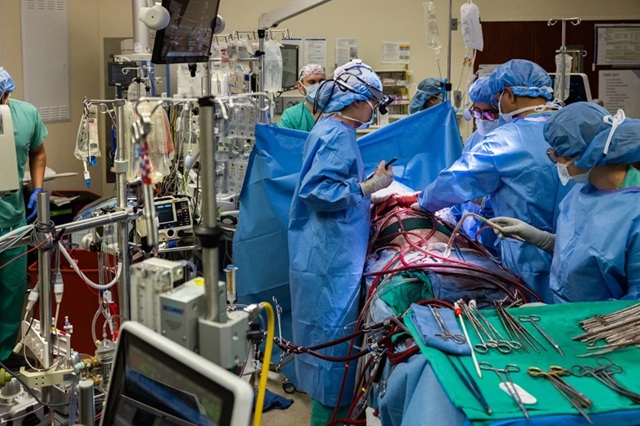
The patient’s lungs were surgically removed after they became a source of overwhelming infection, leaving him entirely dependent on a device developed by clinicians and engineers at Northwestern University in Chicago. Unlike existing machines that assist breathing, this artificial-lung system maintained normal blood flow through the heart, allowing the man’s circulation to function in a way previously thought impossible without lungs. Two days later, once his condition had stabilised, he received a double lung transplant. Nearly three years on, he remains alive and well.
Cases in which patients have been temporarily sustained without functioning lungs are not unheard of, but specialists say this example is fundamentally different. Traditional life-support technologies can oxygenate blood, but they do not replicate the lungs’ role in maintaining the delicate balance of pressure and flow that allows the heart to pump effectively. Ankit Bharat, a thoracic surgeon at Northwestern and one of the system’s developers, said the innovation lay in preserving that balance. By doing so, the team reduced the risk of catastrophic complications such as blood clots, heart failure or cardiac arrest.
“This is not just about oxygen,” Bharat explained. “The lungs are central to how blood moves through the heart. If you don’t manage that properly, the heart cannot function normally.” According to Bharat, the system was designed to deliver a continuous, stable blood flow, preventing the dangerous fluctuations that can trigger clotting or collapse.
The man’s condition before the procedure was dire. He had developed acute respiratory distress syndrome after contracting influenza, leaving his lungs unable to absorb enough oxygen to sustain life. Placed on a ventilator, he then developed a drug-resistant bacterial infection, Pseudomonas aeruginosa, which filled parts of his lungs with pus. As the infection spread, he went into septic shock. His heart and kidneys began to fail, and he suffered a cardiac arrest.
“He was actively dying,” Bharat said. Because the patient was too unstable to undergo a lung transplant, doctors faced an impossible dilemma: leave the infected lungs in place and almost certainly lose him, or remove them entirely and attempt something never before done in this way. They chose the latter, excising both lungs to eliminate the source of infection and connecting him to the experimental artificial-lung system.
What followed surprised even the medical team. Within two days, the patient’s condition improved dramatically. Medications supporting his blood pressure were no longer needed, kidney function recovered fully, and his heart resumed normal operation. Only then was he deemed stable enough to receive donor lungs. The transplant was successful, and years later he shows no signs of rejection or impaired lung function.
Experts unaffiliated with the work have described it as a landmark moment. Natasha Rogers, a transplant clinician at Westmead Hospital in Sydney, told Nature that maintaining normal heart function without lungs is extraordinarily difficult. “They were really very brave,” she said, adding that the engineering behind the system was remarkable. She believes the approach could be used to support other critically unwell patients while they recover enough strength to become eligible for transplantation.
The origins of the technology lie in the COVID-19 pandemic, when clinicians were confronted with waves of patients whose lungs were irreversibly damaged by the virus. Bharat’s team had been working on an artificial-lung system to bridge such patients to transplant, giving them time to stabilise. The new device builds on extracorporeal membrane oxygenation, or ECMO, a technique that oxygenates blood outside the body. However, standard ECMO leaves the lungs in place, which helps to stabilise the heart. Removing the lungs altogether creates a far more complex physiological challenge.
Rogers explained that the new system is effectively a modified form of ECMO that connects directly to the heart and carefully controls pressure. This allows blood to circulate as it would with lungs present, even though the organs themselves are absent. The success of the case suggests that lungs can be removed for extended periods, a notion that could reshape how doctors think about severe lung disease.
One intriguing, though still theoretical, possibility is that damaged lungs could one day be removed, treated outside the body and then reimplanted. For now, that idea remains speculative. The procedure described in this case required multiple highly specialised teams and resources available only at major medical centres. As Rogers noted, widespread use would be limited unless the technology can be simplified and scaled.
Bharat hopes that will happen. He says the next step is to offer the system to other patients at Northwestern who are close to death and have no other options. The team plans to keep a registry tracking outcomes, building evidence for safety and effectiveness. Commercialisation, he believes, could eventually allow the technology to be used in hospitals beyond elite academic centres.
The implications are profound. Lung transplants are constrained not only by the availability of donor organs but by the fragile condition of patients awaiting them. Many die before a suitable match is found. A reliable way to keep patients alive without lungs, even for a short time, could dramatically expand the pool of people who survive long enough to receive a transplant.
For now, the achievement stands as a testament to how far critical care medicine has advanced. As Nature’s coverage underscores, the case demonstrates that organs once considered indispensable can, at least temporarily, be replaced by machines sophisticated enough to sustain the body’s most delicate systems. For one man, it meant a second chance at life. For medicine, it may signal the beginning of a new era in how doctors confront organ failure at the very edge of survival.