Artificial intelligence has made deception easier, faster, and more scalable than at any point in human history. Manipulated images circulate through political channels, fabricated videos seep into social media feeds, and hyperrealistic synthetic voices mimic real people with unsettling precision. What once required sophisticated technical expertise can now be accomplished with widely available tools, raising urgent questions about whether societies can still distinguish authentic evidence from manufactured illusion.
An investigation shared with MIT Technology Review reveals that Microsoft is attempting to confront this crisis with a technical blueprint designed to help prove what is real online. The company’s AI safety researchers have spent months evaluating how emerging verification methods perform against the newest forms of manipulation, including interactive deepfakes and multimodal AI systems capable of generating convincing video, audio, and imagery simultaneously.
The effort reflects a growing recognition across the technology sector that AI-enabled deception is no longer hypothetical. It already shapes geopolitical narratives, election discourse, and public trust. False or misleading media can be injected into information ecosystems at scale, sometimes amplified by state-backed campaigns or opportunistic actors seeking attention and influence.
Microsoft’s proposal draws inspiration from the art world’s methods for verifying masterpieces. Authenticating a painting involves documenting its provenance, embedding identifiers, and analyzing physical characteristics that are difficult to forge. Similarly, the company envisions digital content carrying a layered record of origin, alteration history, and cryptographic signatures that function like fingerprints, allowing platforms and users to trace how a piece of media came into existence.
To test the idea, researchers examined 60 different combinations of existing verification tools, modeling how each would hold up under real-world stress. They simulated scenarios in which metadata is stripped away, images are slightly altered, or content is deliberately manipulated to evade detection. The goal was to identify which combinations provide reliable signals and which risk creating more confusion than clarity.
Eric Horvitz, Microsoft’s chief scientific officer, said the research was driven partly by regulatory momentum and partly by the breathtaking pace of AI development. “You might call this self-regulation,” he told MIT Technology Review, describing the initiative as both a technical necessity and an opportunity to position Microsoft as a trusted information intermediary.
Yet the company has stopped short of promising to deploy the full system across its own ecosystem, which includes tools and platforms deeply embedded in global digital infrastructure. Microsoft operates Copilot, runs the Azure cloud service that hosts major AI models, owns LinkedIn, and maintains a significant partnership with OpenAI. Horvitz has said internal teams are reviewing the findings, but implementation decisions remain distributed across product divisions.
The proposed tools are designed to answer a limited question: whether content has been manipulated, not whether it is true. That distinction is central to Microsoft’s argument that technology companies should not act as arbiters of reality. Instead, the system would attach labels describing a file’s origin and transformation history, leaving interpretation to users, journalists, and institutions.
Digital forensics expert Hany Farid of the University of California, Berkeley, who was not involved in the research, believes such standards could meaningfully reduce deception even if they cannot eliminate it. Sophisticated actors might still find ways to bypass safeguards, he said, but widespread adoption would make it far harder to spread manipulated material undetected. The result would not be a perfect solution, but a significant reduction in misleading content.
Skeptics, however, warn that technological fixes alone cannot solve what is ultimately a social problem. Research increasingly shows that audiences may continue to believe false information even after learning it was generated by AI. In studies of pro-Russian synthetic videos about the war in Ukraine, comments identifying the clips as AI-generated drew far less engagement than those treating them as authentic. The persistence of belief suggests that labeling systems may struggle against confirmation bias and polarized audiences.
Some companies have already experimented with partial solutions. Google introduced watermarking for AI-generated material in 2023, while industry groups have advanced standards such as C2PA, a provenance framework Microsoft helped launch. But adoption has been uneven, and economic incentives often discourage transparency if disclosure risks reducing user engagement.
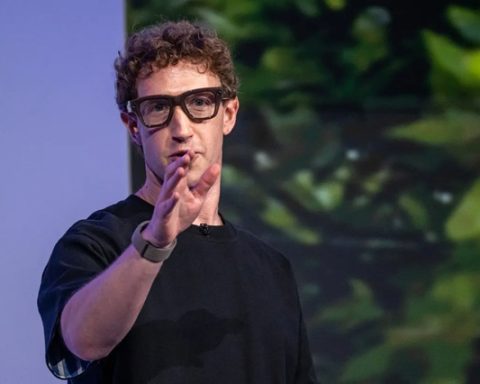
Critics argue that platforms driven by advertising revenue may hesitate to label synthetic media prominently. Figures such as Mark Zuckerberg and Elon Musk, who oversee vast digital ecosystems, face business pressures that may conflict with aggressive verification practices. An audit conducted last year found that only about 30 percent of tested posts across major platforms were correctly labeled as AI-generated, highlighting the gap between policy announcements and real-world enforcement.
Governments are beginning to push for stronger disclosure requirements. The European Union’s emerging regulatory framework and proposed rules in countries such as India would compel AI developers to reveal when content is machine-generated. Microsoft has actively lobbied during legislative drafting processes, seeking to shape requirements it considers technically realistic.
At the same time, researchers caution that poorly implemented verification could backfire. If labeling systems are inconsistent or prone to error, users may lose trust in them altogether. A rushed rollout could even create new opportunities for manipulation, allowing actors to subtly alter genuine material so that automated systems flag it incorrectly as synthetic, thereby undermining authentic evidence.
To mitigate this risk, Microsoft recommends combining multiple verification layers so platforms can show not only that a file was modified but also how and where changes occurred. This approach, researchers argue, would help distinguish between harmless edits and deceptive alterations, providing context rather than binary judgments.
The stakes extend beyond corporate reputation or regulatory compliance. As governments themselves experiment with AI-generated communications, the boundary between official messaging and synthetic media is blurring. The same technologies used to fight disinformation can also be used to produce persuasive state-sponsored narratives, complicating questions about accountability and trust.
Horvitz acknowledged that manipulation is not confined to any single sector. Governments, corporations, and individuals worldwide have all participated in shaping the current information landscape, he said, underscoring the need for shared standards rather than fragmented responses.
Ultimately, Microsoft’s proposal reflects a broader realization that the internet’s evidentiary foundation is eroding. For decades, digital media functioned as a form of documentation. Now, it is increasingly a form of simulation. Whether authentication frameworks can restore confidence may depend less on technical sophistication than on collective willingness to adopt them.
The fight against AI-driven deception is unlikely to produce a single decisive breakthrough. Instead, it may require an ongoing negotiation between innovation, regulation, and public skepticism. As synthetic content grows more convincing, the challenge will not just be identifying what is fake, but preserving a common agreement that truth itself is worth verifying.