The Middle East is witnessing a dramatic escalation in conflict that shows little sign of abating, nearly a month after the United States and Israel launched coordinated strikes against Iran. According to reporting by El País, the offensive, which began with the targeted killing of Iran’s Supreme Leader Ali Khamenei and other senior figures, has widened in scope and complexity, drawing in new actors and threatening global economic stability.
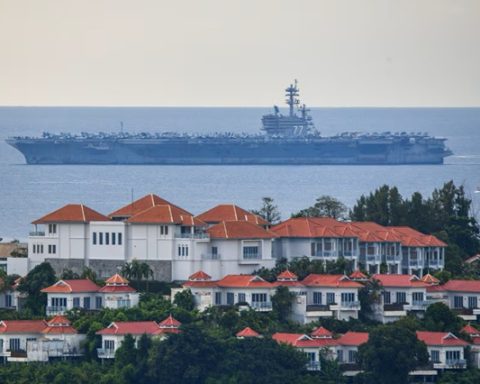
On Saturday, the first contingent of 3,500 U.S. troops, including 2,500 Marines and 1,000 Navy personnel, arrived in the region aboard an amphibious assault group led by the USS Tripoli. Another 5,000 soldiers are en route for a possible ground operation. These reinforcements come as Houthi rebels in Yemen launched their first missile attacks on Israel, opening a new front and underscoring the regionalization of the conflict. The Houthis, who control much of northwest Yemen, including the capital Sana’a, cited loyalty to Iran and opposition to Israeli military operations as justification for their intervention.
The attacks have not only intensified military confrontation but have threatened key global trade routes. The Houthis warned they could close the Bab al-Mandeb Strait, a crucial passage connecting the Red Sea to the Suez Canal and the Mediterranean, while Iran continues to restrict traffic through the Strait of Hormuz, through which roughly 20 percent of global oil and gas flows. Disruptions in these waterways have sent oil prices soaring, with Brent crude trading near $114 per barrel, threatening broader economic consequences worldwide.
President Donald Trump initially promised a swift and decisive campaign, claiming that U.S. and Israeli forces would “destroy” Iran’s missile program, decimate its navy, and permanently eliminate its nuclear ambitions within days. Yet the conflict has now entered its fifth week with the Tehran regime not only surviving but reportedly strengthening its resolve. The Iranian government has rejected all concessions, asserting its control over strategic chokepoints and continuing to project influence across Lebanon, Iraq, and Palestine through allied militias.
Despite U.S. claims of striking over 10,000 targets in Iran and sinking more than 150 ships, military analysts indicate that only a fraction of Iran’s missile capability has been neutralized. The Soufan Center, a New York-based think tank, notes that Iran’s Revolutionary Guard is consolidating authority, moving toward a more militarized governance structure and retaining leverage over strategic assets such as enriched uranium stockpiles and key islands in the Strait of Hormuz.
Meanwhile, Israel has expanded its offensive within Iran, targeting nuclear facilities and industrial sites, while Hezbollah’s involvement has led to Israeli incursions into southern Lebanon. Human rights groups report that Iran has suffered more than 3,300 deaths, nearly 1,500 of them civilians, while the regional escalation has already affected 14 countries. Markets, air traffic, and global supply chains have felt the impact, with oil prices and shipping routes thrown into volatility.
Washington’s approach remains inconsistent. Trump has alternated between claiming the conflict is “almost over” and threatening unprecedented military escalation. U.S. legislators have debated additional funding for the operation, with the Pentagon requesting $200 billion more to sustain the campaign, even as existing munitions stocks are rapidly depleted. Secretary of State Marco Rubio has acknowledged the possibility of diverting military equipment originally intended for Ukraine to support operations in the Persian Gulf.
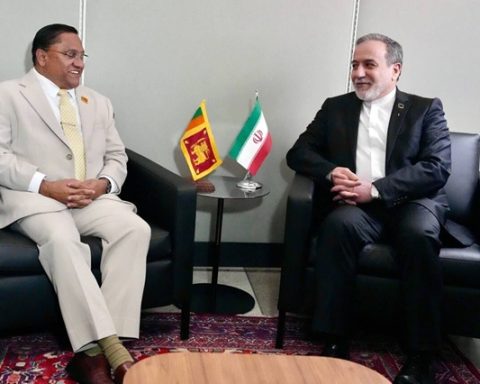
Negotiations mediated indirectly by Turkey, Egypt, and Pakistan have so far made little progress. Tehran demands a complete cessation of hostilities, compensation, and guarantees of sovereignty over its territorial waters, while the U.S. insists on halting Iran’s nuclear program, missile development, and support for proxy militias. Trump has extended ultimatums multiple times, with the current deadline set for April 6, yet both sides remain entrenched, with no sign of compromise.
Military analysts warn that U.S. plans to intensify the conflict could include attempts to seize strategic islands such as Jarg, home to Iran’s oil infrastructure, or portions of the Iranian coastline in Hormuz. Such operations carry enormous risk and could further escalate the war beyond current control. Mick Mulroy, former U.S. Deputy Assistant Secretary of Defense, cautions that any ground campaign or occupation of critical facilities would almost certainly intensify the conflict, creating a highly unstable regional situation.
The consequences of continued escalation extend far beyond the battlefield. Global markets are unsettled, energy prices are surging, and international confidence in stability in the Middle East is eroding. The Houthis’ renewed attacks and Iran’s strategic closures underscore the vulnerability of global trade routes and the potential for the conflict to spiral further.
As El País reports, the war in Iran, initially expected by the Trump administration to last a matter of days, now shows no end in sight. With 50,000 U.S. troops already stationed in the region, additional reinforcements arriving, and multiple regional actors drawn into the fray, the Middle East faces a volatile and uncertain future. The coming weeks will likely determine whether diplomacy can prevail or whether a full-scale regional war will erupt, with consequences that could reverberate across the globe.