The United Arab Emirates has announced its withdrawal from OPEC and OPEC+, marking one of the most significant disruptions to the global oil alliance in decades and delivering a major setback to Saudi Arabia’s leadership of the producer group. The decision comes amid an escalating energy crisis linked to renewed conflict involving Iran, which has already strained global supply routes and pushed oil prices sharply higher.
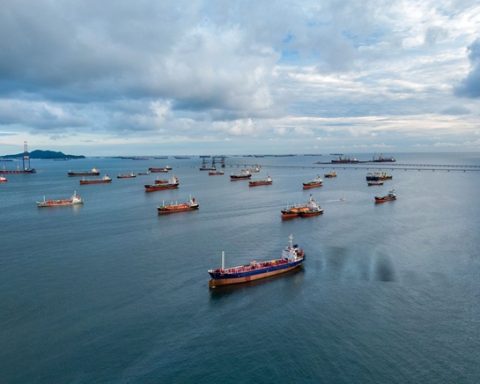
The UAE’s exit signals a potential reshaping of global oil governance at a time when markets are already under pressure from geopolitical instability in the Middle East. Gulf producers have been struggling with disruptions in exports through the Strait of Hormuz, a vital chokepoint responsible for around one-fifth of global oil and liquefied natural gas flows, as tensions and attacks in the region continue to threaten shipping lanes.
Officials in the UAE stated that the decision to leave OPEC reflects a long-term national strategy and evolving energy priorities. The government emphasized that its move is driven by economic interests and a desire to focus more directly on domestic energy policy. Abu Dhabi also noted its historical contributions to the organization, but said the current global environment requires a shift toward independent decision-making aligned with national goals.
The departure has raised immediate concerns about the cohesion and future effectiveness of OPEC, which has long relied on coordinated production strategies among its members to influence global oil prices. Analysts warn that losing the UAE weakens the group’s internal balance, particularly as it has been one of the few members alongside Saudi Arabia with significant spare production capacity that can be used to stabilize markets during supply shocks.
Oil markets reacted with volatility following the announcement. Brent crude rose more than 3 percent to over $111 a barrel, while U.S. West Texas Intermediate surpassed $100 a barrel for the first time in weeks. However, gains were partially tempered after confirmation of the UAE’s withdrawal, as traders reassessed the longer-term implications for supply dynamics. Prices remain elevated due to ongoing disruptions in Middle Eastern exports and fears of broader conflict escalation.
Experts suggest that in the short term, the UAE’s exit may have limited impact on actual supply levels, as the broader region remains constrained by conflict-related disruptions. However, the long-term outlook is more uncertain. Analysts argue that OPEC’s ability to manage global supply shocks could be structurally weakened without the UAE, which previously contributed to the group’s spare capacity buffer used to stabilize prices.
The UAE’s national oil company, ADNOC, has stated production capacity figures significantly higher than external estimates, suggesting the country could eventually expand output independently of OPEC quotas. This raises the possibility that the UAE may prioritize production growth and market share outside the cartel’s coordinated framework, potentially increasing competition among major producers.
Some analysts also believe the timing of the exit is strategic, occurring during a period of elevated prices and constrained supply, which limits immediate market disruption. However, once geopolitical conditions stabilize and supply routes normalize, the absence of coordinated production decisions could lead to more unpredictable price swings.
The decision has also introduced a new geopolitical dimension to global energy markets. It reflects growing divergence among Gulf producers over strategy, regional security concerns, and relations with Western allies. The UAE’s move comes after reported dissatisfaction with regional security dynamics and perceived gaps in collective defense coordination during recent conflicts.
For Saudi Arabia, the development represents a challenge to its long-standing role as the central stabilizer of global oil markets. Without the UAE, OPEC may face reduced flexibility in managing production cuts or increases during periods of volatility, potentially shifting greater influence toward market-driven pricing mechanisms.
While the full consequences of the UAE’s departure from OPEC are still unfolding, the move marks a turning point in global energy politics. It signals a possible transition from coordinated cartel-based control toward a more fragmented and competitive oil market, where national strategies increasingly override collective agreements, and price stability becomes harder to maintain.