Libya needs between $30bn and $40bn in investment to develop its oil and gas resources as the North African country seeks to restore itself as one of the world’s major crude producers, according to Masoud Suleman, chair of the National Oil Corporation (NOC).
Libya has the largest proven oil reserves in Africa, according to the US Energy Information Administration, and has attracted international oil companies seeking new opportunities. But efforts to expand production have been constrained by a shortage of capital, political instability, concerns over corruption and governance, and funding pressures within the NOC.
“We have a lot of untapped resources,” Suleman told the FT in an interview. “We need significant funds, between $30bn and $40bn.”
Suleman has set an “ambitious but realistic” target of increasing Libya’s oil production to 2mn barrels a day by 2030, from about 1.4mn b/d today. More than 60 oil and gas fields have been discovered but remain undeveloped, he said.
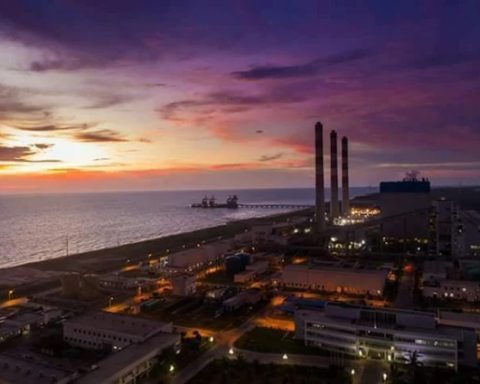
Foreign companies including Eni, TotalEnergies, Chevron and ConocoPhillips are active in Libya, but the investment environment remains difficult. A series of drone strikes this month targeted the Zawiya oil refinery in western Libya, setting fire to a gasoline storage tank and damaging other parts of the installation. A nearby power station was also attacked.
Authorities in Tripoli have not named those responsible, while much of western Libya remains under the control of militias. Suleman described the attacks as being confined to a “limited geographical area . . . caused by a small number of outlaws” and said the state was working to “neutralise” them. He added that oil and gas investment sites were “located well beyond areas of tension and under robust security”.
A key challenge is the NOC’s financing obligations under production-sharing agreements, under which the state company must finance its share of development costs. Delays in government funding have left projects vulnerable, prompting the NOC to consider changing its arrangements with international partners.
“We are thinking [of changing] the business model between NOC and our international partners. We are suffering from [a] lack of funds, and this is delaying our development projects dramatically,” Suleman said.
The NOC is studying whether to return to concession agreements, under which investors would assume more of the upfront costs, or modify existing production-sharing terms to enable international partners to provide additional funding.
In July, the NOC signed an agreement for Area 47 with Qatar-based UCC Holding, led by the Syrian-Qatari billionaire Al-Khayyat brothers, without a competitive licensing round. “There was no bidding process, it was a direct negotiation,” Suleman said, defending the arrangement on the grounds that UCC and its partners would finance the project and that the NOC’s share of production would increase after 10 years.
The NOC also intends to appoint two external auditors, K2 Integrity and KBR, in an effort to reassure foreign investors about transparency. “We managed to rebuild the trust with our partners,” Suleman said. “They are happy with the transparency and the governance.”
Libya’s fragmented political structure remains another obstacle. Most of its largest oilfields and export terminals are in areas controlled by Khalifa Haftar, while the west is governed by the UN-recognised Government of National Unity in Tripoli, backed by a patchwork of armed groups. Haftar and his armed faction have periodically blockaded oilfields and ports.
A UN-appointed panel of experts said in March that armed groups linked to governing circles in both east and west had strengthened their ability to exert control over the NOC. Suleman said all sides recognised the importance of maintaining the NOC as a single national institution, while acknowledging the pressures it faces.
“We have a good relationship and we are travelling east and west and we talk face to face to the main actors,” he said. Foreign investors, he added, must communicate with factions controlling the areas where they operate “to ease their operations”.
Despite higher oil prices during the US-Israeli war against Iran and a recent national budget allocating about $2bn towards NOC operating costs, Suleman said the funding remained insufficient. The NOC wants to retain $6 to $7 for each barrel produced to finance its operations.
The company also imports about 80 per cent of its fuel at international prices while selling it domestically at heavily subsidised rates. According to UN experts, a lucrative large-scale smuggling trade is controlled by armed factions protected by senior figures in political elites on both sides.
“Smuggling is damaging our economy badly,” Suleman said. “This is something beyond our control and authority, and it needs immediate action; otherwise, it will lead to economic collapse in Libya.”