Myanmar’s military rulers have opened a new phase in the country’s brutal civil war, launching coordinated offensives across several strategically vital border regions in an effort to regain territory lost to rebel forces and ethnic armed groups.
The renewed campaign signals both the junta’s determination to reassert control and the growing pressure facing a military leadership that has struggled to stabilize the country since overthrowing the elected government in 2021. According to reports cited by the German newspaper Die Zeit, the latest operations are focused on key trade corridors and frontier regions near China, India and Thailand — areas that have increasingly slipped from military control over the past three years.
The offensive is reportedly being directed by Myanmar’s new military commander, Ye Win Oo, who assumed office in March. Rebel groups and analysts quoted by Reuters say the junta is attempting to secure major communication and transport routes that are essential not only for military logistics but also for economic survival.
The fighting is concentrated in three critical regions: Kachin State near the Chinese border, Chin State bordering India and Karen State near Thailand. Each region has long been a center of armed resistance against Myanmar’s central government, but since the coup they have become even more important battlegrounds in the widening conflict between the military regime and a fragmented but increasingly coordinated opposition movement.
Myanmar’s state-run newspaper, Global New Light of Myanmar, claimed that government forces had already secured the town of Falam in Chin State as well as a major transportation corridor linking Mandalay and Myitkyina in Kachin State. Independent verification remains impossible due to severe restrictions on journalists and limited access to combat zones.
The junta’s renewed military push comes only weeks after regime leader Min Aung Hlaing publicly offered peace talks to rebel organizations within a 100-day timeframe. Several armed groups rejected the proposal outright, viewing it as insincere and strategically motivated rather than a genuine attempt at reconciliation.
That rejection reflects the profound collapse of trust between Myanmar’s military leadership and the broad coalition resisting it.
The conflict began in February 2021, when the military seized power in a coup that ousted the democratically elected government of Nobel Peace Prize laureate Aung San Suu Kyi. The coup abruptly ended a decade-long experiment with limited democratic reform and triggered nationwide protests, civil disobedience campaigns and eventually armed resistance.
What initially began as mass demonstrations evolved into one of the most complex internal conflicts in Asia. Ethnic militias that had fought the central government for decades joined forces with newly formed anti-junta resistance groups, many composed of ordinary civilians, students and young activists radicalized by the military crackdown.
Over time, the resistance movement succeeded in pushing the army out of large parts of the countryside. Several border regions effectively slipped from central control, while anti-junta forces established parallel administrations and local defense structures.
The military, once considered one of Southeast Asia’s most entrenched institutions, has suffered repeated battlefield setbacks despite its superior firepower and control of the air force. Analysts increasingly describe Myanmar as a fragmented state in which no side can claim decisive authority over the entire country.
The strategic significance of the current offensive lies in geography as much as politics.
Border regions in Myanmar are crucial for trade, weapons flows and access to neighboring countries. Kachin State borders China, Myanmar’s most influential economic partner and a key actor with interests in regional stability and infrastructure projects. Karen State connects to Thailand through important trade routes and refugee corridors, while Chin State borders India, where instability increasingly raises regional security concerns.
By attempting to retake these areas, the junta is seeking more than symbolic victories. Control over transport routes and border crossings could strengthen military supply chains, restore customs revenues and limit the operational freedom of rebel groups.
But the campaign also risks intensifying humanitarian suffering in a country already devastated by war.
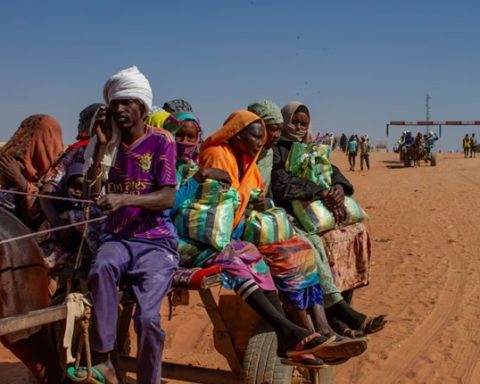
Since the coup, millions of people have been displaced internally, while thousands have been killed or detained. Villages across contested regions have been destroyed in artillery attacks and airstrikes, prompting accusations of war crimes from international human rights organizations. Large numbers of civilians have fled toward neighboring countries, further destabilizing border areas.
The military leadership has repeatedly framed its operations as efforts to preserve national unity and restore order. Critics, however, argue that the junta’s actions have instead accelerated the collapse of state institutions and fueled deeper ethnic and political divisions.
Die Zeit notes that the latest offensive demonstrates how far Myanmar remains from any negotiated settlement despite occasional diplomatic gestures from the regime. The rejection of peace talks by armed groups suggests many opponents now believe military pressure offers a better path than compromise.
At the same time, the fragmented nature of the resistance complicates any future political solution. Myanmar’s opposition consists of dozens of ethnic armies, local militias and underground networks with differing goals, territorial ambitions and political visions for the country’s future.
The result is a conflict that increasingly resembles a prolonged war of attrition rather than a temporary political crisis.
Internationally, Myanmar has become a source of growing concern but limited action. Western governments have imposed sanctions on military leaders, while regional powers such as China, India and members of the Association of Southeast Asian Nations have struggled to contain the instability without directly confronting the junta.
For ordinary citizens, however, geopolitics matters less than survival.
Across Myanmar, communities continue to live under the constant threat of air raids, military raids and forced displacement. Entire generations are growing up amid conflict, economic collapse and political uncertainty.
The junta’s latest offensive may allow the military to reclaim some roads, towns or border checkpoints in the short term. But after more than three years of civil war, Myanmar’s deeper crisis appears increasingly resistant to military solutions alone.
Instead, the country remains trapped in a violent deadlock — one in which neither the generals nor the resistance seem capable of delivering peace, yet neither side is willing to stop fighting.