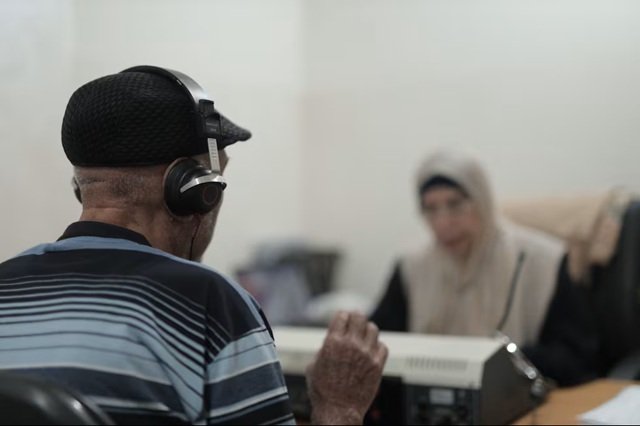
A devastating humanitarian crisis unfolding in the Gaza Strip has left tens of thousands of Palestinians with partial or total hearing loss, as relentless bombardments, collapsing medical infrastructure, and prolonged displacement reshape daily life in the territory. According to reporting by El País, the case of eight-year-old Misk, who survived a bombing that killed her entire family, has become emblematic of a wider and largely invisible consequence of the war: a surge in disability, particularly auditory impairment, caused by explosions, untreated injuries, and the breakdown of healthcare systems in the territory governed by Gaza Strip.
Misk spent more than ten hours trapped under the rubble of her destroyed home before being rescued, later falling into a two-month coma. When she regained consciousness, she had permanently lost her hearing. Her story, recounted by audiologist Ramadán Hussein in an interview with El País, reflects the psychological and medical toll experienced by survivors. Hussein, who has worked for more than two decades treating hearing disorders in Gaza, describes how since 2023 he has encountered cases that continue to haunt him, with children and adults alike suddenly cut off from sound and communication in an already fragile society.
Before the escalation of hostilities in October 2023, health organizations estimated that around 10,000 people in Gaza lived with hearing disabilities. Since then, that figure has surged dramatically. Data compiled by the organization Atfaluna indicates that approximately 35,000 additional people have developed total or partial hearing loss due to the intensity of bombings, resulting trauma, infections, and the lack of timely medical treatment. Experts warn that the true number may be higher, particularly among infants and very young children who have not yet been formally diagnosed due to shortages of medical equipment and access restrictions.
Fady Abed, director of Atfaluna, told El País that many injuries initially appear temporary but become irreversible without immediate intervention. He noted that the organization has struggled to assess newborns and toddlers because diagnostic equipment has only recently begun entering Gaza in limited quantities. “The information we are receiving about newborns is alarming,” he said, highlighting a growing concern that an entire generation could face long-term developmental challenges linked to undiagnosed hearing loss.
The consequences of hearing impairment in a conflict zone extend far beyond communication difficulties. In Gaza, where social services and infrastructure have been severely damaged, the inability to hear can mean exclusion from education, increased exposure to domestic violence, and isolation from community networks. Children without hearing aids cannot attend learning centers, while adults face barriers in accessing psychological support or employment opportunities. Women with disabilities, according to local experts, are particularly vulnerable to neglect and abuse within already strained households.
Among the many testimonies gathered by El País is that of a father identified as K.R., whose two-year-old son lost his hearing after a nearby airstrike. The child, once described as energetic and playful, now struggles to speak and interact with peers, spending most of his time clinging to his caregiver. The emotional toll on families has been compounded by the absence of adequate medical and assistive resources, leaving many parents without tools to support their children’s development.
In another case shared by Atfaluna, a mother who lost her hearing during a bombing regained partial communication through hearing aids provided after months of delay. For the first time, she was able to hear her baby cry, an emotional moment that underscored the life-changing impact of relatively simple medical devices. Yet such success stories remain rare, as shortages of equipment and batteries continue to limit access to essential care.
The dangers faced by deaf individuals during active conflict have also proven deadly. According to Atfaluna, individuals unable to hear evacuation warnings are at significantly higher risk during airstrikes. The organization reports cases of patients who died because they did not hear alerts to leave targeted buildings. A United Nations discussion in Geneva in 2025 estimated that at least 170 deaf individuals had been killed in Gaza since the escalation began, underscoring the lethal consequences of communication barriers in wartime.
Access to hearing aids remains one of the most urgent challenges. Experts estimate that at least 50,000 devices, along with batteries and diagnostic tools, are needed to meet current demand. However, Abed told El País that the entry of such equipment is heavily restricted, with Israeli authorities citing concerns over “dual use,” meaning materials that could potentially be repurposed for military purposes. Humanitarian agencies argue that these restrictions have created life-threatening shortages for civilians with disabilities.
The scarcity of batteries has become particularly critical. Audiologists explain that hearing aids require frequent power replacement, often weekly, and without them devices become useless. Ramadán Hussein warned that within weeks, thousands of patients could be left entirely without functional hearing support. He described a daily influx of patients who cannot access treatment due to equipment shortages or the destruction of medical facilities.
The World Health Organization has also raised concerns about the broader medical crisis in Gaza, estimating that tens of thousands of people have suffered life-altering injuries since 2023, including amputations and severe burns. While some have been evacuated for treatment abroad, many remain unable to leave the territory. Aid organizations emphasize that the scale of need far exceeds current capacity, particularly in specialized fields such as audiology and rehabilitation medicine.
Israeli authorities, through the Coordinator of Government Activities in the Territories (COGAT), have rejected allegations of obstructing humanitarian aid, stating that significant quantities of medical supplies have entered Gaza in coordination with international organizations. They argue that efforts are made to distinguish between essential civilian goods and materials that could be used for military purposes, and that alternative solutions are sought when restrictions apply.
Despite these assurances, local organizations in Gaza continue to describe a collapsing healthcare system. Atfaluna, once a major center providing medical care, education, and employment opportunities for people with disabilities, has itself been severely damaged in the conflict. Its headquarters were hit during bombing in 2024, destroying equipment and disrupting services that had supported thousands of families. The organization has since expanded emergency operations, establishing mobile clinics and inclusive learning spaces across the territory.
Before the war, Atfaluna employed more than 130 staff members. That number has now nearly doubled due to the surge in demand, despite ongoing destruction and limited resources. Workers continue to provide services in multiple locations, supported by international agencies such as UN humanitarian bodies and development programs. Yet even these efforts, staff say, are insufficient in the face of growing need.
Throughout the interviews collected by El País, one message recurs: the struggle of people with disabilities in Gaza is often invisible amid the broader devastation of war. Fady Abed emphasized that deaf and blind individuals face extraordinary challenges in evacuation, shelter life, and survival during bombardments, frequently depending entirely on others for basic safety. He warned that while other emergencies may take priority, neglecting this population represents a profound humanitarian failure.
As the conflict continues to reshape Gaza’s social and physical landscape, the rise in disability underscores a quieter but equally severe consequence of war. For survivors like Misk and thousands of others, the loss of hearing is not only a medical condition but a permanent rupture in their connection to family, community, and future possibility—one that, as El País reports, may take generations to fully comprehend and address.