Venezuela is set to host its largest-ever international energy investment summit from 26 to 29 October 2026 in Caracas, marking a significant step in the country’s efforts to attract foreign capital and accelerate the revival of its energy industry. Officially backed by the Ministry of Hydrocarbons and state oil company PDVSA, Venezuela Energy Week 2026 will convene U.S., Venezuelan and international oil companies, investors, financiers and technical service providers to explore opportunities across the country’s reopening oil and gas sector.
The event comes as Venezuela seeks to capitalize on its vast resource base, which includes more than 300 billion barrels of proven oil reserves—the largest in the world—as well as over 195 trillion cubic feet of natural gas. National oil production currently stands at approximately 1 to 1.1 million barrels per day, but government officials have outlined ambitions to increase output toward 3 million barrels per day through phased investments, rehabilitation of existing fields and broader private-sector participation.
Recent hydrocarbons reforms introduced in 2026 are reshaping the investment environment and are being promoted as a key driver of renewed international interest. The measures include lower fiscal burdens, expanded production-sharing mechanisms, stronger arbitration protections and greater operational control for foreign partners. Industry observers view the reforms as an attempt to align Venezuela’s commercial framework more closely with international standards while improving the visibility of capital recovery for investors.
A central attraction for prospective investors is the combination of scale and near-term development potential across Venezuela’s producing basins. Major opportunities are concentrated in the Orinoco Oil Belt, the Maracaibo Basin and the Eastern Venezuela Basin, where both large undeveloped projects and mature assets are available for expansion and enhanced recovery. Priority developments include the Junín, Carabobo and Ayacucho projects in the Orinoco Belt, brownfield rehabilitation programs in Maracaibo, reactivation of inactive wells and investments in heavy crude upgrading and blending facilities aimed at supporting export growth.
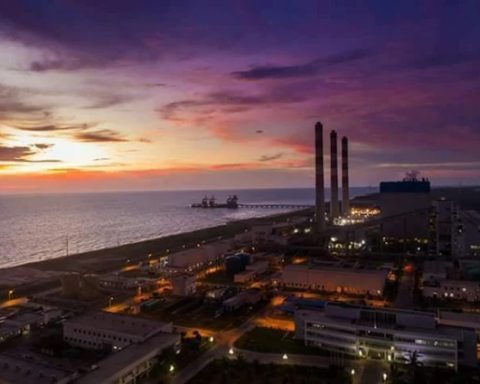
Beyond upstream production, Venezuela is also highlighting opportunities in refining, logistics and export infrastructure. The country’s refining network has a nominal capacity of nearly 1.3 million barrels per day but is currently operating at roughly 35 percent utilization. This gap has created immediate investment prospects in refinery rehabilitation, storage facilities, transportation systems and export terminal expansion as authorities seek to modernize critical infrastructure and increase operational efficiency.
Natural gas development is emerging as another strategic pillar of Venezuela’s energy revival. Offshore projects such as the Dragon and Cocuina-Manakin fields are expected to strengthen the country’s position in regional and global liquefied natural gas markets. However, significant gaps remain in gas capture, processing and transportation infrastructure, creating opportunities for both technical and financial partners looking to enter a developing market segment with long-term growth potential.
Industry estimates suggest that restoring Venezuela’s energy sector could require investments of up to $100 billion. Approximately $10 billion per year over the next decade may be needed to rebuild production capacity, modernize infrastructure and expand export capabilities. Officials hope that the summit will serve as a catalyst for securing a portion of that capital while showcasing the country’s readiness for large-scale energy investment.
The conference program will feature dedicated investment tracks covering upstream technical opportunities, commercial structuring, infrastructure integration and digital modernization. Organizers have also placed a strong emphasis on innovation, including the use of artificial intelligence in field management and broader energy systems optimization. Workforce development and local participation will be addressed through dedicated Youth in Energy sessions designed to support skills development, innovation and knowledge transfer across generations of energy professionals.
With participation expected from leading industry organizations and major energy stakeholders, Venezuela Energy Week 2026 aims to position itself as a key platform for investors evaluating re-entry into the Venezuelan market. The event will conclude with site visits to major upstream and downstream assets, providing attendees with direct insight into operational conditions and project readiness across the country’s core producing regions.
As global energy markets continue to adapt to evolving supply dynamics and energy security concerns, Venezuela is seeking to present itself as a renewed destination for investment. While challenges remain, the combination of vast reserves, regulatory reforms and large-scale infrastructure needs is creating what many industry participants view as one of the most significant emerging energy investment opportunities in the world.