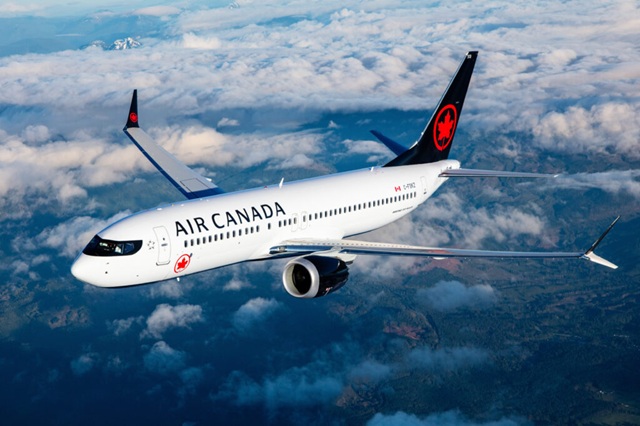
The Incident
What began as an ordinary international flight between the United States and Canada soon evolved into an extraordinary demonstration of the resilience of modern aviation and, simultaneously, into a compelling case study for international air law. Air Canada Flight 7664, operated by PAL Airlines from Newark Liberty International Airport to Halifax on Wednesday, June 25, 2026, had scarcely settled into its cruise when passengers sensed that something was gravely amiss. Approximately twenty-five minutes after departure, the aircraft abruptly banked to the left before swerving sharply to the right, movements so sudden and so inconsistent with the smooth equilibrium ordinarily associated with commercial air transport that apprehension immediately spread throughout the cabin. One passenger would later describe the experience as akin to riding in an automobile whose steering wheel had been violently jerked from side to side without warning. Others instinctively turned to prayer, sensing that the invisible margin separating normality from catastrophe had suddenly become perilously thin.
The explanation emerged with startling rapidity. Flight attendants rushed to the cockpit after recognizing that events within the flight deck had departed dramatically from normal operating procedures. Moments later, the cockpit door swung open, revealing a scene that few passengers aboard a commercial aircraft could ever have imagined witnessing. The captain was removed from the flight deck by members of the cabin crew, apparently suffering from a serious medical emergency that had rendered him incapable of exercising command of the aircraft. According to eyewitness accounts, his complexion had turned an alarming grey-green, and he appeared almost lifeless. Yet within moments, his condition changed dramatically. Believed to have entered a post-seizure state, he became intensely agitated, physically combative and possessed of extraordinary strength, kicking, flailing and resisting all attempts to restrain him. The cabin instantly became transformed from an environment of routine passenger service into an arena of emergency response.
Several passengers immediately volunteered to assist the flight attendants in subduing the incapacitated captain. Using multiple seat belts wrapped around his ankles, wrists, waist and shoulders, they succeeded only with considerable effort in preventing further injury to both the captain and those around him. Throughout these extraordinary events, another drama, unseen by those in the passenger cabin, was unfolding within the flight deck. The first officer had assumed complete command of the aircraft, stabilized its flight path, declared an emergency and diverted to Boston Logan International Airport, where a safe landing was subsequently accomplished without injury to the passengers or damage to the aircraft. Medical personnel immediately attended to the captain while arrangements were made to enable the passengers to continue their respective journeys.
From an operational standpoint, the incident represents a remarkable affirmation of the robustness of modern aviation safety systems. It demonstrated the effectiveness of crew resource management, the wisdom of requiring two qualified pilots in airline operations, the competence of contemporary cabin crew training and the value of operational redundancy that has become one of the defining characteristics of commercial aviation. Had this incident occurred during the infancy of commercial air transport, when aircraft were frequently operated by a single pilot under rudimentary regulatory oversight, the outcome might well have been tragic. Instead, multiple independent layers of safety intervened precisely as they had been designed to do. The first officer fulfilled his professional obligations with commendable skill, the cabin crew exhibited exceptional composure under conditions of extreme stress, and several passengers displayed an admirable willingness to assist in preserving the safety of everyone aboard.
Legalities
Operational success, however, does not necessarily conclude the legal inquiry. Aviation lawyers have long recognized that the absence of catastrophe does not invariably signify the absence of legal consequence. Indeed, one of the distinguishing characteristics of international air law is its recognition that liability may arise not solely from disasters resulting in fatalities, but equally from occurrences that produce bodily injury while stopping short of destruction of the aircraft. It is precisely this characteristic that invites a careful examination of the legal implications arising from the Air Canada incident.
Suppose, for example, that during the aircraft’s violent and unexpected movements an elderly passenger had been thrown against the cabin wall, sustaining a fractured hip. Suppose that another passenger, standing in the aisle when the aircraft abruptly deviated from controlled flight, had suffered spinal injuries requiring lifelong medical treatment. Equally conceivable is the possibility that one of the passengers who courageously assisted the cabin crew in restraining the captain might have sustained serious bodily injury during the struggle. Would such injuries constitute compensable damage under the Convention for the Unification of Certain Rules for International Carriage by Air, adopted in Montreal in 1999? Or would they be regarded merely as unfortunate consequences of a natural medical event suffered by the captain, thereby falling outside the scope of the Convention’s liability regime?
Was This an “Accident”?
These questions are neither speculative nor merely academic. They lie at the intersection of treaty interpretation, judicial precedent and the philosophy that has underpinned international air carrier liability for almost a century. They require an examination of whether a pilot’s sudden physiological incapacity can itself constitute the “accident” contemplated by Article 17 of the Montreal Convention, or whether the legally relevant accident is instead to be found in the abnormal operation of the aircraft and the chain of events that inevitably followed. Put differently, does international air law concern itself with the origin of the emergency or with the consequences that the emergency produces during the process of international carriage?
The distinction is of considerable importance because the Montreal Convention was never intended to transform international air carriers into universal insurers against every misfortune occurring during a flight. Equally, it was not intended to permit carriers to escape liability merely because the precipitating event originated in human physiology rather than mechanical malfunction or operational negligence. Between these two extremes lies the delicate equilibrium that the Convention has sought to preserve: a balance between protecting passengers who sustain bodily injury during international carriage and safeguarding the economic viability of an industry upon which global commerce and international mobility fundamentally depend.
This equilibrium did not emerge in isolation. It represents the culmination of almost one hundred years of jurisprudential evolution, beginning with the Warsaw Convention of 1929, continuing through the various Hague, Guadalajara and Montreal Protocols, and ultimately finding its contemporary expression in the Montreal Convention of 1999. Throughout this historical progression, one deceptively simple word has remained at the center of judicial interpretation, scholarly debate and legislative intention: “accident.” The Convention deliberately refrains from defining the term, thereby leaving its interpretation to the courts. Consequently, one of the most influential bodies of jurisprudence in international aviation law has developed not around questions of negligence, causation or quantum of damages, but around the deceptively simple inquiry of what, precisely, constitutes an accident for the purposes of international carriage by air.
The Air Canada incident provides an ideal vehicle through which this inquiry may be revisited. It illustrates with unusual clarity the distinction between a medical emergency suffered by an individual and the operational consequences that flow from that emergency. It also compels renewed consideration of the relationship between human frailty and legal responsibility, between operational safety and treaty interpretation, and between the philosophy of passenger protection and the commercial realities that continue to shape international civil aviation. Before examining whether the captain’s medical incapacitation may generate liability under Article 17 of the Montreal Convention, it is necessary to revisit the historical evolution of international passenger compensation and the jurisprudential foundations upon which the modern law of carrier liability continues to rest.
From Warsaw to Montreal: The Architecture of Passenger Compensation
The modern law of international air carrier liability did not emerge as an abstract intellectual construct divorced from operational reality. It was, rather, forged in response to the economic fragility and technological infancy of early aviation, when international carriage by air was regarded as both a commercial experiment and a regulatory challenge requiring delicate international coordination. The Warsaw Convention of 1929, formally the Convention for the Unification of Certain Rules Relating to International Carriage by Air, was the first systematic attempt to impose order upon this emerging mode of transport. It established a liability regime that was at once protective and restrictive: protective of passengers in that it recognized the right to compensation for injury or death arising during international carriage, yet restrictive in that it imposed monetary limits on carrier liability and prescribed strict conditions under which claims could be brought.
The philosophy underlying the Warsaw system was neither accidental nor incidental. It reflected an explicit compromise between competing interests: on the one hand, the need to ensure that passengers were not left without remedy in the event of injury, and on the other, the imperative of shielding nascent airlines from potentially ruinous exposure to unlimited liability. In this sense, the Warsaw Convention represented an early expression of what may be described as calibrated responsibility, a principle that has remained embedded in international air law ever since.
It is within this historical framework that the concept of “accident” first acquired legal significance. Article 17 of the Warsaw Convention imposed liability upon the carrier for damage sustained in the event of death or bodily injury of a passenger if the accident which caused the damage took place on board the aircraft or in the process of embarking or disembarking. The Convention, however, refrained from defining the term “accident,” thereby entrusting its interpretation to national courts and, eventually, to international judicial bodies. This omission has proven to be one of the most consequential drafting choices in the history of aviation law.
As aviation matured technologically and economically, the limitations of the Warsaw regime became increasingly evident. The proliferation of protocols and supplementary instruments, including the Hague Protocol of 1955 and the Montreal Agreement of 1966, reflected a gradual shift in the balance between carrier protection and passenger rights. By the end of the twentieth century, it had become apparent that the fragmented Warsaw system no longer provided a coherent or predictable framework for international carriage. The Montreal Convention of 1999 was therefore conceived as a comprehensive consolidation and modernization of the regime, designed to replace the multiplicity of overlapping instruments with a single, unified legal structure.
Yet, despite its modernization, the Montreal Convention retained the conceptual architecture of its predecessor. Article 17 remained the cornerstone of passenger liability, preserving the requirement of an “accident” as the triggering mechanism for compensation. What changed, however, was not the structure of liability but its economic and evidentiary framework. The introduction of a two-tier liability system under Articles 21 and 22 marked a significant departure from the rigid limitation regime of Warsaw, establishing a mechanism of strict liability up to a defined threshold, beyond which the carrier could avoid liability only by proving absence of negligence or wrongful act. This shift reflected a broader philosophical transition from a carrier-protective regime to a passenger-centric system of compensation, while still preserving the essential requirement that liability be anchored in an identifiable accident.
The Jurisprudential Meaning of “Accident”: Air France v. Saks
The interpretative challenge posed by Article 17 has generated a substantial body of judicial reasoning, none more influential than the decision of the United States Supreme Court in Air France v. Saks. In that case, the Court was confronted with the question of whether a passenger’s hearing loss, allegedly caused by normal cabin pressurization during descent, constituted an “accident” under the Warsaw Convention. The Court rejected the proposition that any injury occurring aboard an aircraft automatically satisfied Article 17. Instead, it articulated a principle that has since become foundational: an accident is an unexpected or unusual event or happening external to the passenger.
This formulation introduced two essential elements into the interpretative framework. First, the requirement of unexpectedness or unusualness, which distinguishes ordinary incidents of flight from extraordinary occurrences. Second, the requirement of externality, which excludes purely internal physiological events affecting the passenger from the scope of Article 17. The significance of Saks lies not only in its definition but in its methodological approach. The Court emphasized that the analysis must focus on the nature of the event causing the injury rather than the injury itself. This distinction has profound implications for cases involving medical conditions, physiological reactions and other internal bodily processes.
The externality requirement established in Saks has been consistently reaffirmed in subsequent jurisprudence and remains central to the interpretation of both the Warsaw and Montreal regimes. It ensures that liability is not imposed merely because an injury occurs during international carriage, but only where the injury results from an event that can be characterized as external to the passenger and outside the normal operation of air transport. However, as later cases have demonstrated, the boundary between internal and external events is not always easily defined, particularly where human conduct or operational decisions intersect with physiological outcomes.
The Expansion of Liability: Olympic Airways v. Husain
The decision in Olympic Airways v. Husain marked a significant development in the interpretation of Article 17 by expanding the understanding of what may constitute an “accident.” In that case, a passenger suffering from severe asthma died after repeated exposure to cigarette smoke in the aircraft cabin. The cabin crew had declined to relocate the passenger despite requests for assistance. The Court held that the crew’s refusal constituted an unexpected or unusual event, thereby satisfying the requirements of Article 17.
The importance of Husain lies in its recognition that an accident may consist not only of affirmative acts but also of omissions where such omissions deviate from expected standards of conduct during international carriage. The Court effectively acknowledged that operational decisions, when unreasonable or inconsistent with established procedures, may themselves constitute the external event required by Saks. This broadened the interpretative horizon of Article 17 and reinforced the principle that the Convention is concerned with the totality of the carriage experience, including both acts and omissions that materially affect passenger safety.
At the same time, Husain did not abandon the externality requirement. The Court was careful to distinguish between internal medical conditions and external contributing factors arising from the carrier’s operational conduct. The passenger’s asthma was an internal vulnerability, but the refusal to relocate him was an external event within the meaning of Article 17. The causal chain, therefore, depended upon the interaction between internal susceptibility and external operational conduct.
Internal Medical Events and External Operational Consequences
It is precisely at this intersection that the Air Canada incident assumes doctrinal significance. A pilot’s medical emergency is, in its origin, an internal physiological event. It arises within the human body and is not, in itself, an operational occurrence external to passengers. Under a strict application of Saks, such an event would not ordinarily constitute an accident for the purposes of Article 17. However, aviation is not governed by isolated physiological events; it is governed by the operational consequences that flow from them.
When a pilot’s incapacitation manifests in abnormal aircraft behavior—unexpected swerving, loss of stability, or deviation from standard flight parameters—the legal analysis necessarily shifts. The focus moves from the internal medical condition to the external operational consequences observable within the aircraft’s conduct. These consequences are not merely derivative; they constitute independent manifestations of the carriage process itself. In this sense, the aircraft becomes the medium through which the internal event expresses itself externally.
The jurisprudential challenge, therefore, is not to determine whether the pilot’s illness is itself an accident, but whether the operational disruption it causes constitutes an unexpected or unusual event external to the passenger. This distinction preserves the integrity of the Saks framework while accommodating the operational realities of modern aviation, where human incapacitation and system redundancy are intrinsically interconnected.
In this context, the Montreal Convention does not treat aviation as a collection of isolated human actions but as an integrated system of carriage. The relevant inquiry is whether the system, in operation, produces an abnormal event that departs from the expected experience of air travel. Where such departure occurs and results in bodily injury, Article 17 is potentially engaged.
The Air Canada incident therefore sits at the conceptual boundary between internal human incapacity and external operational manifestation. It is within this boundary that the modern law of international air carrier liability must determine whether compensation is triggered, not by the illness of the pilot as such, but by the manner in which that illness translated into the operational reality of the flight experience.
The Pilot’s Incapacity and the Problem of Legal Causation
The analytical difficulty posed by the Air Canada incident lies not in the identification of the factual sequence of events, which is now reasonably well established through passenger accounts, but in the juridical characterization of those events within the structure of the Montreal Convention of 1999. The captain’s sudden medical incapacitation is, in isolation, a purely internal physiological occurrence. It originates within the human body and is not, in the strict doctrinal sense articulated in Air France v. Saks, an external event. Yet aviation law rarely permits such neat compartmentalization. The legal inquiry under Article 17 does not terminate at the point of medical causation. It extends to the operational consequences that arise when human incapacity intersects with the dynamics of flight.
The crucial question is therefore whether the relevant “accident” is to be located in the captain’s seizure itself, or in the aircraft’s abnormal response to that seizure. The distinction is not semantic. It determines whether liability attaches under the Convention or whether the event remains outside its compensatory regime. If the former, the carrier is exposed to liability subject to the two-tier structure of Articles 21 and 22. If the latter, the passengers are left to bear their losses without recourse under the Convention, though potentially under domestic tort principles depending on jurisdictional reach.
The jurisprudence of Saks provides the starting point for this inquiry. The requirement that the accident be an “unexpected or unusual event or happening external to the passenger” establishes a threshold that excludes purely internal physiological processes affecting the passenger. However, Saks was not concerned with the internal condition of a crew member whose incapacity manifests itself through the operation of the aircraft. This distinction becomes decisive. The captain is not the claimant; the passengers are. The internality or externality of the event must therefore be assessed not in relation to the pilot, but in relation to the passenger experience of carriage.
From this perspective, the relevant inquiry shifts. The captain’s seizure is internal to him but external to the passengers in its operational consequences. When the aircraft suddenly veered left and then right in an uncontrolled manner, passengers were confronted not with a latent medical condition but with a manifest deviation from the ordinary expectations of safe and stable flight. The aircraft, as the instrument of carriage, exhibited behavior that was neither normal nor anticipated within the contractual framework of international air transport. It is this manifestation that may arguably constitute the “accident” within the meaning of Article 17.
The logic of this approach is reinforced by the decision in Olympic Airways v. Husain, where the Supreme Court recognized that omissions or failures in operational judgment may themselves constitute the relevant external event. The refusal of cabin crew to relocate a passenger exposed to cigarette smoke was treated as an unusual operational decision that directly contributed to the fatal outcome. The Court did not confine itself to the passenger’s internal vulnerability but focused on the carrier’s conduct in the operational environment of the aircraft. By analogy, the failure of the flight system—through its human component—to maintain stable control of the aircraft during the captain’s incapacitation may be characterized as an operational deviation sufficient to satisfy the Saks requirement.
It is important, however, to avoid the analytical error of conflating causation with characterization. The captain’s medical emergency is undoubtedly the cause of the aircraft’s abnormal movements. Yet causation alone is not determinative under the Convention. The Montreal regime is not structured around causal chains in the abstract but around legally significant events within the process of international carriage. Thus, the question is not simply what caused the aircraft to behave abnormally, but whether that abnormal behavior constitutes an “accident” in its own right.
This distinction between causal origin and legal characterization is well established in aviation jurisprudence. Courts have consistently emphasized that Article 17 is concerned with the event that directly produces the injury, not necessarily the antecedent conditions that give rise to that event. In this sense, the legal system isolates a segment of the causal chain and designates it as the compensable accident. Everything preceding that segment, however causally relevant, remains legally neutral unless independently constitutive of an accident.
Applying this principle to the present case, the captain’s seizure may be understood as the initiating condition. The aircraft’s swerving, loss of stability and sudden deviation from expected flight parameters may constitute the operative event. If a passenger were injured during this phase, the injury would arguably be attributable not to the medical condition itself, but to the abnormal operation of the aircraft as an instrument of international carriage.
Externality Reconsidered: The Aircraft as the Site of the Accident
The requirement of externality under Saks has generated sustained interpretative debate, particularly in cases involving complex interactions between human physiology and operational conduct. While the doctrine was initially formulated to exclude internal bodily processes of passengers, its application to aviation systems has required a more nuanced understanding of what constitutes “external” in a technologically integrated environment.
In the context of pilot incapacitation, externality cannot be reduced to a simplistic dichotomy between human and mechanical causes. The aircraft is not merely a passive object; it is a dynamic system operated by human agents whose physiological conditions directly influence its performance. When a pilot becomes incapacitated, the resulting operational disturbance is external to passengers in both a physical and experiential sense. Physically, because passengers are subjected to forces and movements beyond normal flight conditions. Experientially, because the expectations of safe and stable carriage are abruptly disrupted.
It is this dual dimension that allows the law to conceptualize such events as accidents even though their origin lies in internal human physiology. The Montreal Convention, like its Warsaw predecessor, is ultimately concerned with the experience of carriage. It is within that experiential framework that legal externality must be assessed.
The Air Canada incident thus illustrates a subtle but important doctrinal evolution. The law is no longer concerned solely with whether an event originates outside the human body, but whether it manifests itself externally within the process of carriage in a manner that departs from ordinary expectations. This shift does not abandon Saks but refines its application to contemporary aviation realities.
Bodily Injury and the Threshold of Compensability
Even where an accident is established, Article 17 imposes a further requirement: the existence of bodily injury. The Montreal Convention deliberately excludes purely psychological harm unaccompanied by physical injury, notwithstanding ongoing academic debate regarding the adequacy of this distinction in modern jurisprudence. The policy rationale is grounded in the need to maintain predictability in liability assessment and to avoid the evidentiary uncertainties associated with purely psychiatric claims.
In the Air Canada scenario, compensability would therefore depend upon whether passengers sustained bodily injury as a result of the aircraft’s abnormal movements or the ensuing struggle to restrain the incapacitated captain. A passenger thrown against the cabin structure, suffering fractures or soft tissue injuries, would clearly fall within the protective scope of Article 17, provided that the underlying event is characterized as an accident. Similarly, a passenger injured while assisting cabin crew in restraining the captain may also fall within the scope of liability, as the injury would be sufficiently connected to the operational environment of the aircraft during international carriage.
However, mere fright, anxiety or psychological distress arising from the incident would not, in itself, constitute compensable damage under the Convention. This limitation reflects a deliberate policy choice embedded in both Warsaw and Montreal jurisprudence. While modern psychology increasingly recognizes the physical dimensions of trauma, international air law continues to adhere to a more conservative evidentiary threshold, requiring demonstrable bodily harm.
The interaction between bodily injury and accident thus forms a dual threshold structure. The claimant must first establish the existence of an accident within the meaning of Article 17. Only then does the inquiry proceed to whether bodily injury has been sustained as a result. In the absence of either element, the Convention does not apply.
Crew Incapacity and the Architecture of Operational Responsibility
The final dimension of the analysis concerns the allocation of responsibility within the aircraft’s operational structure. Modern aviation is premised upon redundancy and substitution. The presence of a qualified first officer is not incidental but integral to the safety architecture mandated under international standards, including those established by the International Civil Aviation Organization. The system is designed precisely to ensure that the incapacitation of one pilot does not compromise the safety of the aircraft.
In this sense, the Air Canada incident demonstrates both the strength and the limits of operational redundancy. While the first officer successfully assumed control and executed a safe landing, the transitional period between incapacitation and stabilization created conditions under which passengers were exposed to abnormal aircraft behaviour. It is this transitional phase that assumes legal significance. The law is not concerned with ultimate success in averting disaster, but with whether, during the process of carriage, an abnormal and unexpected event occurred that resulted in bodily injury.
The Montreal Convention, therefore, operates at the intersection of operational success and legal responsibility. An incident may be successfully managed from an aviation safety perspective while still giving rise to liability under international law. This apparent paradox is not a contradiction but a reflection of the distinct purposes served by operational regulation and legal compensation.
The analysis must therefore proceed to the final stage: whether, in light of the foregoing principles, a pilot’s medical incapacitation and its operational consequences can be coherently integrated within the concept of “accident” under Article 17, and whether such integration preserves the doctrinal integrity of the Montreal Convention while ensuring its continued relevance to contemporary aviation realities.
When Human Frailty Becomes a Legal Event: Reconstructing “Accident” in Modern Aviation
The Air Canada incident ultimately compels international air law to confront an uncomfortable but inescapable truth: aviation remains a human system, and human systems are vulnerable not only to mechanical failure but to biological unpredictability. A pilot’s sudden medical incapacitation is neither rare enough to be ignored nor predictable enough to be fully eliminated by regulation. It sits at the intersection of physiology and technology, where legal classification becomes more complex than the operational response that follows it. The Montreal Convention must therefore be tested against this hybrid reality: whether it is sufficiently flexible to accommodate events whose origin is internal to a crew member but whose consequences are external to the passenger experience of international carriage.
The starting point remains Article 17, whose architecture has endured from the Warsaw Convention through to its modern successor. Liability is triggered when a passenger suffers death or bodily injury, provided that the injury is caused by an accident on board the aircraft or in the process of embarking or disembarking. The jurisprudence of Air France v. Saks continues to govern the interpretative approach: the accident must be an unexpected or unusual event or happening external to the passenger. Yet as aviation systems have become increasingly automated, integrated and dependent upon human-machine interaction, the simplicity of this formulation has been tested by cases that do not fit neatly into classical categories of mechanical failure or isolated human negligence.
The present scenario illustrates this tension with unusual clarity. A captain suffers a sudden seizure. That seizure is internal to him and, in isolation, does not constitute an accident under Article 17. However, the seizure does not remain isolated. It immediately propagates into the operational environment of the aircraft: loss of stable control, abrupt lateral movement, deviation from expected flight path, emergency cockpit intervention, and physical struggle within the cabin. The legal question is whether this chain of events must be disaggregated into its physiological and operational components, or whether it must be treated holistically as a single accident within the meaning of the Convention.
The better view, consistent with both jurisprudence and principle, is that the Convention requires a functional rather than purely etiological analysis. The law does not ask whether the origin of the disturbance lies within or outside the human body. It asks whether, during the course of international carriage, an unexpected and unusual event external to the passenger occurred that caused bodily injury. Once the aircraft deviates from normal operational parameters in a manner perceptible to passengers and capable of producing injury, the legal threshold of accident is likely to be satisfied.
This approach preserves doctrinal coherence with Saks while acknowledging the evolution of aviation systems. The aircraft is not merely a physical object but a controlled environment in which human and mechanical components operate as a unified system. When that system behaves in a manner that departs from ordinary expectations—particularly when passengers experience violent or uncontrolled movement—the law is justified in treating the deviation as external to the passenger, even if its origin is internal to a member of the crew.
The decision in Olympic Airways v. Husain reinforces this interpretative trajectory. The Court’s willingness to treat operational omission as an “accident” confirms that Article 17 is not confined to mechanical breakdowns or affirmative acts of misconduct. It extends to the broader operational context of carriage, including failures of judgment and deviations from expected conduct within the aircraft environment. The refusal to act in Husain was not merely a passive condition; it was an operational choice with direct causal consequences. Similarly, the inability of a pilot to maintain normal control of the aircraft due to sudden incapacitation may be viewed as an operational disruption that transforms an internal medical event into an external legal one.
Yet caution is necessary. To characterize every medical emergency affecting flight crew as an accident would risk collapsing the distinction between operational risk and compensable legal event. Aviation necessarily involves human vulnerability. Pilots are subject to stringent medical certification under ICAO Annex 1 standards precisely because their physical and cognitive capacity is central to flight safety. Nevertheless, these standards aim at risk mitigation, not elimination. The law must therefore distinguish between the mere occurrence of a medical event and the manifestation of that event in a manner that disrupts the carriage process.
It is this manifestation that is decisive. A pilot suffering a silent medical episode that is immediately and seamlessly managed by the first officer, without any disruption to flight operations perceptible to passengers, would not ordinarily give rise to an accident under Article 17. There would be no external event affecting the passenger experience of carriage. By contrast, where the medical episode results in abnormal aircraft movement, emergency intervention, or cabin disturbance, the operational environment itself is altered. It is this alteration—not the physiological cause—that becomes the legally relevant accident.
The distinction is subtle but essential. It preserves the integrity of the Convention while ensuring that liability remains tied to the experience of carriage rather than the internal biology of aviation personnel. It also reflects the underlying philosophy of international air law, which has consistently sought to regulate the consequences of air transport rather than the abstract origins of risk.
The Air Canada incident also raises an additional dimension of legal interest: the participation of passengers in restraining the incapacitated captain. Injuries sustained in such circumstances occupy a particularly complex doctrinal space. On one view, such injuries arise from an extraordinary emergency situation created by the operational disturbance of the flight. On another, they may be seen as voluntary acts undertaken by passengers responding to a perceived threat. The better analysis is that where passengers are effectively drawn into the operational management of an in-flight emergency, their resulting injuries remain causally linked to the underlying accident, provided that the accident requirement under Article 17 is otherwise satisfied.
This interpretation is consistent with the Convention’s broader objective of ensuring compensation for injuries arising from risks inherent in international carriage. The cabin is not a passive environment; it is an active space in which passengers may, in exceptional circumstances, be required to respond to emergencies. When such responses are necessitated by an abnormal operational event, injuries sustained in the course of those responses cannot be artificially severed from the originating disturbance.
The final dimension of analysis concerns the philosophical coherence of treating human medical incapacity as a trigger for legal liability. There is an instinctive reluctance, both in law and in policy, to impose liability on carriers for events that are neither preventable nor attributable to negligence. Yet the Montreal Convention is not structured exclusively around fault. Its liability regime is deliberately hybrid: strict liability up to a defined threshold, followed by a due diligence defense beyond that point. This structure reflects a policy judgment that passengers should not bear the burden of proving negligence in circumstances where injury arises from the operational environment of international carriage.
Within this framework, the question is not whether the pilot’s medical emergency was foreseeable or preventable, but whether the passenger’s injury resulted from an unexpected and unusual event during the course of carriage. The answer, on the facts of the Air Canada incident, is likely to depend on the precise nature of the injury and the operational manifestation of the emergency. Where abnormal aircraft movement or emergency intervention is present, the threshold of Article 17 is likely to be crossed.
Ultimately, the Montreal Convention reveals itself not as a rigid code but as an adaptive legal structure designed to accommodate the evolving realities of aviation. Its strength lies in its capacity to translate complex operational phenomena into legally intelligible categories without losing sight of its underlying purpose: the protection of passengers in the inherently risk-laden environment of international air transport.
The Air Canada incident therefore occupies more than anecdotal significance. It serves as a contemporary illustration of how human frailty, when embedded within the operational machinery of flight, may transform from a private medical event into a legally cognizable accident. Whether compensation ultimately follows will depend on the presence of bodily injury and the characterization of the operational disturbance. But the broader legal lesson is clear. In the architecture of the Montreal Convention, it is not the origin of human vulnerability that governs liability, but the manner in which that vulnerability manifests itself within the lived reality of international carriage by air.
My Take
My considered view of this incident, situated within the interpretative framework of the Montreal Convention , is that it exposes once again the enduring elasticity—and necessary indeterminacy—of the concept of “accident” in international air law. The Air Canada Flight 7664 episode, precipitated by the sudden medical incapacitation of the captain and manifested through abnormal aircraft movements and in-flight disturbance, demonstrates that modern aviation liability cannot be confined to rigid ontological categories of cause and effect. The captain’s seizure, in its medical essence, is an internal physiological event. Yet aviation law is not concerned with physiology in isolation; it is concerned with the operational expression of such events within the aircraft as a system of international carriage.
In my view, consistent with the jurisprudence of Air France v. Saks and Olympic Airways v. Husain, the relevant juridical “accident” is not the illness itself but the external operational disruption that it generates. Where that disruption translates into unexpected aircraft behavior and results in bodily injury to passengers, Article 17 of the Montreal Convention is engaged. The causal chain remains relevant, but it is the manifestation of that chain within the carriage environment that assumes legal significance.
The Montreal Convention thus continues to reflect a carefully calibrated equilibrium: strict liability grounded in operational reality, tempered by doctrinal discipline. The Air Canada incident reinforces the proposition that human frailty, when embedded in the machinery of flight, becomes not merely a medical episode but a potential legal event within the architecture of international air carrier liability.