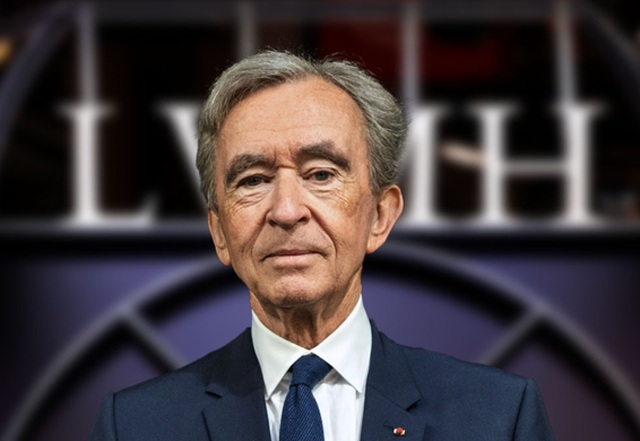
France’s richest man, Bernard Arnault, has been ordered to pay €22.5 million in back taxes following a years-long legal dispute with French tax authorities over a restructuring involving a Belgian holding company linked to his stake in luxury goods giant LVMH.
According to a ruling by a French administrative court, Arnault and his wife should have paid tax on most of a €50 million payment they received after withdrawing funds from a Belgian holding company that held shares related to LVMH. Arnault had argued that the payment constituted a tax-free repayment of capital following a reduction in the company’s share capital, but the tax authorities maintained that most of the amount should instead be treated as taxable distributed income.
The latest ruling reverses Arnault’s earlier courtroom victories. Since 2020, he had successfully challenged the tax authorities’ position in two separate court decisions before the appeal court overturned those judgments. The ruling, first reported by French media outlet l’Informé, reinstates approximately €22.5 million in additional income tax, social charges and related wealth tax liabilities.
A spokesperson for Arnault said the decision would be appealed to France’s highest administrative court, the Conseil d’État. “This ruling, which overturns both the first-instance judgment and an earlier decision by the same appeal court, will be appealed to the Conseil d’État,” the spokesperson said.
The spokesperson also said LVMH is France’s largest corporate taxpayer and that the group’s activities contribute more than one percent of the country’s gross domestic product. According to the spokesperson, the company’s income tax payments rose to approximately €5.5 billion last year, an increase of more than €300 million from 2024.
Arnault has long opposed proposals to increase taxes on wealthy individuals. Last year, he criticised a wealth tax proposal promoted by economist Gabriel Zucman and backed by left-wing political parties, describing it as “deadly to the French economy.” The proposal, which failed to secure parliamentary approval, would have required individuals with fortunes exceeding €100 million to pay a minimum annual tax of two percent on their assets, including company holdings, shares and unrealised gains.
Arnault and his family control LVMH through a 50.01 percent stake. The luxury conglomerate owns brands including Louis Vuitton and Dior. According to the Bloomberg Billionaires Index, Arnault is the world’s eighth-richest person, with an estimated fortune of US$165 billion.
The ruling follows a long history of scrutiny over Arnault’s tax affairs. In 2012, he applied for Belgian citizenship in addition to his French nationality, prompting criticism that the move was intended to optimise his tax position. Arnault denied the allegation, saying the application was intended to protect a Belgian foundation established to safeguard the future of the LVMH group, and later withdrew the application.
The case adds to a series of high-profile tax disputes involving wealthy French families. Cosmetics heiress Liliane Bettencourt, whose family owns part of L’Oréal, previously paid back taxes following disputes with authorities, while the Franco-American Wildenstein family was involved in a lengthy legal battle over offshore trusts that culminated in Guy Wildenstein’s conviction for tax fraud in 2024.