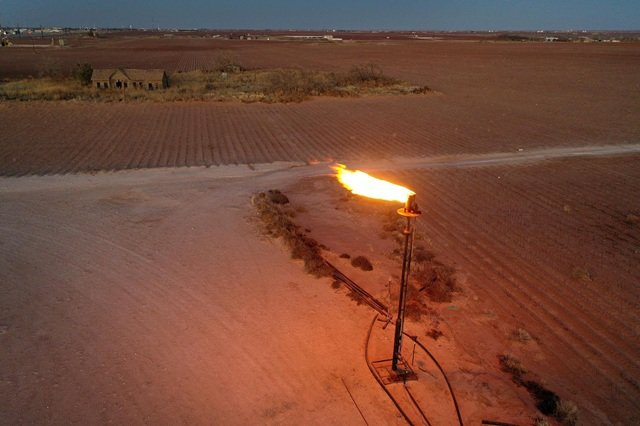
A striking contradiction is emerging at the heart of the Trump administration’s attempt to dismantle America’s federal greenhouse gas reporting system: major oil and gas companies are seeking weaker requirements for measuring methane emissions, while simultaneously urging the government to preserve the national database that records those emissions.
The tension is detailed in a statement released by the National Security Archive, drawing on U.S. Environmental Protection Agency records obtained through Freedom of Information Act requests. The documents show how industry groups have sought changes to the methane reporting rule known as Subpart W even as several of the industry’s largest organisations and companies opposed proposals to eliminate the broader Greenhouse Gas Reporting Program, or GHGRP.
The issue centres on what companies are required to disclose, how those emissions are calculated and who controls the system through which the information becomes publicly available.
The industry’s concerns intensified after the Biden administration revised Subpart W in 2023 and finalised the changes in 2024. The revised methodology expanded reporting requirements to include previously unaccounted-for sources, including super emitter events and equipment used to regulate natural gas pressure and flow.
At a private trade group meeting in 2023, an energy analyst described the revised methane rule as a “major PR headache” for oil and gas companies. “How do we even go talk to our investors and explain that this is what’s happening?” he asked, warning that matters that had historically gone unreported would now have to be disclosed.
The scale of the potential change was significant. In 2025, an industry consultant predicted that some companies could see their reported methane emissions increase by four to ten times under the revised methodology. More recently, another consultant speaking to a gas group conference warned that updated disclosure requirements could increase reported methane emissions by roughly 16 percent. EQT, a major gas producer, subsequently cited the revised rule as one reason its reported methane emissions rose in 2025.
Subpart W is one of dozens of reporting requirements within the GHGRP. It covers large petroleum and natural gas systems, including onshore and offshore drilling sites, pipelines, compressors and liquefied natural gas terminals. As of 2023, nearly 2,300 facilities were covered, accounting for 322 million metric tons of carbon dioxide equivalent, including methane, carbon dioxide and nitrous oxide.
Methane is particularly significant because it is the main component of natural gas and is a more powerful heat-trapping pollutant than carbon dioxide in the short term. According to the EPA, the oil and gas industry is the largest source of methane emissions in the United States.
Yet when the Trump administration proposed eliminating the entire GHGRP, sections of the fossil fuel industry objected.
The American Gas Association, American Petroleum Institute, American Exploration & Production Council, ExxonMobil, Shell and the U.S. Chamber of Commerce all submitted public comments supporting preservation of the programme. Their position was not that the system should remain unchanged. Instead, they called on the administration to “improve the program rather than suspend it.”
The distinction is important. While industry groups have sought greater flexibility in how methane emissions are measured and estimated, they have also argued that the existence of a central federal reporting system serves important commercial purposes.
Timothy R. Parr, Deputy General Counsel of the American Gas Association, made that case in a 16 January 2025 letter to the EPA transition team. He urged the agency to increase the use of facility- and company-derived emission factors and advanced methane measurement technologies in Subpart W, while also encouraging the government to preserve its greenhouse gas information repositories.
Parr wrote that AGA and its members rely on EPA data to demonstrate the progress the industry claims to have made in voluntarily reducing methane emissions. He also argued that natural gas companies depend on the data when responding to investors, customers and other stakeholders.
The American Petroleum Institute made a similar argument. Dustin Meyer, API’s Senior Vice President of Policy, Economics, and Regulatory Affairs, called for a balance between reducing the burden of information collection and preserving the benefits of the GHGRP, including its “high quality data” for stakeholders.
For industry, therefore, the federal system serves two purposes. It imposes reporting obligations that companies increasingly want reduced, but it also provides a centralised and recognised source of information that can support claims about environmental performance.
The documents show that this tension was accompanied by sustained industry engagement with the EPA. The American Gas Association sought meetings with agency officials specifically concerning Subpart W. API met EPA staff in early March 2025 and subsequently held at least three more meetings, while requesting another. The American Exploration & Production Council and Independent Petroleum Association of America also met with the agency concerning methane reporting.
One major point of contention was the Super Emitter Program, created under the 2024 methane rules to identify and address unusually large methane releases. AXPC had previously said the programme served “an important function”, while raising concerns about mandatory repair and reporting requirements. Under the Trump administration, however, it described the programme as a “significant strain on resources”, “subject to litigation”, and possessing “seemingly no transparency”.
The broader consequences extend beyond the oil and gas industry. The GHGRP provides data used by governments, researchers, communities, investors and international bodies. EPA documents warn that dismantling it could create gaps and inconsistencies in emissions estimates. States including Iowa and North Carolina rely on its data for their own greenhouse gas inventories, while Texas does not have independent greenhouse gas reporting requirements.
The international implications could also be significant. European Union methane regulations place greater demands on the quality and verification of emissions data for imports. EPA briefing material has also noted that the transparency of the US system has allowed Washington to press countries including China, India and Brazil to disclose emissions and permit comparisons of performance.
The National Security Archive documents thus reveal a regulatory battle that is not simply about whether America should measure methane. It is also about who defines the measurements, how much companies must disclose, and whether the federal government should continue providing the authoritative framework through which those figures are understood.
Even as the Trump administration considers the future of the GHGRP and Subpart W, the industry’s position remains divided on the precise form the system should take. Some companies and trade groups favour preserving the federal programme with significant changes; others support making it voluntary or eliminating it altogether.
What unites much of the industry, however, is the effort to reshape mandatory methane reporting.
The result is a striking paradox. The same federal emissions database that companies resist when it imposes greater disclosure can become valuable when it provides a common, credible record of environmental performance.
The National Security Archive’s newly released records place that contradiction at the centre of the debate over America’s greenhouse gas data: the struggle is not only over regulation, but over the evidence by which the country measures its own emissions.