“Farming is not just a way of life; it is a way of thinking about our relationship with the earth.” This idea, echoed by generations of agricultural pioneers, captures a growing global movement that sees farming not merely as food production, but as a responsibility towards people, communities and the planet. In Sri Lanka, one former banker is attempting to bring that philosophy to life through an unlikely journey that began not in the fields, but inside the corporate world.
When Paul Christopher stepped away from banking and moved towards agriculture, he was not chasing a business opportunity. His journey began with a personal search for healthier living, meaningful family engagement and a deeper connection with nature. What started as a small backyard experiment during the pandemic has grown into Panda Farmacy, a social enterprise in Uswatekeiyawa built around organic farming, regenerative agriculture, education and community empowerment.
The transformation reflects a wider global conversation about the future of food systems. As agricultural pioneers such as Sir Albert Howard, often regarded as one of the founders of modern organic farming, argued, the health of the soil is inseparable from the health of society. “The maintenance of soil fertility is the first condition of any permanent system of agriculture,” Howard wrote, a principle that lies at the centre of Panda Farmacy’s approach.
Paul’s entry into farming was not a planned career transition. In 2020, as the pandemic brought offices and schools to a standstill, he found himself spending more time at home with his two children. Like many families during that period, he faced the challenge of keeping children engaged in a world dominated by screens and uncertainty.
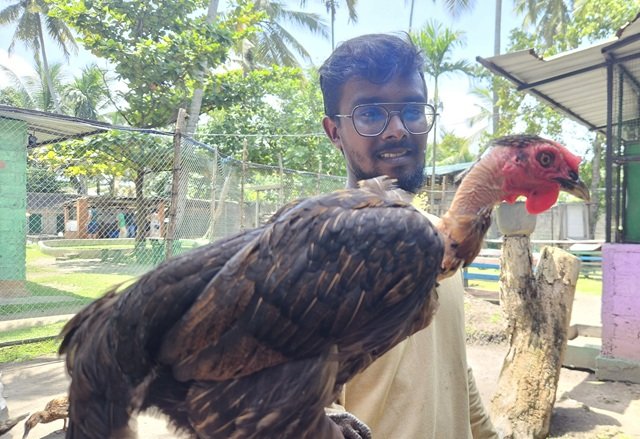
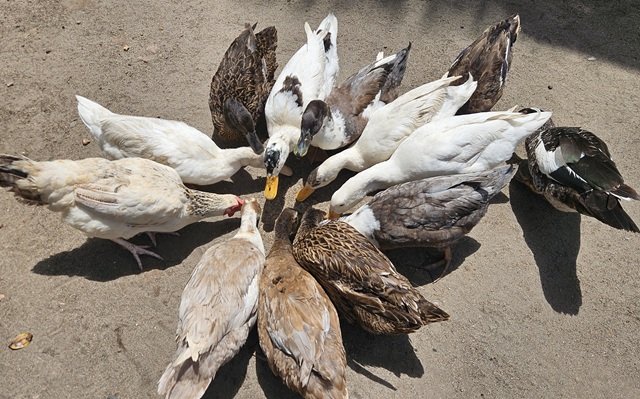
Looking for an activity that would bring his children closer to nature, he introduced four hens into the family garden. The birds quickly became more than just animals in the backyard. They became part of the family’s daily rhythm. The children fed them, cared for them and learned responsibility through simple interactions with living creatures.
Within months, the small flock expanded dramatically, eventually growing to more than 100 hens and roosters. A personal experiment had quietly developed into the foundation of a larger agricultural vision.
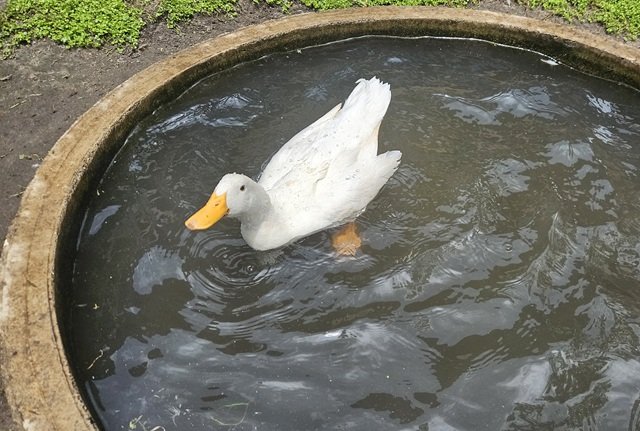
In 2021, the family moved the operation to Uswatekeiyawa, creating a dedicated farm space designed around animal welfare, free-range practices and sustainable cultivation. The farm gradually expanded to include ducks, turkeys, rabbits, goats, sheep, cows and even a horse, alongside organic vegetable production.
However, the expansion also revealed one of the biggest challenges facing organic farming: maintaining healthy soil without relying on synthetic chemicals. This led Paul and his team towards vermicomposting, a natural process using earthworms to transform organic waste into nutrient-rich compost and liquid fertiliser.
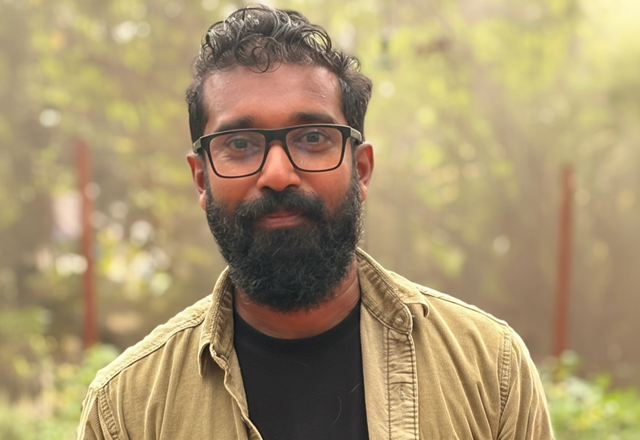
Known by many farmers as “black gold”, vermicompost became both a farming solution and an educational tool. Panda Farmacy began conducting training programmes to teach farmers and home gardeners how to produce organic fertilisers and adopt regenerative practices. More than 150 farmers and gardening enthusiasts across Sri Lanka have participated in these programmes.
The idea reflects the philosophy of renowned farmer and environmental activist Wendell Berry, who wrote, “The soil is the great connector of lives, the source and destination of all.” For Panda Farmacy, farming is not simply about growing crops; it is about rebuilding a relationship between humans and the natural systems that sustain them.
In 2024, Panda Farmacy opened its doors to the public, evolving from a working farm into an educational destination. Families, schools and organisations began visiting the site to experience farming beyond textbooks and screens.
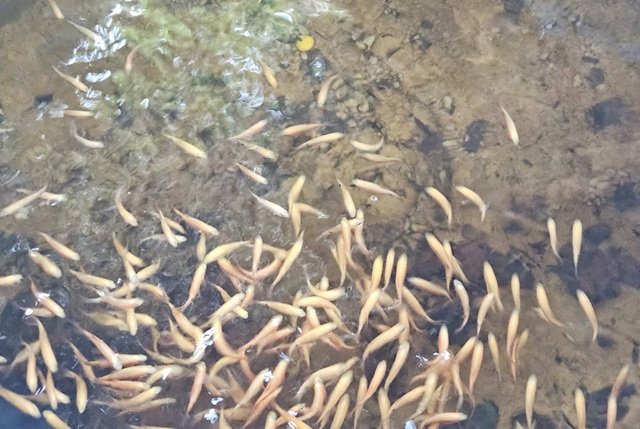
The farm tours are designed as immersive learning experiences. Visitors can plant and harvest vegetables, interact with animals, explore aquaponics systems, understand renewable energy through biogas units and learn about seed preservation. The objective is to create a direct connection between people and the origins of their food.
More than 12,000 visitors have since experienced the farm, many of them children encountering agriculture not as an abstract concept but as a living process.
For Paul, this educational mission is central to the farm’s identity. Modern lifestyles have increasingly separated people from agriculture, with many children growing up disconnected from where food comes from. Panda Farmacy attempts to bridge that gap by making farming a practical experience rather than a distant idea.
The farm also operates as a social enterprise, using agriculture as a means of community development. Through training, partnerships and sustainability initiatives, it aims to create opportunities for vulnerable communities while promoting environmentally responsible practices.
Its programmes include support for community farming, seed preservation, sustainable livelihood training and educational activities for children. The farm also works with organisations and corporate groups through sustainability programmes, allowing businesses to participate in environmental and social initiatives.
The approach follows a principle expressed by agricultural visionary Masanobu Fukuoka, the Japanese farmer and author of The One-Straw Revolution, who believed that farming should work with nature rather than attempt to dominate it. His philosophy of natural farming influenced generations of environmental thinkers and farmers worldwide.
Panda Farmacy combines this traditional wisdom with modern techniques. Alongside organic cultivation, it promotes recycling initiatives, eco-bricks, renewable energy systems and regenerative farming methods designed to restore rather than exhaust natural resources.
The name itself reflects the unusual journey behind the project. “Panda” refers to the pandemic period during which the farm began, while “Farmacy” represents the belief that naturally produced food can nourish both physical health and emotional well-being.
Today, the farm produces organic vegetables, free-range eggs, poultry products, vermicompost, liquid fertilisers and a grain-based nutritional product known as Panda Superfood. Yet its broader purpose extends beyond products.
At its heart, Panda Farmacy represents an attempt to redefine what a farm can be. It is a place where agriculture meets education, where food production meets community development, and where business is connected with social responsibility.
The journey has also changed the meaning of work for its founder. A career once centred around financial institutions has become a life built around soil, animals, children and community.
As American agricultural scientist George Washington Carver once said, “Education is the key that unlocks the golden door of freedom.” For Panda Farmacy, education is not limited to classrooms; it is found in gardens, farms and everyday interactions with nature.
From four hens in a family backyard to a growing social enterprise serving thousands of visitors, Paul Christopher’s journey demonstrates how personal choices can evolve into wider movements. In a world searching for sustainable solutions, Panda Farmacy’s message is simple: returning to the land may also mean rediscovering a more balanced way of living.
To experience Panda Farmacy firsthand and discover its approach to organic farming, sustainable living and community-based agriculture, visitors can arrange a farm visit through the official website: [https://pandafarmacy.com/].