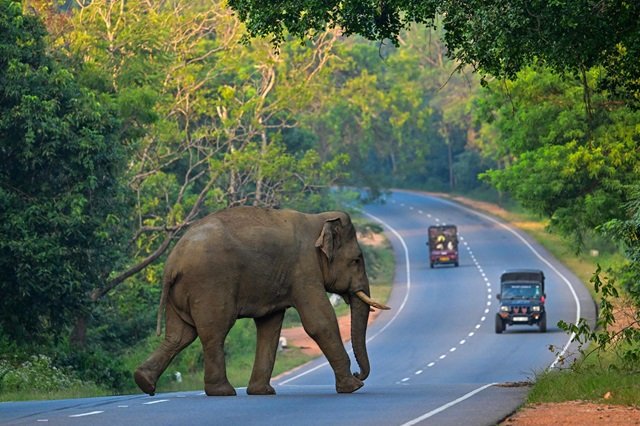
Sri Lanka plans to strengthen existing elephant fences and construct new barriers in a village in Puttalam district before considering the allocation of land on the village side to newly married young families, Public Administration, Provincial Councils and Local Government Minister Chandana Abayarathna has said.
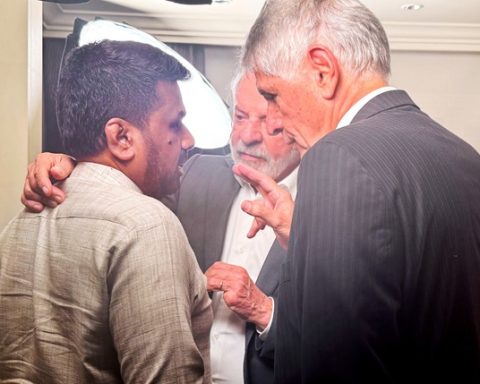
The proposals were discussed at a divisional committee meeting held in the Thenuwara division on 26 October, chaired by Abayarathna, who also heads the Puttalam District Coordinating Committee. The meeting focused on human-elephant conflict, farmers’ land issues and measures to improve rural livelihoods.
Village representatives said residents living near forest reserves were facing severe difficulties because elephants were entering settlements, damaging crops and threatening daily life. They attributed the problem partly to the lack of an adequate forest corridor connecting two reserves separated by about 2.5 kilometres and to insufficient clearance of government and Forest Conservation Department land within the village.
Residents said the situation had made it difficult to protect both upland crops and paddy cultivation. Elephants had also approached areas near the school and temple, creating further risks for the community.
To address the problem, residents called for the strengthening of a 3.5-kilometre elephant fence on the side of the Weerakkodichole reserve, the construction of a new fence towards the Sellakanda reserve and the introduction of a systematic patrol service using existing watchtowers.
Responding to the concerns, Abayarathna said steps would be taken to expedite the necessary work. He said 5,000 Civil Security Department personnel had been attached to the Department of Wildlife Conservation to improve the efficiency of wildlife officers’ duties. Field operations had also been strengthened by providing transport facilities, including pickup trucks and motorcycles, he said.
The minister added that President Anura Kumara Dissanayake had stressed the need to construct durable elephant fences designed for long-term effectiveness rather than focusing solely on construction costs.
He also said attention was being given to building the Mahasen reservoir and restoring other forest-area reservoirs to help prevent elephants from entering villages in search of water.
On land allocation, Abayarathna said he would discuss the matter with the divisional secretary and the grama niladhari, or village administrative officer, to develop an appropriate programme for making land available to newly married young families on the village side once the elephant fencing had been strengthened.
He stressed that any allocation of land would need to take account of wildlife habitats and the government’s policy target of increasing Sri Lanka’s forest cover to 30 per cent.
The minister also called for greater use of agricultural methods capable of generating higher incomes from limited land, alongside the development of self-employment opportunities. He cited bitter gourd, mushroom, passion fruit and big onion cultivation, as well as animal husbandry, flower cultivation and garment sewing, as possible livelihood options for rural households.
Abayarathna said the government aimed to strengthen rural economic independence through technology and productive agriculture rather than continued reliance on subsidies. He said the proposed measures would seek to balance environmental conservation with improvements in people’s living standards.
The meeting was attended by Karuwalagaswewa Pradeshiya Sabha chairman Neil Navaratne, local councillors, divisional committee representatives and a large number of residents from Thenuwara.