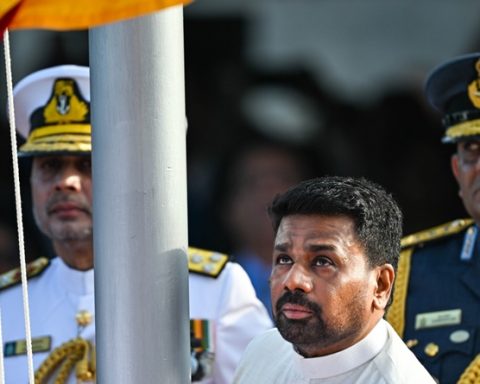
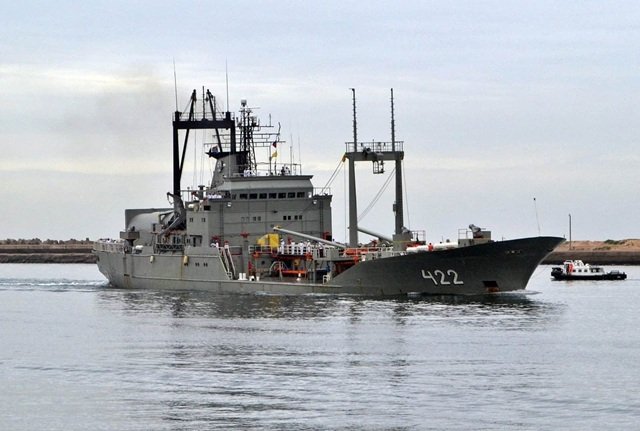
When President Anura Kumara Dissanayake stood before Parliament in March and confirmed that Sri Lanka had twice turned away American warplanes seeking to land at Mattala Rajapaksa International Airport, the applause that followed inside the chamber was easy to understand. What is harder to grasp, and what deserves far more scrutiny than it has received, is what that single decision reveals about the geopolitical vice Sri Lanka now finds itself in and how little room the island actually has left to manoeuvre.
The facts, as the president laid them out, are stark. Washington asked on 26 February for two missile-armed aircraft to be relocated from a base in Djibouti to Mattala, a civilian airport in the island’s south, for a five-day window in early March. Colombo said no. Days later, Operation Epic Fury began, and the US-Israel war on Iran escalated into the kind of regional conflagration that energy markets and shipping insurers had long feared. Sri Lanka did not stay untouched for long. A US submarine’s torpedoing of the Iranian frigate IRIS Dena occurred just off the island’s coast, and Colombo subsequently found itself rescuing Iranian sailors and sheltering a damaged Iranian vessel, an episode that, however humanitarian in intent, has been read in some quarters as evidence that Sri Lanka’s “neutrality” tilts by default toward whichever side happens to wash up on its shores.
This is the trap small, strategically located states have always faced, and Sri Lanka’s location at the crossroads of the Indian Ocean’s busiest sea lanes makes the trap unusually tight. Analysts at the East-West Center have long noted that the island’s position near vital maritime chokepoints turns its harbours and airstrips into prizes that Washington, Beijing and New Delhi all want, whether or not Colombo wants to be wanted. The Mattala episode simply made visible a competition that usually plays out through port financing agreements and naval logistics rather than parked fighter jets.
What should give Sri Lankans pause is not the decision itself, declining to let the island’s territory be used as a springboard for missile strikes against a third country is precisely what neutrality is supposed to mean, and it is consistent with how the government explained its reasoning to Parliament. The harder question is whether “strict neutrality” is a policy Sri Lanka can sustain, or a posture it can only afford until someone decides to test it further. A recent assessment from a Canadian defence-research outlet has argued that the refusal, whatever its legal merits, will be read in Washington as confirmation that Colombo sits inside what it calls a Chinese orbit, a framing that ignores the mirror-image reality that saying no to Iranian warships too would seem to complicate. Perception, in great-power politics, often matters more than intent, and Sri Lanka’s insistence on equidistance may satisfy international law without satisfying Washington.
The economic exposure that comes with picking the wrong side, or being seen to, is not abstract. Sri Lanka is still climbing out of its 2022 default, still servicing an IMF programme, and still dependent on remittances from workers across a Gulf region now rattled by war. A research note on Colombo’s 2026 outlook points out that the island’s stress will likely persist until the fallout from Washington’s more transactional, “flexible realism” approach to foreign policy becomes clearer, a posture under which alliances are judged by immediate utility rather than longstanding partnership. For a country whose entire post-crisis recovery strategy rests on IMF goodwill, tourism inflows and continued access to Western markets for its garment and tea exports, being cast as unreliable by Washington carries a price tag that a parliamentary round of applause cannot cover.
None of this means Colombo should have said yes. It means the government must now do the diplomatic work that “neutrality” as a word cannot do on its own: explaining, repeatedly and specifically, to Washington, to Beijing, to New Delhi and to Tehran, that refusal was universal and not selective. The Diplomat’s reporting on the episode notes that Colombo also declined a request from Iranian naval vessels to dock and withheld support for a UN motion it judged one-sided, details that matter enormously to the credibility of the policy but that rarely travel as far as the initial headline about turned-away American jets. A foreign ministry that wants equidistance to be believed cannot leave that context to be dug up by foreign correspondents.
There is also a quieter, longer-running dimension to this that predates the Iran war by years: the steady expansion of Chinese and Indian naval and research activity around the island, including submarine visits that have periodically strained ties with New Delhi. A recent account of that dynamic makes clear that Sri Lanka’s balancing act was never only about the United States; it is a permanent condition of sitting where it sits, and the Mattala decision is one data point in a much longer pattern of the island trying to avoid becoming, as one Washington-based analysis put it, a pawn in a great power rivalry rather than an actor with genuine agency.
Sri Lanka does not have the luxury of choosing whether great powers compete over it. What it can still choose is how disciplined, transparent and consistent its own conduct is when that competition knocks on the door whether the knock comes from an American base in Djibouti, an Iranian frigate limping toward its waters, or the next research vessel flying a Chinese flag. The Mattala refusal was a reasonable answer to a hard question. Whether it holds up as policy, rather than as a single well-applauded moment in Parliament, will depend on what Colombo does next.