Dozens of organisations representing Hong Kong, Tibetan, Uyghur, Taiwanese and other diaspora communities have launched a coordinated campaign opposing China’s Law on Promoting Ethnic Unity and Progress, arguing that the legislation threatens ethnic minority rights within China while extending its impact to critics living overseas.
A total of 39 organisations issued a joint statement and organised protests on 15 July, describing the law as a significant escalation in Beijing’s approach toward ethnic minorities. While Chinese authorities have said the legislation is intended to promote a shared national identity among the country’s 55 officially recognised ethnic minority groups, the organisations contend that it functions as a penal law with provisions that could also target individuals and groups outside China who criticise its implementation.
Richard Lue, founder of the Western Australian Association for Pan-Asian Democracy and one of the organisers of the joint statement, said the legislation could affect human rights advocates regardless of where they live, including those based in Australia. In comments reported by the Australian Broadcasting Corporation (ABC), Lue said the law institutionalises forced assimilation within China while extending Beijing’s authority beyond its borders.
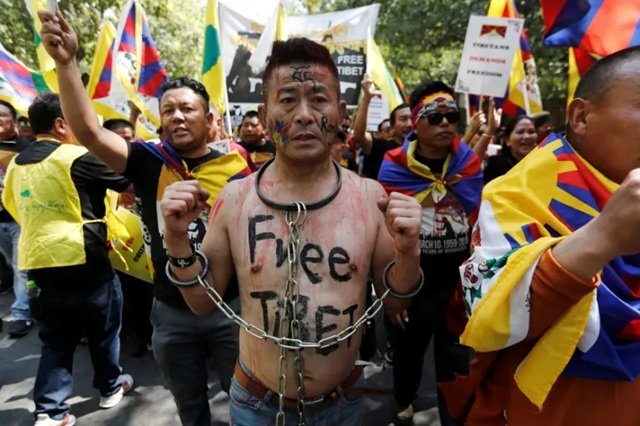
The joint statement, published on social media on 15 July, said participating organisations were acting in solidarity to warn the international community about what they described as a serious escalation. The campaign brought together representatives from multiple diaspora communities who argue that the law has implications not only for ethnic minorities inside China but also for overseas advocacy networks and international civil society organisations.
Protests against the legislation have taken different forms in several countries. According to the ABC report, Tibetans and their supporters have organised demonstrations in response to the law, including a protest self-immolation outside United Nations headquarters in New York City on 2 July. In Melbourne, activists staged a 24-hour hunger strike earlier this month as part of the broader campaign highlighting concerns over the legislation.
Academic observers have also raised questions about the law’s potential impact. Feng Chongyi, a China specialist at the University of Technology Sydney, said Beijing has long pursued policies that weaken the languages and cultures of ethnic minority communities. He argued that the new legislation effectively legitimises restrictions on freedom of expression by making violations of its provisions criminal offences.
Feng also pointed to provisions allowing Chinese authorities to pursue legal action against overseas organisations and individuals accused of undermining ethnic unity or creating ethnic division. Critics have argued that these measures could extend the law’s practical effects beyond China’s borders by targeting members of diaspora communities engaged in advocacy or political activism.
Jane Poon, president of the community organisation Australia Hong Kong Link, compared the legislation to Hong Kong’s National Security Law, introduced in 2020, which expanded the Chinese government’s powers to suppress dissent. She said the new law could have an even broader reach because of its potential implications for multiple ethnic minority communities and overseas activists.
Concerns have also been expressed in Taiwan. Chen Ching Kuen, executive director of the Taiwan Nation Association, said the legislation could discourage Taiwanese people from expressing political opinions. He argued that individuals supporting the existing cross-strait status quo or Taiwan’s participation in international organisations could face allegations under the law.
Dr Bedford, identified in the report as an Australian human rights advocate and understood to be Australia Tibet Council Chief Executive Officer Dr Zoë Bedford, said China’s objective was to encourage self-censorship by discouraging people from speaking openly, participating in community organisations or expressing identities other than Han Chinese.
Australia’s Department of Foreign Affairs and Trade previously told the ABC that the government had raised concerns about the legislation directly with China and at the United Nations Human Rights Council. The department also stated that all people in Australia, regardless of citizenship, are protected under Australian law and enjoy Australian political freedoms.
Lue, however, described Australia’s response as insufficient, arguing that stronger action was needed. Together with Poon and Bedford, he called on the Australian government to consider targeted Magnitsky-style sanctions, including travel bans and asset freezes, against individuals responsible for the legislation. Poon said she and other activists intend to continue protesting as international opposition to the law continues.