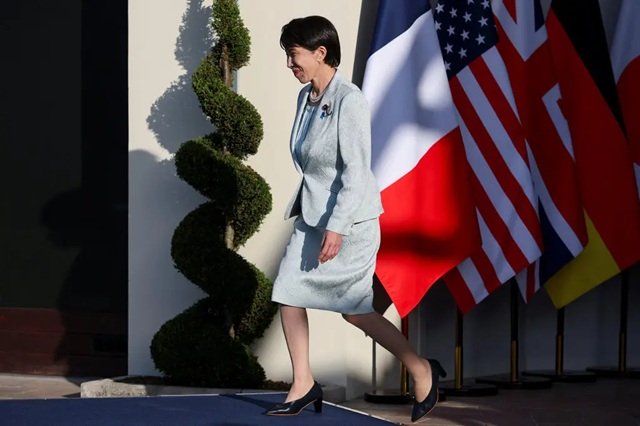
Japan has embarked on the most significant restructuring of its intelligence and national security system since the end of World War II, approving the creation of a central intelligence agency designed to unify fragmented government operations, strengthen protection against espionage and cyber threats, and improve coordination in response to mounting security challenges across the Indo-Pacific. The reform, driven by Prime Minister Sanae Takaichi’s government and developed with advice from security partners including the United States, Australia and Germany, represents a major departure from Japan’s post-war intelligence framework while reigniting domestic debate over the balance between national security and civil liberties.
Japan has approved the establishment of the National Intelligence Bureau (NIB), marking a fundamental shift in the country’s approach to intelligence gathering and national security. The new organisation will consolidate intelligence functions that have long been dispersed across multiple government departments, creating a central body intended to improve the collection, analysis and sharing of intelligence as Japan confronts an increasingly complex regional security environment.
The bureau, expected to employ around 700 staff members, will become the focal point of Japan’s intelligence apparatus, coordinating information previously handled separately by the foreign ministry, police, defence agencies and other government institutions. Officials say the reforms are intended to strengthen the country’s ability to identify and respond to emerging threats, particularly those arising from heightened geopolitical tensions in the Indo-Pacific.
The initiative represents the first attempt since World War II to establish a centralised domestic intelligence agency. In developing the organisation, Japanese leaders have privately sought advice from partners including the United States, Australia and Germany on issues ranging from technology and staffing to organisational priorities and intelligence-sharing practices.
The reforms come against a backdrop of growing concern over regional security challenges involving China, Russia and North Korea. Japanese officials have also highlighted the increasing importance of responding to cyberattacks, disinformation campaigns and other forms of hybrid warfare that increasingly blur the distinction between conventional military threats and digital or economic coercion.
According to officials, Japan has become more concerned about foreign influence operations targeting the country, including efforts to spread misinformation through Japanese-language websites and online platforms designed to influence public opinion and policy debates. The government has also expressed concern over industrial espionage and attempts to acquire sensitive technologies from strategically important Japanese industries.
For decades after the war, Japan deliberately maintained a fragmented intelligence structure as part of its broader post-war pacifist settlement. Intelligence responsibilities were divided among multiple ministries and agencies, with no single organisation exercising overall authority or coordinating foreign intelligence operations. While this arrangement reflected lessons drawn from Japan’s wartime experience, critics have increasingly argued that it left the country vulnerable to espionage, slow information sharing and foreign interference.
Officials now contend that the changing international security environment requires a more integrated approach. Security experts have similarly maintained that Japan’s existing intelligence framework often made it difficult for agencies to exchange information rapidly during crises, limiting the government’s ability to develop a comprehensive assessment of evolving threats.
Under the new structure, the National Intelligence Bureau will coordinate intelligence collection and analysis across government departments while reporting to a newly established National Intelligence Council chaired by the prime minister. The council is intended to serve as the government’s central command structure for intelligence, strengthening cooperation among ministries that have traditionally operated independently.
The government has said the reforms are necessary to improve the protection of classified information, counter cyber intrusions and strengthen safeguards against foreign influence operations. Officials have also emphasised the importance of improving information security across both the public and private sectors as threats increasingly target government institutions, businesses and critical infrastructure alike.
Economic security has become another central element of the reforms. Japan is home to globally significant industries, including semiconductor manufacturing, robotics and advanced technology, sectors that officials say have increasingly attracted attempts at industrial espionage and the acquisition of sensitive technologies.
Alongside the creation of the National Intelligence Bureau, the government has introduced stricter rules governing foreign investment, granting authorities expanded powers to review investments involving sensitive industries and critical technologies. The measures form part of a broader effort to protect strategically important sectors from foreign interference and unauthorised technology transfers.
Prime Minister Sanae Takaichi has positioned the intelligence reforms within a wider programme aimed at strengthening Japan’s national security institutions. Her government has already advanced a series of defence initiatives, including reversing previous restrictions on weapons exports and overseeing what has been described as Japan’s largest defence build-up in the post-war era. The intelligence overhaul is widely regarded as another pillar of that broader strategy.
The reforms also build upon changes initiated under former Prime Minister Shinzo Abe, who sought to modernise Japan’s security architecture by establishing an American-style National Security Council and promoting legislation to strengthen the protection of state secrets. Mr Abe argued that Japan should become a “normal” nation capable of protecting its own interests while assuming a more influential international role. Prime Minister Takaichi’s latest initiatives extend that trajectory through a more comprehensive restructuring of the country’s intelligence system.
Despite the government’s emphasis on national security, the reforms have generated criticism both domestically and abroad. China has accused Ms Takaichi of pursuing militarism, while some Japanese lawmakers and civil liberties advocates have questioned whether the new agency will have sufficient oversight.
Opponents argue that Japan’s decision to avoid creating a stand-alone intelligence agency for nearly eight decades reflected lessons learned from its wartime history, particularly the legacy of the Tokko, the police and intelligence organisation that targeted government critics before World War II. They warn that expanding intelligence powers could undermine privacy rights and contribute to the emergence of a surveillance society.
Supporters, however, argue that the reforms are a necessary response to an increasingly challenging security environment in which cyber threats, foreign interference, economic espionage and geopolitical competition require faster decision-making and closer coordination across government.
The creation of the National Intelligence Bureau is expected to be only the first stage of a broader transformation. The government is considering additional legislation to strengthen counter-espionage laws and expand Japan’s intelligence capabilities, including overseas intelligence gathering. As the new bureau prepares to begin operations, it will assume responsibility for integrating intelligence functions that have remained divided for decades, signalling a profound shift in how Japan seeks to protect its national security in an increasingly uncertain international environment.