


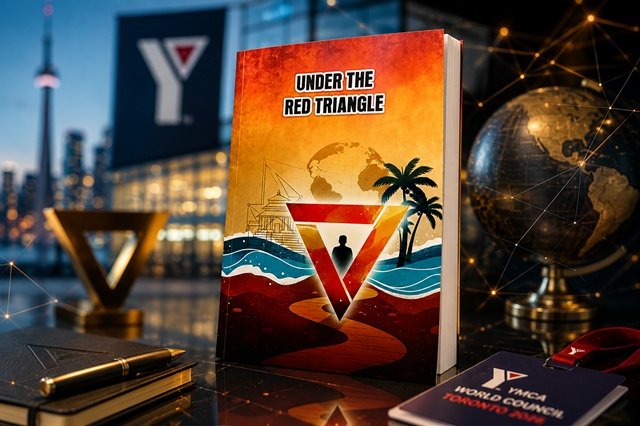
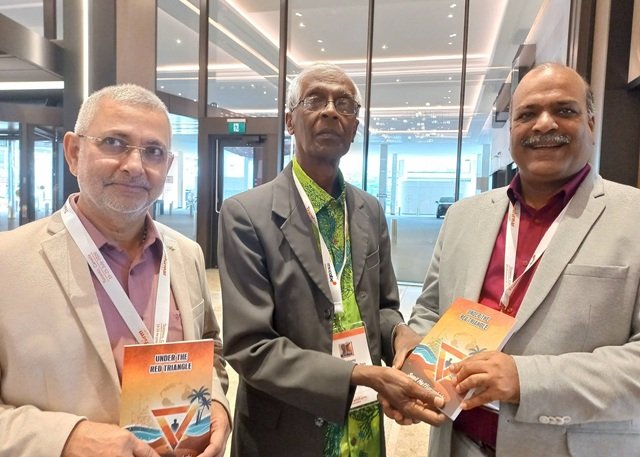
The release of Under the Red Triangle by Susil Hettiarachchi, former General Secretary of the Dehiwala YMCA, could hardly have come at a more symbolic moment. As more than 1,300 delegates gathered in Toronto for the 21st YMCA World Council under the theme “Transform”, the memoir asks an uncomfortable question: can an organisation speak of transformation while parts of its own global family have abandoned the very principles that gave birth to the movement? Hettiarachchi’s answer is unequivocal. His book argues that the crisis confronting the YMCA in Sri Lanka is not financial, administrative or generational. It is fundamentally a moral crisis.
This is not a nostalgic account from a retired official lamenting the passing of an earlier era. It is a detailed indictment written by someone who spent three decades inside the organisation, documenting how, in his view, the YMCA gradually exchanged Christian conviction for institutional politics. Every chapter returns to the same conclusion: leadership ceased to be measured by integrity, competence and service, and became increasingly shaped by alliances, expediency and personal interests.
The book identifies the retirement of National General Secretary Alagan S. Kadirgamar as the turning point. Hettiarachchi argues that qualified YMCA professionals were repeatedly overlooked in favour of individuals with limited understanding of the movement’s philosophy and traditions. The bypassing of S. Vijayakulsingam is presented not as an isolated appointment but as the beginning of a pattern in which experience became a liability rather than an asset. Even leaders who eventually assumed office found themselves targeted by internal campaigns that made effective leadership almost impossible. Constitutional amendments removing senior leaders over the age of sixty are described not as organisational reform but as a deliberate purge that stripped the movement of institutional memory. According to the author, the result was predictable: factionalism replaced unity, democratic processes deteriorated and the National Council became consumed by internal power struggles instead of Christian mission.
The strongest criticism in the book is reserved for what Hettiarachchi describes as the abandonment of the YMCA’s Christian identity. He argues that the organisation no longer functions as the Christian movement envisioned by the Paris Basis of 1855. Bible studies, prayer meetings, evangelism and reconciliation ministries have steadily disappeared from organisational life. Recreation, sports programmes and revenue-generating activities have taken their place. The criticism goes well beyond programme priorities. Hettiarachchi suggests that many present-day leaders no longer understand the theological foundations of the YMCA itself. References to the Paris Basis and Kampala Principles have become ceremonial rather than operational. He portrays an organisation that still carries the YMCA name while steadily distancing itself from the beliefs that originally defined it.
The author also points to what he regards as unmistakable evidence of ethical decline. Alcohol at YMCA functions, financial decisions lacking strategic discipline, and behaviour during meetings that falls far below the standards expected of Christian leadership are presented as symptoms of a deeper institutional sickness. The issue, he argues, is not isolated misconduct but the gradual normalisation of practices that previous generations of YMCA leaders would never have accepted.
The book is equally unsparing in its assessment of the Peace, Reconciliation and Rehabilitation programme. Although widely recognised as one of the YMCA’s flagship initiatives during Sri Lanka’s ethnic conflict, Hettiarachchi argues that the programme ultimately fell victim to the same organisational weaknesses affecting the wider movement. National vision never translated into local commitment. Peripheral YMCAs pursued their own priorities, leadership lacked professional capacity, and internal politics repeatedly undermined implementation. Particularly damaging is his account of overseas peace-building training opportunities being awarded to individuals who had little involvement in reconciliation work and produced no measurable impact after returning. The implication is clear. Good intentions alone were never enough to build peace when organisational culture rewarded loyalty over competence.
The memoir becomes intensely personal when Hettiarachchi recounts his arrest under the Prevention of Terrorism Act in December 1999 after providing shelter to a displaced Tamil youth. The episode exposes what he believes was the YMCA’s greatest moral failure. While police interrogated one of its own senior leaders and falsely accused him of links to the Tamil Tigers, the institution that preached Christian compassion remained largely silent. Many within the Christian community distanced themselves rather than risk association with controversy. The irony is not lost on the author. The person who demonstrated genuine courage during this ordeal was not a prominent church leader but a Buddhist youth from a poor fishing community who brought him food and openly defended him before the authorities. Hettiarachchi does not present this as a personal grievance. He presents it as evidence that institutional Christianity had become disconnected from the values it claimed to uphold.
Leadership failures extend into financial management. Hettiarachchi argues that the YMCA repeatedly rejected opportunities that could have secured its long-term sustainability because innovation threatened entrenched interests. His account of former National President Nirmal de Fonseka’s proposal to establish a professional fundraising committee illustrates this resistance. Experienced professionals from outside the YMCA were viewed with suspicion rather than welcomed as partners. Even a proposal to organise a fundraising concert featuring Irish singer Daniel O’Donnell was dismissed. The author argues that while international donor support was steadily declining, the organisation rejected practical alternatives capable of securing its future.
Some of the book’s most powerful pages do not deal with financial decisions but with moral choices. Hettiarachchi recalls how, in 1979, the National Executive unanimously rejected a Rs. 1 million donation from a tobacco company because accepting the money would have compromised the principles contained in the Paris Basis. That decision, he argues, demonstrated that integrity mattered more than financial desperation. He contrasts that example with what he describes as today’s culture of poor financial planning, depletion of reserves, short-term projects and leadership increasingly motivated by personal prestige rather than Christian service. The comparison is intended to demonstrate how dramatically the organisation’s moral compass has shifted.
The author also argues that internal politics have steadily isolated Sri Lanka from the wider YMCA movement. He cites the withdrawal of support for Nirmal de Fonseka’s candidature for regional leadership and the rejection of opportunities for representation within the World Alliance as examples of leaders placing personal rivalries ahead of the national interest. According to Hettiarachchi, international goodwill painstakingly built over decades has been allowed to erode because current leadership lacks both commitment and meaningful engagement with the global movement.
The story of the Sunshine Camp for children with special abilities provides another example of how institutional priorities changed. Once recognised as one of the YMCA’s most compassionate programmes, it gradually lost organisational support following changes in leadership. Hettiarachchi argues that this was not simply the disappearance of a successful project. It reflected a wider inability to recognise and protect programmes that embodied the movement’s Christian calling. The camp survived only because of the commitment of the Dehiwala YMCA rather than the National Movement.
Under the Red Triangle is likely to unsettle many within the YMCA. The memoir accuses the organisation of abandoning meritocracy, weakening democratic governance, neglecting its Christian mission, tolerating ethical decline, discouraging innovation and sacrificing international credibility to internal politics. These are not casual observations but sustained allegations made by a former senior leader who spent decades inside the institution. Whether every criticism will be accepted is almost beside the point. The questions raised are too serious to ignore.
The timing of the book makes its message even more uncomfortable. While YMCA leaders from around the world gathered in Canada to discuss transformation, Hettiarachchi’s memoir argues that meaningful transformation in Sri Lanka cannot begin until the movement confronts a far more difficult reality. According to the author, the YMCA does not first need new programmes, younger leaders or better fundraising strategies. It needs to recover its moral credibility. Without that, the organisation may continue to exist in name, but it will remain a shadow of the Christian movement it once claimed to be.






This is a powerful reflection on how movements struggle to thrive when they fail to evolve with the changing needs of society and new generations. It is also deeply ironic that this testimony comes from someone who was an influential part of the movement for many years and was involved, directly and indirectly, in the organizational politics of the very period described.
Some of the individuals portrayed positively in this account, including the author, have since been found responsible for causing significant financial and governance damage to the movement. As someone who has been part of this movement for more than three decades, I have witnessed how the reluctance of many senior leaders to genuinely empower young people with responsibility has contributed to where the movement stands today.
Despite these challenges, there is reason for hope. The remaining committed leadership, together with a new generation is working hard to rebuild the movement, strengthen its governance, and restore its relevance. I sincerely hope these efforts will succeed.