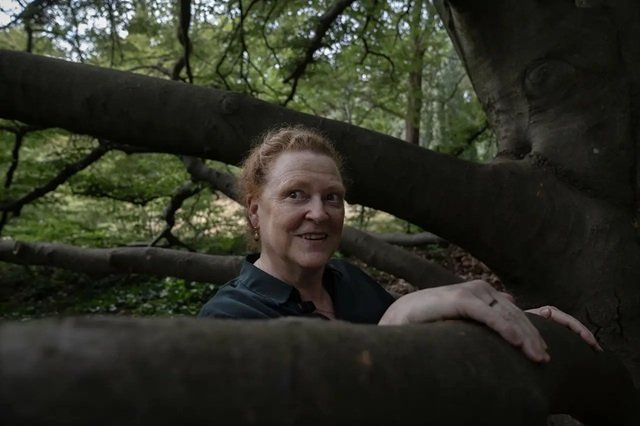
Death has been Professor Dame Sue Black’s closest companion for most of her life. Yet rather than fear it, she has learned to regard it as a constant presence and, ultimately, a trusted guide. During a walk through the grounds of St John’s College, Oxford, Black recalls advice from her paternal grandmother that has shaped both her personal philosophy and her extraordinary professional career. “She used to say to me: ‘Death walks beside you every moment of your life,'” Black tells The Observer UK. “And so if Death is going to walk with you, then you may as well make her a friend.”
That perspective has underpinned decades of work that has established Black as one of the world’s foremost forensic anthropologists. Her profession centres not on determining how people died but on discovering who they were, using the science of human anatomy to establish identity. Throughout her career she has helped identify victims of some of the most devastating tragedies of modern times, including mass executions in Kosovo, where she served as lead forensic anthropologist during the international war crimes investigations in 1999, and the victims of the Indian Ocean tsunami that claimed around 230,000 lives on Boxing Day 2004.
Yet, as The Observer UK notes, Black’s scientific contributions extend far beyond identifying the dead. Her research has repeatedly demonstrated how anatomical knowledge can protect the living, particularly victims of violent crime. Among her most significant recent achievements is H-unique, a five-year research programme valued at €2.5 million (£2.1 million), which became the first project to develop a multimodal automated analysis of visible hand anatomy. The work addresses a disturbing challenge faced by investigators: child sexual abuse offenders sometimes film only their hands while committing offences. If those hands can be uniquely identified, investigators can identify the offender.
The pioneering project reflects Black’s lifelong fascination with the human body. Since 2022 she has served as President of St John’s College, Oxford, following distinguished academic appointments at the University of Dundee, where she was Professor of Anatomy and Forensic Anthropology between 2003 and 2018, and later as Pro-Vice-Chancellor for Engagement at Lancaster University. Alongside her academic career, she has also brought forensic science to wider audiences through bestselling books including All That Remains: A Life in Death, Written in Bone: Hidden Stories in What We Leave Behind and her latest work, An Expert Witness: Forensic Science on Trial, which examines both the advances and the limitations of scientific evidence within modern courtrooms.
Her own journey into forensic science began far from university lecture halls. Raised in Inverness, Black grew up in a household where practical work was an everyday expectation. Her father, a former serviceman and carpenter who hunted to provide food for the family, introduced her to the realities of preparing game from an early age. While her mother preferred to avoid such tasks, Black recalls skinning rabbits and removing the entrails from deer from the age of five. By 13 she was expected to contribute financially to the household, handing half of her wages to her mother after finding employment in a butcher’s shop, an occupation she now recalls with characteristic humour.
University was never regarded as an obvious destination. No one in her family had attended higher education before her. Instead, it was encouragement from a biology teacher, Dr Fraser, that convinced her to pursue academic study. Reflecting on education today, Black tells The Observer UK that academic and vocational pathways should be regarded as equally valuable, arguing that while her own state school education was “superb”, university is not necessarily the right choice for everyone.
That passion for anatomy found an unexpected home after she arrived at St John’s College. Among the treasures housed within its historic library are first and second editions of Andreas Vesalius’s landmark anatomical work, De Humani Corporis Fabrica, long regarded by Black as the book she most wished to see. Discovering that the college possessed both editions, including the 1555 publication that coincided with St John’s own foundation, reinforced her belief that her appointment as President carried a special sense of destiny.
Throughout the interview, Black repeatedly returns to the idea that every human body carries an individual story. Sitting beneath a variegated beech tree planted in 1898, the year her grandmother was born, she reflects on how scars, marks and the body’s ability to repair itself reveal individuality. That belief ultimately shaped one of the most significant forensic breakthroughs of her career.
The Observer UK recounts a case from 2004 involving a young girl who secretly recorded evidence of sexual abuse by leaving her computer camera switched on overnight. Although the offender’s face was never captured, Black identified distinctive vein patterns visible on the man’s arm and hand. At the time, scientific evidence proving the uniqueness of those patterns did not yet exist. Although a judge permitted her testimony, the jury acquitted the father.
The verdict continues to trouble Black, not only because she believes the jury’s expectations of how a victim should behave influenced the outcome, but because she has never discovered what became of the girl afterwards. Determined that future victims should not face the same evidential limitations, she embarked on years of research that ultimately created a database containing five million images of hand anatomy, confirming that vein patterns are unique to every individual. According to Black, that research has since contributed to 30 whole-life prison sentences for other offenders, amounting to more than 500 years of imprisonment.
Her experience also informs her views on the justice system itself. While recognising the historic importance of jury trials dating back to Magna Carta, she acknowledges the pressures facing modern courts, including shortages of defence lawyers and courtroom capacity that leave both complainants and defendants waiting years for trials. She believes certain less serious offences could potentially be decided by judges or magistrates, while maintaining that the gravest crimes, particularly murder and offences carrying life sentences, should continue to be heard before juries.
Despite a career immersed in some of humanity’s darkest experiences, Black insists that her work has never overwhelmed her emotionally. She describes maintaining a “clinical box” in her mind, separating professional responsibilities from personal life. Advice from a detective friend early in her career reinforced that approach: whatever crimes she investigates, she could never have prevented them, and the burden of responsibility belongs solely to those who committed them.
That calm acceptance extends to her own mortality. Black tells The Observer UK that she is not afraid of death and even looks forward to experiencing what she describes as life’s final event. Referring deliberately to death as “she” rather than “he”, she argues that removing masculine associations allows people to focus instead on compassion. In keeping with a lifetime devoted to anatomy, she has arranged to donate her body to the University of Dundee, where she hopes scientists rather than medical students will conduct her dissection. Once every trace of tissue has been removed, her skeleton will become a permanent teaching specimen, allowing future generations to continue learning from her long after her death.
As the interview draws to a close beneath the shade of the centuries-old beech tree, the conversation returns to the philosophy that has guided Black throughout her remarkable career. Surrounded by the enduring walls of St John’s College and reflecting on a lifetime spent uncovering the stories written within the human body, she presents death not as something to fear but as an inevitable companion that gives greater meaning to life itself. It is a perspective forged through science, strengthened by experience and shared with remarkable warmth in a conversation that, as The Observer UK demonstrates, is ultimately about understanding both mortality and humanity.