A nationwide survey indicates that a majority of Indians are dissatisfied with Prime Minister Narendra Modi’s response to examination paper leaks that triggered nationwide student protests and political upheaval. The findings suggest the controversy has damaged public confidence in the ruling coalition, while highlighting broader frustrations among young people over limited opportunities and demands for greater accountability.
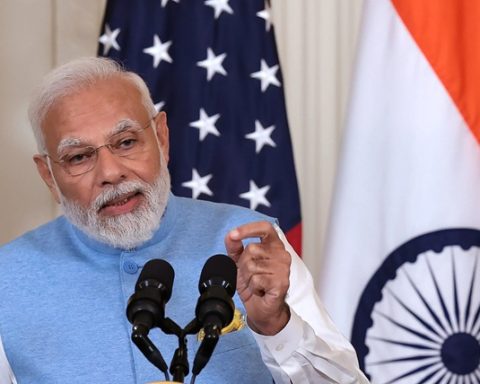
Most Indians are dissatisfied with Prime Minister Narendra Modi’s government over its handling of examination scandals that sparked widespread student protests, according to a nationwide survey conducted by one of the country’s largest polling firms.
The survey, released by CVoter on Monday, found that just over half of Indian adults polled last week said they were “not happy” with the government’s response to recent leaks involving the country’s medical examination system. The controversy led to the invalidation of tests taken by millions of candidates and ignited demonstrations that spread across the country.
The findings suggest that public dissatisfaction extends beyond the government’s political opponents. Even among supporters of the National Democratic Alliance (NDA), the ruling coalition led by Modi’s Bharatiya Janata Party, 40 per cent expressed disapproval of the government’s handling of the issue, while 44 per cent said the authorities had responded appropriately.
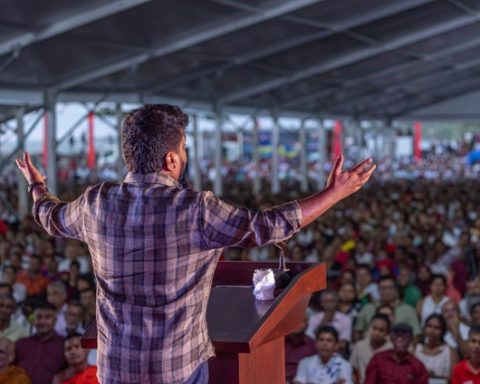
The examination scandal became the catalyst for a broader wave of youth-led protests organised by the Cockroach Janta Party (CJP). Demonstrations intensified rapidly in recent weeks, with police deploying tear gas and batons against protesters. Demonstrators accused authorities of using excessive force as rallies expanded nationwide, eventually culminating in the resignation of Education Minister Dharmendra Pradhan on July 25.
Following the minister’s resignation, CJP leaders announced plans to transform the protest movement into a nationwide campaign focused on issues affecting young people, signalling that the organisation intends to broaden its agenda beyond the examination controversy.
The survey also found strong public support for greater scrutiny of the authorities’ response to the demonstrations. Nearly two-thirds of respondents, or 63 per cent, said allegations of police brutality during the protests should be properly investigated. Support for such an inquiry also crossed political divides, with 58 per cent of NDA supporters saying the claims warranted investigation.
Despite the political turbulence generated by the protests, the poll indicates that Modi continues to retain significant support among younger voters. Nearly 40 per cent of respondents identified him as the most popular political leader among young Indians. Opposition Leader Rahul Gandhi was viewed as the most popular youth leader by almost 28 per cent of those surveyed.
The CVoter survey was conducted by telephone between Wednesday and Thursday and included 1,349 respondents aged 18 and above from across India.
While the polling suggests the examination scandal has inflicted political costs on the government, CVoter argued that the controversy represents only part of a wider challenge confronting the ruling coalition.
“Overall, the paper leak and the CJP protests have inflicted political damage on the NDA government. But they are not the main challenge,” the polling firm said.
“The real challenge is the frustration of the youth whose rising aspirations are hitting a roadblock of limited opportunities.”
The findings point to broader concerns extending beyond the immediate controversy over examination integrity. Public sentiment reflected in the survey suggests that many Indians view the protests as part of a wider expression of youth dissatisfaction, rooted in concerns about opportunity, accountability and governance.
The survey also indicates that the CJP may have gained political momentum beyond the immediate protests. Nearly half of those questioned said they would support the movement on future causes, while fewer than 30 per cent said they would not back the organisation. The results suggest that although the examination scandal has become a significant political issue in its own right, it has also evolved into a broader test of public confidence in the government’s ability to address the concerns of India’s younger generation.