Negotiations aimed at paving the way for a political transition and future elections in Venezuela are resuming this week as representatives of the government and opposition return to the negotiating table under a framework designed by the United States.
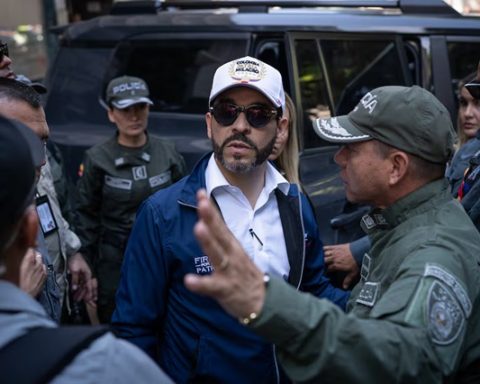
The latest round of talks will bring together Jorge Rodríguez, President of Venezuela’s National Assembly, and Dinorah Figuera, the opposition figure selected by Washington to lead the negotiations. Figuera arrived on Wednesday at Barcelona airport, around 300 kilometres from Caracas, to begin what is expected to be the first round of face-to-face discussions. Few details of the agenda have been disclosed, although upon her arrival she acknowledged the complexity of the task, saying the process would require technical expertise and that addressing the consequences of the twin earthquakes in La Guaira would be a priority.
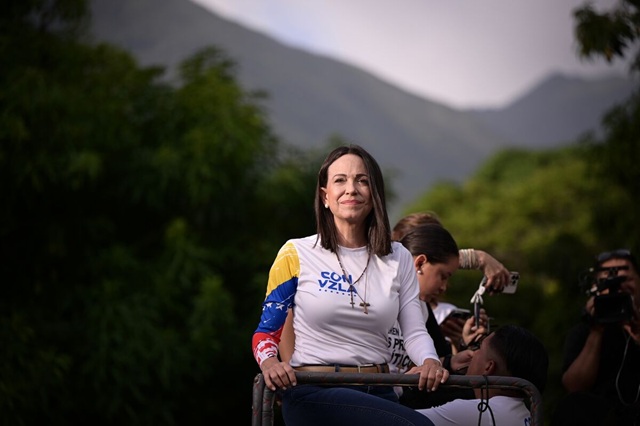
According to the framework established by the US State Department, Figuera has been appointed to negotiate with siblings Delcy Rodríguez and Jorge Rodríguez on the political reforms considered necessary to guarantee free elections in Venezuela. Among the measures under discussion are the renewal of the National Electoral Council and the judiciary, which the opposition argues has been brought under the control of the Maduro administration. María Corina Machado, the country’s most popular opposition political leader, has so far remained outside the negotiations with Washington’s approval.
The talks had initially been scheduled to begin on 1 August, but on that date Rodríguez and Figuera, who continues to reside in Spain, held only a telephone conversation. Afterwards, both sides announced separately that each negotiating delegation would consist of six members. Nevertheless, many figures across Venezuela’s political spectrum have downplayed the composition of the delegations, arguing that the negotiations are effectively taking place between the Rodríguez leadership and Washington rather than between the government and the broader opposition.
One opposition politician described the negotiating structure as little more than a façade, arguing that the main decisions had already been determined. According to that assessment, the National Electoral Council would be renewed in December, with regional governor elections expected to take place in 2027.
The opposition delegation consists exclusively of parliamentarians from Voluntad Popular and Primero Justicia who belong to the 2015 National Assembly, an institution that Figuera continues to lead. On the government side, Jorge Rodríguez is joined by four members of parliament and Higher Education Minister Ana María San Juan, a close ally of the Rodríguez siblings. Other opposition parties, excluded from the discussions despite their significance for Venezuela’s political future, have expressed reservations about the process.
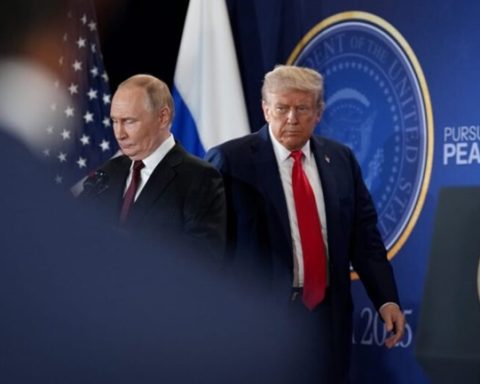
The two sides have identified three principal areas for negotiation: assistance for victims of the earthquake, strengthening democracy, and political rights and guarantees. The first issue is directly linked to the continuing legal authority of the 2015 National Assembly in the United States over Venezuelan funds and overseas assets worth billions of dollars. Those powers date back to the first administration of Donald Trump, when Washington recognised the opposition-controlled assembly rather than Nicolás Maduro’s government. The issue is regarded as a key priority for the government and is expected to dominate the opening discussions.
The remaining agenda items, largely reflecting opposition demands, remain less clearly defined. Broadly, they include proposals to renew public institutions, restore political parties that were blocked through judicial decisions, and hold elections at regional, parliamentary and presidential levels, potentially in that sequence.
The negotiations stem from the political crisis that followed Venezuela’s presidential election on 28 July 2024. Nicolás Maduro declared victory in the vote despite the opposition maintaining that official polling records demonstrated its candidate, Edmundo González Urrutia, backed by Machado, had won. The National Electoral Council and the Supreme Court, both controlled by the executive, upheld the result, while Machado continued to insist that the opposition’s tally should be recognised. According to the source material, the political landscape changed on 3 January following Maduro’s capture and the establishment of US oversight over Venezuela.
While opposition groups subsequently demanded that presidential elections be held as soon as possible, the United States instead adopted a three-stage plan that places political reforms after efforts to restore stability and economic recovery aimed at encouraging foreign investment.
US Secretary of State Marco Rubio has also spoken of the need for elections at every level of government but has urged patience, saying the process would take months rather than years. He told journalists in Washington that the objective was for Venezuela’s next government to inherit a functioning state rather than what he described as a disaster, adding that political transitions of this nature require persistence and cannot produce immediate results.
Despite raising hopes of ending Venezuela’s prolonged political crisis through free and legitimate elections, the negotiations have already exposed divisions within the opposition. The decision by the United States, with the agreement of the Rodríguez leadership, to appoint Figuera as chief negotiator has generated fresh uncertainty, particularly because it sidelined Machado after opposition parties, including Figuera’s own, had agreed in May in Panama that Machado would lead the transition strategy.
Machado has since stated that her exclusion should not prevent the transition from succeeding, although she has said she was not consulted before Figuera travelled unexpectedly to Caracas. Meanwhile, the opposition coalition known as the Unitary Platform has yet to clarify what role it will play in the negotiations, despite weeks of internal meetings. Other senior opposition leaders, including Henry Ramos Allup of Acción Democrática and Henrique Capriles Radonski of Primero Justicia, have separately called for Machado to be included in the talks.
In a recent interview with Venezuelan journalist Luis Olavarrieta, Machado said Venezuelans expected tangible results rather than further negotiations. She called for the release of all civilian and military political prisoners, unrestricted media freedom, the dismantling of institutions involved in repression and torture, and the publication of a timetable for presidential, parliamentary and regional elections. While reiterating those demands, she also accepted the possibility that elections at other levels could be held before a presidential vote, marking a departure from her previous position.