Five years after returning to power in Afghanistan, the Taliban have expanded diplomatic and economic relations with a growing number of countries despite continuing international concerns over human rights and the absence of broad formal recognition.
Russia remains the only country to officially recognise the Taliban government, while many Western governments have demanded domestic reforms on human rights before considering recognition. Yet practical engagement has steadily increased, driven largely by security, trade, migration and other immediate interests.
Inside Kabul, the Taliban’s diplomatic strategy is increasingly visible through meetings with foreign representatives and delegations. Taliban officials have hosted envoys from countries including China, Japan, Turkey, Saudi Arabia and Britain, frequently publishing photographs of the encounters.
Taliban spokesman Zabihullah Mujahid said the authorities “seek relations with all countries”, while placing particular importance on neighbouring states because of Afghanistan’s economic links with the region.
That regional focus has become increasingly significant. Officials from Tajikistan, Turkmenistan, Kyrgyzstan, Uzbekistan and Kazakhstan gathered in Kabul this year as landlocked Central Asian countries seek trade routes through Afghanistan that could provide access to the sea.
Erica Gaston, who was part of a team mandated by the UN Security Council to identify strategies for addressing challenges in Afghanistan, said regional governments had generally taken a pragmatic approach towards the Taliban.
“You had much more receptivity among regional member states to say, ‘this is the reality that we have in our region and engagement is inevitable’,” said Gaston, who heads the Conflict Prevention and Sustaining Peace Programme at the United Nations University Centre for Policy Research.
Economic considerations are also driving engagement. Taliban officials have promoted cross-border infrastructure projects as they attempt to strengthen a fragile economy that is facing the effects of international aid cuts. The government has also expanded mining activity, seeking to attract companies from China and elsewhere to Afghanistan’s largely untapped natural resources.
However, foreign investment remains limited because of the Taliban government’s lack of broad official recognition. Expectations that Iran might follow Russia in formally recognising the government have also not materialised.
At the same time, diplomatic contact has not been restricted to Afghanistan’s neighbours. Taliban officials continue to travel abroad, including a delegation that travelled to Brussels in June for discussions with 15 EU nations over the return of failed asylum-seekers to Afghanistan.
A spokesperson for the European Union said those without a legal right to remain in Europe must be returned. Germany has taken a particularly prominent position, with Interior Minister Alexander Dobrindt saying in July that the country had deported an Afghan who had not been convicted of any crime for the first time since the Taliban returned to power in 2021.
For Gaston, the passage of time has gradually changed international calculations. “More and more countries accept that this is the reality, even if it’s a reality that they don’t like or condone,” she said.
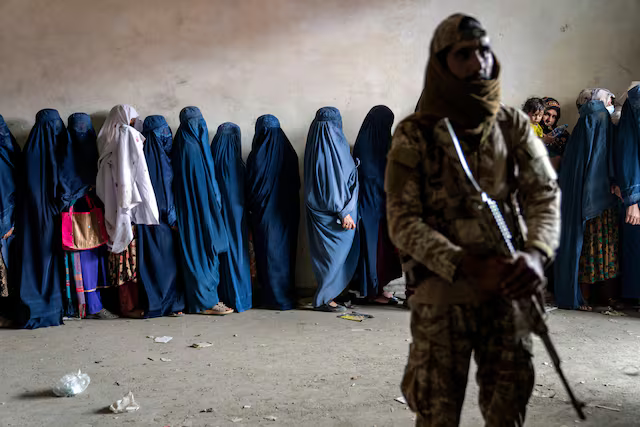
But that acceptance has not removed the central obstacles to broader international recognition. Many countries continue to restrict deeper relations until the Taliban change policies, particularly those preventing girls from continuing their education beyond age 12. No significant policy shift is currently expected.
The Taliban’s treatment of women and girls has also generated severe international legal pressure. The International Criminal Court issued arrest warrants last year for Supreme Leader Hibatullah Akhundzada and chief justice Abdul Hakim Haqqani, accusing them of crimes against humanity over the persecution of women and girls.
Afghan women also remain banned from a range of places, including UN premises, despite a visit last month by the heads of two UN agencies. A UN source in Kabul, speaking anonymously because of the sensitivity of the issue, said international influence over the Taliban remained highly dependent on the subject.
“Some of these issues are kind of fairly impenetrable, but then you have other issues on which you are able to make progress,” the source said, citing cooperation in some areas including counternarcotics and humanitarian access.
Afghanistan’s changing regional position was particularly visible during its conflict with Pakistan this year. After hundreds of civilians were killed, China hosted talks aimed at stopping the fighting, while Qatar, Saudi Arabia, Oman, Iran, Turkey, Uzbekistan and Malaysia also became involved in efforts to end the conflict.
India, despite being Pakistan’s longstanding rival, has also strengthened its relationship with the Taliban government. New Delhi secured a sanctions waiver last year allowing Foreign Minister Amir Khan Muttaqi to travel to India.
In June, India’s UN envoy Harish Parvathaneni argued that the international approach should be reconsidered, saying, “The political reality of Afghanistan has changed in the last five years, and the current UN sanctions regime must take that into account.”
The emerging reality is that formal recognition remains limited, but isolation has become increasingly difficult to sustain. As one UN source put it, Afghanistan is fully controlled by the de facto Taliban authorities, leaving the international community and the region with multiple issues that require direct engagement with them.