Australia has confirmed its first case of H5N1 bird flu in a mammal, after the highly pathogenic virus was detected in a long-nosed fur seal in South Australia, authorities said on Sunday.
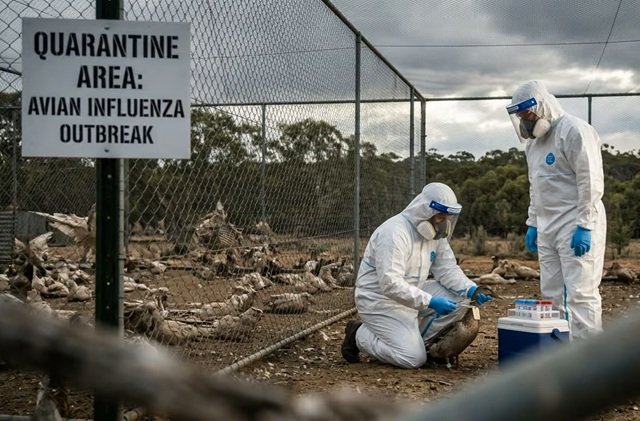
The discovery marks a new stage in an outbreak that has been spreading through Australia’s wildlife since the virus first reached the country in June. Australia has experienced rising numbers of H5 bird flu cases, with the virus initially detected in migratory seabirds before spreading to native species.
The country recorded its first mass seabird deaths from the virus this month, marking an escalation in an outbreak that has increasingly affected wildlife. The detection in a mammal adds another dimension to the spread, although authorities have not indicated that the virus has entered Australia’s agricultural sector.
South Australian authorities said the seal was found dead near the coastal town of Beachport, about 310 km (190 miles) south of Adelaide, the state capital. The animal showed no signs of injury.
The seal was one of an estimated population of 100,000 in South Australia’s waters. Authorities said its death did not appear to be connected with other sick or dead marine mammals, while federal Agriculture Minister Julie Collins warned that significant wildlife losses could become difficult to prevent as H5 bird flu spreads through the natural environment.
“Once the H5 bird flu is spreading in the natural environment it is not possible to avoid significant losses,” Collins said in televised remarks.
The detection is particularly significant because Australia had been the last continent to report bird flu, although H5N1 was detected in late 2025 on the sub-Antarctic territory of Heard Island. More than 13,000 baby seals were killed by the virus on the island, according to local media.
South Australia’s chief veterinary officer, Skye Fruean, said seals face a high risk of contracting the virus because they live in close proximity to wild birds on rocky coastal outcrops. This creates opportunities for the animals to encounter environments heavily contaminated with the virus.
“They would be coming across, no doubt, really high levels of the virus in their environment,” Fruean said in televised remarks.
Despite the detection in wildlife, H5N1 has not been found in Australia’s poultry or agriculture, according to the federal government. The government said on Friday that 297 cases had been confirmed nationwide.
The development nevertheless underscores the expanding reach of the outbreak beyond its initial impact on birds. The movement of H5N1 from migratory seabirds to native species and now into a marine mammal illustrates the growing challenge facing Australian authorities as they attempt to monitor the virus in the natural environment.
For Australia, the discovery in the seal represents a significant warning about the scale of the wildlife outbreak, even as authorities continue to report no detection of H5N1 in the country’s poultry or agricultural sector.