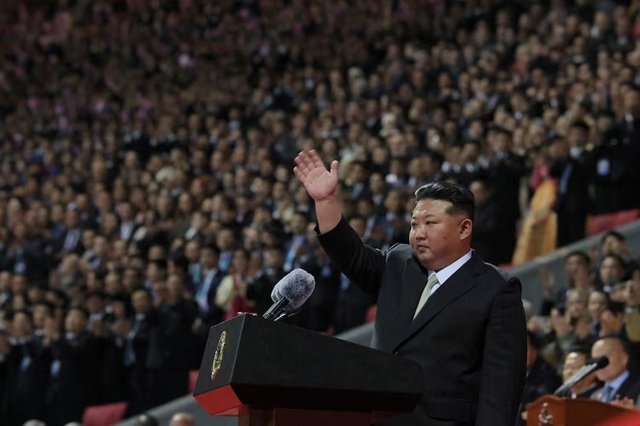
Kim Jong-un, the leader of North Korea, has reached a position few would have predicted for a country long defined by isolation and international sanctions. Donald Trump wants to meet him again, Vladimir Putin needs him to sustain Russia’s war in Ukraine, and Xi Jinping chose Pyongyang for his first — and, so far, only — foreign trip of 2026.
The result is a striking shift in the way the three major powers deal with North Korea. Rather than depending exclusively on any one of them, Kim has been able to offer each something different, creating competing interests in Washington, Moscow and Beijing. As El País reports, the North Korean leader has found a formula that allows him to exercise influence over all three.
“Kim has sought deliberately to increase the strategic value of North Korea” to several major powers, Rachel Minyoung Lee, a senior researcher in the Korea programme at the US think tank Stimson, told El País. Instead of returning to the dependency and isolation that characterised earlier years, she argues, Kim has become “expert” at turning the needs of other countries into strategic value.
This position was not necessarily the product of a master plan. Kim could not have predicted Russia’s invasion of Ukraine or that relations with Moscow would develop into a military alliance. But the war created an opportunity that Pyongyang exploited. North Korea became an increasingly important supplier to Russia, while its expanding relationship with Moscow reduced its dependence on China and weakened some of the international mechanisms designed to pressure the regime.
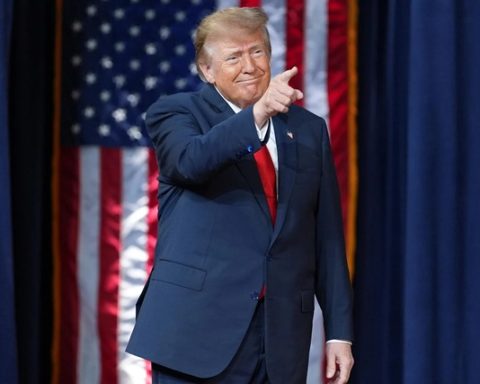
The latest indication of Kim’s growing leverage came just before US and South Korean forces began their main summer military exercises. Trump unexpectedly ordered the Pentagon to “substantially” reduce US participation, citing the cost of the exercises and his dissatisfaction with Seoul over its support during the war in Iran. He also said on Truth that the exercises made North Korea uncomfortable, describing Pyongyang as “respectful and without threatening intentions” since his return to the White House.
The Ulchi Freedom Shield exercises subsequently ended six days earlier than planned. According to El País, there had been no precedent for a joint military exercise of this scale being shortened at Washington’s request after it had already begun. For Pyongyang, which regards such exercises as preparations for an invasion, the decision amounted to a concession secured before negotiations had even begun, according to Ramón Pacheco Pardo, professor of International Relations at King’s College London.
Trump’s renewed interest in Kim comes seven years after their last handshake. The two leaders met three times between 2018 and 2019, the only meetings between a sitting US president and a North Korean supreme leader. Although those negotiations ended without an agreement, Trump continues to portray them as one of the major achievements of his first term. He has recently highlighted his “friendship” with Kim and said he is considering another meeting, possibly in the autumn when he travels to Shenzhen, China, for the Asia-Pacific Economic Cooperation summit.
Yet the circumstances have changed. Kim Yo-jong, Kim’s sister and close collaborator, has denied that negotiations are taking place, while leaving open the possibility of dialogue if Washington changes its policy towards Pyongyang. She has said that the personal relationship between her brother and Trump “remains excellent”.
North Korea, however, is no longer approaching Washington from the same position it occupied in 2018. Jenny Town, director of 38 North, told El País that Pyongyang “has options”. Cooperation with Russia is designed to continue beyond the war, while North Korea has also expanded ties with other states opposed to the West. Its relationship with China, meanwhile, has entered what Chinese and North Korean media have described as a “new historical stage”.
The war in Ukraine has been central to this transformation. Since mid-2023, the British Open Source Centre estimates that Pyongyang has sent between eight and 11 million projectiles and rockets to Russia. Ukrainian intelligence estimates that North Korean supplies have at times accounted for almost half of the artillery ammunition used by Russia at the front. Since 2024, around 15,000 North Korean soldiers have also fought in Russia’s Kursk region. Kyiv estimates that around 8,500 North Korean personnel are currently deployed in Russia, including engineers, sappers and drone operators.
“North Korea can now present itself as a country that contributes to the security of another major power,” Lee told El País. That represents a significant reversal for a state traditionally treated as a problem to be contained. The relationship with Russia deepened after Putin and Kim signed a strategic partnership treaty in 2024 requiring both countries to provide assistance in the event of aggression.
The exchange has also provided North Korea with revenue, oil, economic cooperation, combat experience for its troops and possibly military technology transfers. Russia has openly imported North Korean weapons despite United Nations sanctions and, in 2024, vetoed the renewal of the panel of experts responsible for monitoring them. The sanctions remain in place, but their principal independent monitoring mechanism has been weakened.
That growing Russian connection has also complicated China’s traditional position. Beijing remains North Korea’s overwhelmingly most important economic partner and traditional ally, but the Russian alternative gives Kim greater room to resist Chinese pressure. According to a European diplomatic source based in Beijing cited by El País, North Korea’s involvement in Ukraine has forced Chinese authorities to reconsider their calculations.
China has responded with renewed high-level diplomacy. Kim returned to China in September 2025 after six years without meeting Xi and stood alongside Putin and the Chinese leader during the major military parade in Tiananmen Square. In June, Xi travelled to Pyongyang for the first time since 2019 and, so far, his only foreign trip of the year.
For Beijing, keeping North Korea within its orbit means preserving an ally against US military presence on the peninsula, avoiding instability along its border and retaining a central role in any regional crisis. Xi reaffirmed a friendship “forged in blood” and a relationship of camaraderie and mutual trust.
But one subject was notably absent from the official readings of the meeting: denuclearisation. China has not formally abandoned that objective, but it has avoided raising it publicly as Kim insists that he will not negotiate away his nuclear arsenal.
For Lee, Kim is attempting to make North Korea impossible for the United States to ignore. Its nuclear weapons are no longer simply presented as a guarantee of survival, but also as a source of power, autonomy and international status. Town says Kim wants to be treated as “a normal actor” and to engage with the international community “on his own terms”.
Trump may be particularly receptive to that ambition. While previous US administrations have maintained complete denuclearisation as their objective, Trump has referred to North Korea as a “nuclear power”. His administration still demands denuclearisation, but the language marks a departure from the caution of previous governments and raises the possibility that negotiations could begin without an immediate demand for the dismantling of North Korea’s arsenal.
For now, Kim appears in no hurry. After strengthening ties with Russia and repairing relations with China, he has greater scope to wait and assess what Washington can offer. As Pacheco Pardo puts it, “North Korea does not want to depend on anyone”. The country that once appeared to have few choices now has several — and Kim Jong-un has shown that he is prepared to make each of them count.