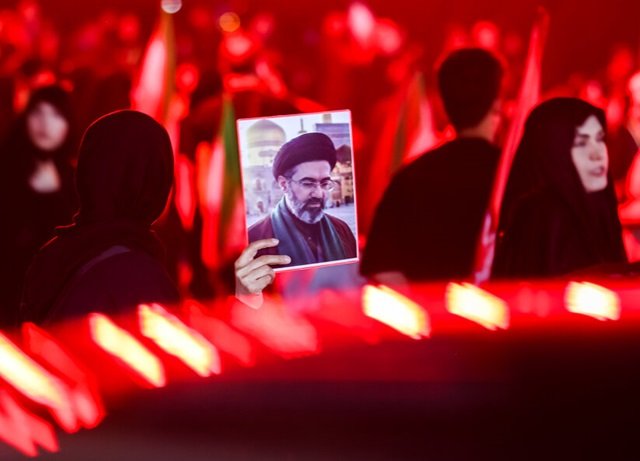
Iran’s Supreme Leader Mojtaba Khamenei has called on Muslim countries, particularly those in the Gulf, to unite against what he described as their “real enemy”, arguing that divisions among Muslims serve the interests of their adversaries.
The message was published on Khamenei’s Telegram account during Islamic Unity Week, which marks the birthday of the Prophet Muhammad. His appeal focused on greater cooperation among Muslim states, including in areas of mutual defence, while warning that those who create divisions among Muslims, “knowingly or unknowingly”, help Islam’s enemies.
Khamenei also invoked the situation facing Palestinians, asking whether they would have been left “so helpless” if Muslims had been united. His remarks linked the question of Muslim solidarity to wider regional conflicts and the divisions that have shaped relations among countries in the region.
The call comes as Khamenei remains absent from public view after being injured in U.S.-Israeli airstrikes six months ago that launched the Iran war. The strikes killed his father and previous supreme leader, Ayatollah Ali Khamenei.
His latest appeal for unity also echoes a statement he made on Friday to Iranians, in which he said he had banned actions that harm social cohesion and urged authorities to avoid “discouraging statements” that weaken national and public morale. Together, the messages placed particular emphasis on unity and cohesion, both within Iran and among Muslim countries.
Khamenei directly addressed the rulers of Gulf Arab states, questioning whether “rogues without identity” would have dared to covet their lands and possessions if the peoples and governments of the Gulf had been “united under the flag of Islam”.
The remarks carry particular significance given the long-standing tensions between Iran and the Gulf Arab monarchies. Since the 1979 Islamic Revolution, those monarchies have viewed Iran’s revolutionary ideology, including its anti-monarchic rhetoric and regional influence, as a threat to their political systems.
Those tensions have also been exposed by the present conflict. Tehran has struck U.S. military facilities as well as other infrastructure in Gulf states, further highlighting the difficult relationship between Iran and its Gulf neighbours.
Against that backdrop, Khamenei framed greater unity among Islamic countries as a means of confronting common adversaries. Rather than addressing individual disputes between Iran and Gulf states, his message called for Muslim governments to identify what he characterised as a broader threat and respond collectively.
“My emphatic and repeated recommendation to the rulers of Islamic countries, especially the countries of West Asia and the Gulf, is to identify your real enemy, understand his plan and confront it,” Khamenei said.
The appeal places Muslim unity at the centre of Iran’s message to the region at a time when Tehran’s relations with Gulf neighbours remain strained by the ongoing conflict. His emphasis on cooperation, mutual defence and resistance to division reflects an effort to frame the region’s security challenges through a broader call for Islamic solidarity.