by Our Correspondent in Colombo
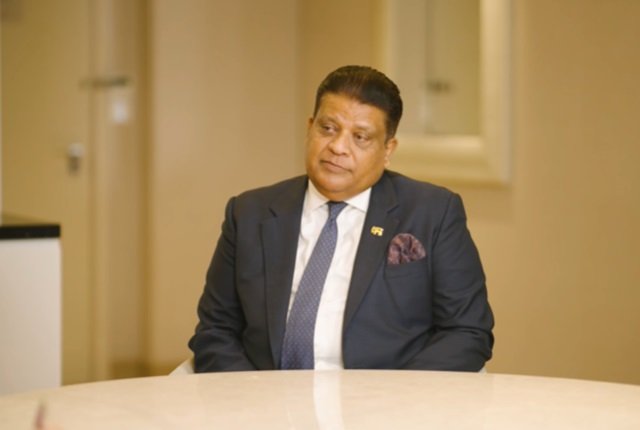
When General Shavendra Silva sat down with Ankit Chauhan, an Indian national and the founder and host of the Impact Stories podcast, the conversation quickly moved beyond military biography and into one of the most contested chapters of Sri Lanka’s modern history.
Silva was one of the commanders at the forefront of the final military campaign against the Liberation Tigers of Tamil Eelam (LTTE), which ended on 18 May 2009. He commanded the 58 Division, one of the two divisions on the ground during the final day of the war, and says he was the officer who informed the then Army Chief that the last inch of territory had been liberated and that the war was over.
For Silva, 18 May 2009 remains the defining and most emotional day of his life. For others, the final phase of the war remains associated with allegations concerning civilian deaths and the conduct of government forces. Silva rejects the suggestion that the Sri Lankan military deliberately targeted civilians and argues that its operations were conducted with an emphasis on minimising civilian casualties.
His account places particular emphasis on what he describes as the humanitarian character of the final military campaign. From 2006 until the war ended in May 2009, Silva says, his division operated under a policy he called “zero casualty” — not meaning that no one would die, but that commanders would seek to minimise civilian casualties whenever possible.
The military faced a complex battlefield. Silva says the LTTE used civilians as human shields and, during the final stages, prevented civilians from escaping towards government-controlled areas. He also alleges that the organisation used locations such as hospitals for military purposes, placing weapons and firing positions in areas where the army would be reluctant to attack.
These circumstances, he argues, forced commanders to make difficult calculations. Silva says his division possessed eight multiple rocket launchers, each capable of firing large numbers of rounds, but that he used only five rounds from the system during the entire operation because of concerns about civilian casualties and the wider consequences of indiscriminate fire. He says a single round cost 1.2 million Sri Lankan rupees, meaning that millions of rupees could have been spent within minutes had the weapons been used more extensively.
The scale of the military campaign was enormous. Silva says his division operated with almost three divisions’ worth of strength, including 26 battalions, and travelled approximately 202 kilometres along the western axis of the offensive. In one area of rice fields, he recalls, troops took almost eight months to advance roughly 15 kilometres because of sniper attacks and difficult terrain.
For Silva, the demands of the campaign were accompanied by an unusual personal discipline. “From 2006 to 2009, during the war, I was a vegetarian,” he told Chauhan. The remark came as he described the period in which he commanded the 58 Division under its motto, “Nothing Impossible”. Silva said the phrase reflected his conviction that difficult challenges could be overcome when people were united behind a common purpose.
One of the most significant episodes came in April 2009, when large numbers of civilians were trapped in LTTE-controlled territory. Silva says he planned an operation to break through and rescue them, eventually bringing more than 123,000 people out of an estimated 200,000 civilians held by the LTTE.
He also points to the surrender of more than 12,000 LTTE cadres as evidence that the military did not simply seek to kill its opponents. More than 75 per cent of those who surrendered, he says, came into the custody of his division. They were subsequently rehabilitated and returned to civilian life.
Silva argues that many LTTE recruits had themselves been victims of coercion. Children were allegedly taken from schools and families were pressured to provide members to the organisation. Some families, he says, were required to provide money or jewellery if they could not provide a child.
For Silva, this distinction between combatants and civilians is central to understanding the final stages of the war. He acknowledges that civilians died, but rejects the claim that such deaths were intentional.
He also disputes figures and interpretations surrounding civilian casualties, arguing that LTTE fighters frequently operated in civilian clothing. He recalls an “encirclement operation” in which he found one of the LTTE’s northern commanders dead, dressed in civilian clothes but carrying a weapon. In such circumstances, he argues, identifying every casualty simply by clothing could produce a misleading picture.
Yet the military victory did not end the controversy surrounding the war. Silva says the LTTE lost the battle on the ground but continued to win an international battle over the narrative.
He attributes this partly to what he describes as sophisticated LTTE propaganda networks and partly to the failure of successive Sri Lankan governments to present the military’s account effectively to the international community. In his view, the failure was not simply military or diplomatic but also one of communication: Sri Lanka, he argues, did not adequately tell its own story.
As a former ambassador to the United States and a diplomat who represented Sri Lanka in New York, Silva says he personally encountered competing narratives about the war. He recalls challenging material presented by a UK-based channel, arguing that translations of Tamil speech in the footage were incorrect and that the interpretation of events did not correspond with what had actually occurred on the ground.
He also recalls confronting allegations in meetings with people sympathetic to the LTTE. Among the claims he says were made was an allegation that Sri Lankan soldiers had used chewing gum to make women unconscious before raping them. Silva dismissed the allegation as a lie and says he challenged such claims directly.
His proposed solution is direct dialogue. Those who believe Sri Lankan armed forces committed wrongdoing, he says, should identify the specific incident, location and time and engage directly with those who were responsible for the military operations. If wrongdoing occurred, he says, it should be acknowledged.
That argument has become particularly personal for Silva because of international sanctions imposed on him. He says he has been sanctioned by the United States and was sanctioned by the United Kingdom last year. He questions what wrongdoing has been established against him and says he is prepared to answer allegations through appropriate mechanisms.
“I’m not a war criminal. I fought for my country,” Silva says.
Silva also objects to the consequences he says the sanctions have had on his family. He recalls that his two daughters, who were 12 and seven at the time, were also sanctioned. He says he has experienced difficulties using credit cards overseas and that money transferred for health insurance was frozen because of his sanctioned status.
His objection is framed in terms of professional military accountability. If he violated military law, he argues, there should be a mechanism to punish him. But he insists that he has not been shown what wrongdoing he committed.
The general also rejects attempts to portray the conflict as a simple struggle between ethnic communities. He says grievances among Tamil communities could and should have been addressed through political means, but argues that taking up arms was not a legitimate response. He distinguishes between Tamil civilians and LTTE sympathisers or members, insisting that no community or religion should collectively be blamed for the actions of an organisation.
“I don’t blame all of them,” he says, referring to the Tamil community and distinguishing ordinary civilians from those who supported or belonged to the LTTE.
His argument extends to the LTTE’s international support network. Silva says the organisation could not have developed into a sophisticated military force without overseas funding, supplies and support. He points to weapons, explosives, ships and other resources that, in his account, had to come from outside Sri Lanka. He says some people supported the organisation because of pressure on their families, while others did so because they sympathised with its cause.
Yet his own vision of Sri Lanka after the war is framed around coexistence. He recalls growing up in an environment where different ethnic and religious communities lived together and says that, immediately after the war, his division was welcomed by Muslim, Hindu and Buddhist religious institutions.
He argues that any future head of state must understand the aspirations and grievances of every community and ensure that no citizen lives in fear. For Silva, national unity does not mean ignoring differences but ensuring that all Sri Lankans have the right to live peacefully.
His memories of the final stages of the war are also tied to the civilians his troops encountered. He recalls people appealing to him for help and asking to be allowed to live peacefully. One such expression, “Master sir”, stayed with him and later influenced his choice of a song on a television musical programme.
His military career continued beyond the battlefield. He became Army Commander and later Chief of Defence Staff, one of only eight officers to hold that position during Sri Lanka’s 78-year history. As Army Commander, he says he pursued reforms including the creation of an agricultural regiment aimed at strengthening food security and self-reliance within the armed forces.
He also speaks warmly about Sri Lanka’s military relationship with India. He describes himself as, in his words, an “Indian product” in military training, having undertaken numerous courses in India, including parachute training in Agra. He says he maintained close relationships with successive Indian military chiefs, including General Bipin Rawat, General Manoj Mukund Naravane and General Manoj Pande. He also recalls attending General Rawat’s funeral.
Silva’s relationship with India is part of a wider belief that Sri Lanka’s security and future cannot be separated from its regional relationships. He describes India as Sri Lanka’s “big brother” and speaks of the close ties between the two countries’ armed forces.
But the central contradiction of Silva’s story remains unresolved: a commander who describes the final offensive as a humanitarian operation and a professional military victory remains at the centre of international controversy.
Seventeen years after the guns fell silent, Silva says the military accomplished its task on the ground. What remains, in his view, is the unresolved contest over how that war is remembered and presented internationally.
The personal cost of that war remains visible. Silva says he was thrice injured and carries 32 splinters in his body. He lost the hearing in his right ear and says a piece of metal remains near his heart. During the final days, he recalls a lorry carrying approximately 1,000 kilograms of explosives exploding near him, causing further injury.
Yet he describes himself as a happy man.
His explanation is simple: he believes he fulfilled the duty he was given, survived the war and helped bring an end to a conflict that had divided Sri Lanka for almost three decades.
He also remembers 21 May 2009, three days after the war ended, when he organised what he describes as a “gun silence ceremony” at Nandikadal and Mullivaikal beach. Firing into the air and sea, he says he declared that no bullet should ever again be fired in Sri Lanka because of terrorism or extremism. He points to the years since then as evidence that the country has not seen another terrorist bullet.
For Silva, that is the meaning of victory. For his critics, however, the end of the fighting did not settle questions about how the war was conducted or its human cost.
Silva’s account therefore represents one side of a historical argument that remains deeply contested. His challenge to the international community is direct: examine the evidence, engage with those who fought the war and judge the events not through third- or fourth-party accounts, but through evidence and dialogue.
The battlefield ended in 2009. The argument over its meaning continues.