India’s two-year-old plan to fence its entire border with Myanmar has gained renewed attention after Manipur announced it aims to complete its section of the frontier by 2028, prompting former officials and experts to question whether such an ambitious project is feasible and whether it could disrupt communities living along the border.
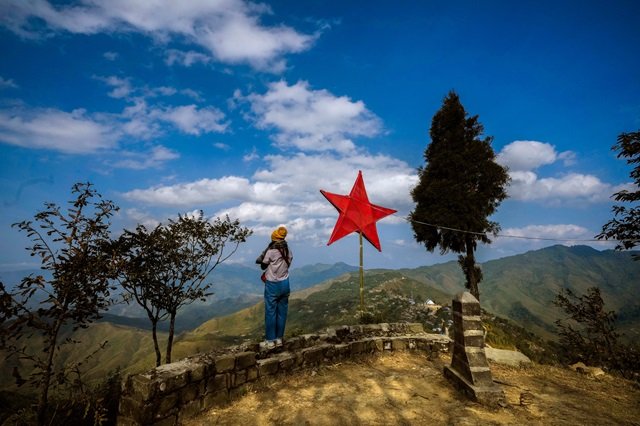
Govindas Konthoujam, Manipur’s home minister, told the state assembly on Sept. 2 that around 55 kilometres of the state’s 398-km border with Myanmar had already been fenced. The state now intends to fence the remainder within two years. The project forms part of New Delhi’s broader plan, announced in 2024, to fence the entire 1,643-kilometre India-Myanmar frontier across Arunachal Pradesh, Nagaland, Manipur and Mizoram. Little progress has been made on the wider project, which is estimated to cost $3.7 billion.
The renewed push comes as Myanmar’s civil war continues to reshape the security environment along the frontier. The conflict began in 2021 when the country’s military took power by force and has since intensified, with territorial control shifting in several areas from Naypyitaw towards ethnic armed groups, including the Kachin Independence Army, Chin forces and the Arakan Army. The instability has created additional challenges for New Delhi, including refugee inflows and the illegal narcotics trade.
“Authorities have been particularly concerned about smuggling, trafficking, gun-running, drug-running and so on,” Rajiv Bhatia, a former Indian diplomat, told Nikkei Asia.
India also announced in 2024 that it would end the free movement regime, a policy dating to 2018 that allowed people living along the frontier to cross the border without a visa. New Delhi cited security concerns in making the decision. Bangladesh, facing similar deterioration in security along its frontier, also decided in June to fence parts of its 271-km border with Myanmar.
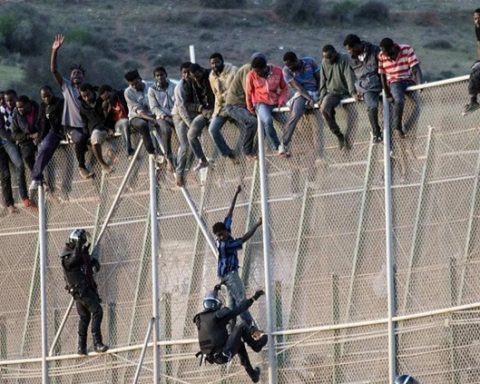
Yet the physical challenge of fencing the India-Myanmar frontier remains considerable. Bhatia, now a fellow at Gateway House, a Mumbai-based think tank, said the region’s hills, forests and rivers make a continuous physical barrier impractical. “You cannot actually fence the entire border,” he said, suggesting India would probably combine physical fencing with electronic surveillance. Even then, he estimated that the process could take “easily 10 years or so” to complete.
The security rationale has gained additional weight in Manipur following violence between the Meitei and Kuki tribes in 2023. New Delhi has said ending the free movement regime would help prevent illegal immigration, curb drug and weapons smuggling and halt the movement of insurgents across the border, which it argues worsens India’s internal ethnic violence.
But the policy has not received uniform support along the frontier. Ayan Bordoloi, a researcher at Delhi University who lives in Assam, said that while tougher border controls have support in parts of Manipur, neighbouring Mizoram has opposed them partly because communities on both sides share long-standing ethnic and family ties. People in Mizoram, he said, did not view the frontier as a conventional international border.
Gautam Mukhopadhaya, a former Indian ambassador to Myanmar, similarly argued that New Delhi’s policy reflects a failure to understand the communities living along the frontier. “It totally misunderstands our border population and tribals,” he told Nikkei Asia, describing the approach as reflecting “a highly centralized idea of India.”
He argued that many of these populations existed before the boundary between India and Myanmar was drawn and that the free movement regime had recognised their historical connections. “Hardening of boundaries will only alienate and disturb such a population and provoke border security problems,” he added.
Morgan Michaels, a research fellow at the International Institute for Strategic Studies, said fencing could address some immediate security concerns, but only “to some limited extent”. The deeper challenge, he argued, cannot be resolved by barriers alone. Addressing instability along India’s Myanmar border, he said, “requires a political settlement involving the military, opposition forces and ethnic armed organizations.”