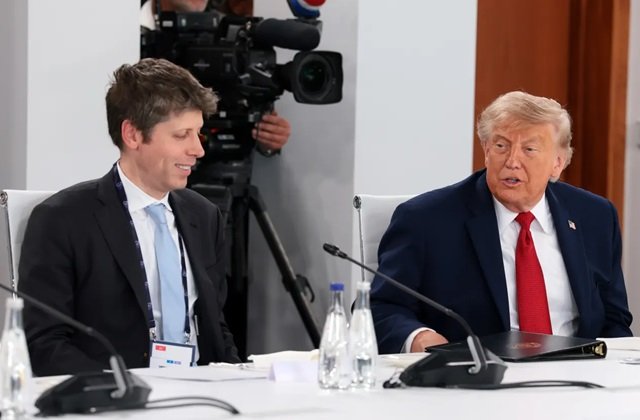
US President Donald Trump has announced plans to establish an “AI Force” to oversee artificial intelligence, signalling a possible shift towards greater government supervision of a technology whose rapid development he has repeatedly defended.
In a post on his online platform Truth Social, Trump said the “AI Force” would address the “bad” effects of artificial intelligence within the framework of existing criminal law. At the same time, he stressed that his administration would “in no way hinder or slow down the growth of this incredible industry”. He also said he would appoint an AI commissioner, described as an “AI czar”, in the near future.
The details of the proposed “AI Force” remain unclear. Its creation could represent an initial attempt by Trump’s administration to establish some form of state oversight of artificial intelligence, despite the president’s previous opposition to stronger regulation. The White House did not initially comment on the plans.
The proposed appointment would also revive a role previously held by Silicon Valley entrepreneur David Sacks. Sacks served in the position until March, when he stepped back after the period allowed for his work as an external government employee expired.
Trump’s announcement came alongside renewed criticism of those warning about the potential risks of increasingly powerful artificial intelligence systems. In his Truth Social post, he accused critics of wanting “the decimation or destruction of AI”, adding: “I, as President of the United States, will not stand idly by and allow this to happen.”
The comments followed remarks earlier in the week in which Trump described what he called a “nasty conspiracy” against artificial intelligence and data centres. At that time, he rejected calls for new nationwide AI regulations, arguing that the United States needed only a strong president to regulate the technology.
The apparent tension between those positions now places the proposed “AI Force” at the centre of questions about how the Trump administration intends to approach artificial intelligence. While Trump continues to reject measures that could slow the industry’s expansion, his latest announcement suggests that some form of government monitoring may nevertheless be considered.
The debate comes as concerns about AI safety have intensified. In recent weeks, major AI companies including OpenAI and Anthropic have themselves called for slowing the development of artificial intelligence on safety grounds. At the same time, AI data centres have emerged as an important issue ahead of the decisive US midterm elections in November.
Public attitudes towards those facilities are also becoming more contested. Increasing numbers of Americans are reported to be sceptical of data centres because of their immense energy consumption, adding another dimension to the wider debate over the rapid expansion of artificial intelligence in the United States.
Against that backdrop, the proposed “AI Force” and the planned appointment of an “AI czar” could mark a new phase in Washington’s approach to a technology Trump has continued to champion while rejecting warnings that its development should be substantially restrained.