For decades, a persistent German family narrative portrayed the aristocracy as a social class that had viewed Adolf Hitler with contempt and largely stood outside his dictatorship. Research examined by Der Spiegel challenges that account, showing that many aristocratic families contained both opponents of Nazism and committed supporters of the regime. In some cases, the same family trees contained resistance, collaboration and direct involvement in Nazi crimes.
The case of the von Gottberg family illustrates the contradiction. Wilhelm von Gottberg, born in 1940 in East Prussia and later a CDU politician and long-serving official in the organisation representing German expellees, has spoken publicly about his family’s Prussian Pietism, patriotism and heroism. In a 2021 interview with the right-wing publication Junge Freiheit, he cited relatives including Helmut von Gottberg, who was involved in the 1944 Stauffenberg conspiracy, and Anni von Gottberg, a co-founder of the Confessing Church. But Der Spiegel notes that another relative, Curt von Gottberg, became an SS-Obergruppenführer and was responsible for operations in occupied Belarus in which thousands of people were killed.
The broader aristocratic relationship with Nazism emerged from the upheaval that followed Germany’s defeat in the First World War and the abolition of the monarchy. Historian Stephan Malinowski told Der Spiegel that “no social group lost as much as the German nobility, factually and symbolically”. Article 109 of the Weimar Constitution abolished privileges based on birth or social rank, while the reduction of the armed forces eliminated military careers that had been central to the identity of many aristocratic men. The economic crisis hit the agrarian estates of eastern Germany particularly hard. Historian Heinz Reif has written that shortly before 1933, one-third of large agricultural holdings in eastern Germany were regarded as beyond rehabilitation even by progressive large landowners.
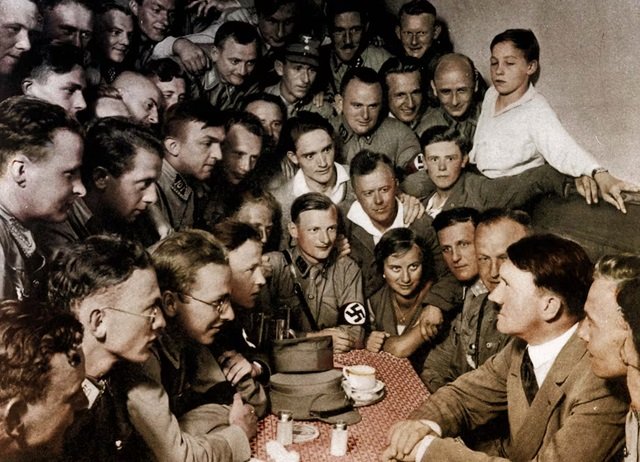
This decline produced what Malinowski describes as a mixture of “desperation and resentment”. Some aristocrats subsequently found common ground with the National Socialists in opposition to democracy, parliamentarianism, trade unions, socialism and modern social movements. The German Aristocratic Association had already introduced an internal “Aryan paragraph” in 1920. Aristocratic networks also helped bring Hitler into contact with conservative elites. The German Herrenklub, founded in Berlin in 1924 as a meeting place for conservative and reactionary elites from the aristocracy, military, business, administration and politics, became an important right-wing network during the final years of the Weimar Republic. After 1933 it intensified its links with the Nazi movement.
Curt von Gottberg followed this trajectory directly. Born in 1896 at Preussisch-Wilten near Königsberg, he had served during the First World War in the Kürassier Regiment No. 3 and the 1st Foot Guards Regiment, suffering repeated gunshot and shrapnel wounds and receiving the Iron Cross First and Second Class. After the war he remained an officer in the Reichswehr before joining the right-wing Freikorps Brigade Ehrhardt. In 1923 he participated in Hitler’s failed putsch in Munich. He later worked as a settlement entrepreneur in Königsberg and joined the Nazi movement as its political strength grew.
His wife Charlotte Kniep entered the NSDAP on 1 December 1931, with membership number 842230. Curt joined on 1 February 1932. Other members of the wider Gottberg family followed. Malinowski’s research for his study Vom König zum Führer identified 34 Bismarcks, 43 Kleists, 41 Schulenburgs and 78 Wedels who joined the party.
Curt von Gottberg entered the SA in 1931 and the SS in 1932, rising rapidly. In 1942 he became SS and Police Leader in occupied Belarus and later Higher SS and Police Leader. He commanded the Kampftruppe von Gottberg, whose operations targeted civilians as well as resistance fighters. In 1943 he ordered his forces: “In the evacuated area, people are henceforth fair game.” Historian Peter Klein told Der Spiegel that Jews and Roma were repeatedly identified alongside partisans as enemies to be destroyed, with women, children and young people also exposed to the killing operations.
During the “Hornung” operation in Sluzk on 8 February 1943, Gottberg’s report to Berlin recorded “3,300 Jews executed”, alongside thousands classified as “bandits” or “bandit suspects”. After the killing of the General Commissar for White Ruthenia, Wilhelm Kube, by partisans, Gottberg became his successor and exercised power with little supervision until the Red Army retook the territory in summer 1944. He remained loyal to Heinrich Himmler until the final weeks of the war. Gottberg was arrested by Allied forces on 31 May 1945 and killed himself while being taken to the police headquarters.
The family record also contains genuine resistance. Anni von Gottberg helped establish the Confessing Church in Potsdam in 1934 and was briefly arrested by the Gestapo in 1937. Her son Sigurd and her relative and close friend Helmut von Gottberg were involved in the circle behind the Stauffenberg assassination attempt in 1944. Yet another branch had earlier participated in right-wing violence: Anni’s brother Bogislav von Selchow took part in the 1920 Kapp-Lüttwitz Putsch, while a Freikorps under his command was involved in the killing of 15 workers at Mechterstädt.
The family’s history therefore resists a single political inheritance. Even Hans-Heinrich von Gottberg, Wilhelm’s father, initially joined the Nazi Party but later left it and belonged to the Confessing Church. His post-war denazification file described him as standing in “the sharpest opposition to the National Socialist worldview”. Wilhelm von Gottberg later became a founding member of the AfD’s Lower Saxony branch in 2013, after four decades in the CDU. Der Spiegel’s account places these divergent biographies within a wider historical record in which aristocratic resistance and Nazi collaboration existed within the same families, sometimes separated by only a few branches of the family tree.