by Our Correspondent in Hong Kong SAR
The speed of Chinese President Xi Jinping’s flight between Beijing and Washington has exposed an unusual consequence of the competing airspace restrictions imposed after Russia’s invasion of Ukraine: Chinese airlines can use Russian airspace, while American carriers cannot. The difference has added hours to US flights to China and become a source of concern for the American aviation industry, even as the issue forms part of a broader shift in the balance surrounding renewed US-China engagement.
According to flight-tracking platform Flightradar24, Xi’s aircraft arrived in the United States at about 5.40pm local time on Wednesday after a journey of roughly 13½ hours from Beijing. When US President Donald Trump made the return journey from Beijing in May, his flight took close to 16 hours. Xi’s modified Boeing 747, drawn from the Air China fleet, took about 15 hours to return to China on Friday. Trump’s Air Force One flight to Beijing in May lasted nearly 18 hours, excluding a refuelling stop of about 1½ hours in Alaska, according to US media.
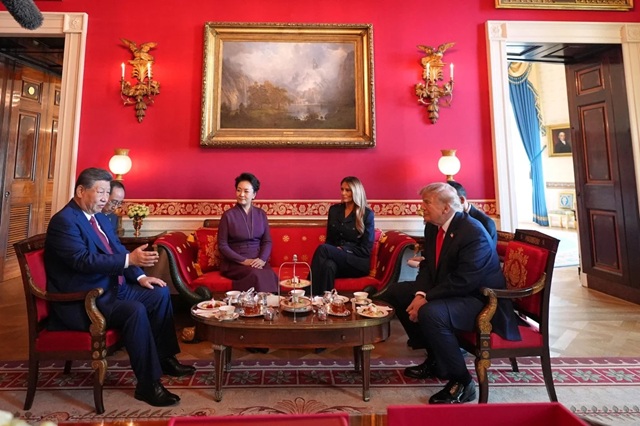
The difference was apparent to Trump himself. During private tea in the White House Red Room at the end of Xi’s three-day state visit, he remarked on the speed of the Chinese leader’s aircraft. “It’s a very fast plane … the fastest plane,” Trump said. Xi replied that the speed was due to its route: “We go by Russia, Alaska, Canada, and then into the US.” Trump responded: “That’s fantastic.”
The route is possible because Russia barred US and many other foreign carriers from its airspace in 2022, in retaliation for Western flight restrictions imposed after its full-scale invasion of Ukraine. Chinese carriers, meanwhile, are permitted to operate eight weekly round-trip US flights through Russian airspace. Russian airspace provides shorter routes between Asia, Europe and North America, reducing both flying time and fuel consumption.
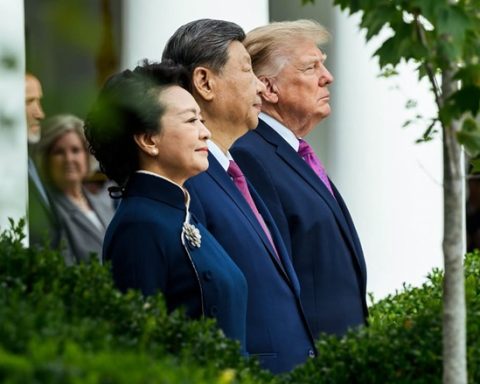
The arrangement has become contentious in the US aviation industry as Washington and Beijing seek to restore direct air links reduced sharply during the Covid-19 pandemic. Each side is currently allowed 50 weekly round-trip flights, compared with more than 150 weekly passenger round trips before restrictions were introduced in early 2020. At the White House welcome ceremony, Xi called for more direct US-China flights to facilitate travel and trade.
American carriers, however, have opposed additional flights while the Russian airspace restriction remains. Chris Sununu, head of Airlines for America, which represents American Airlines, United Airlines and Delta Air Lines, described the situation as “imbalanced” and “unfair”. “It’s not just a minor thing. It’s a huge cost to the airlines to have to go around Russia,” Sununu was quoted by Reuters as saying.
The issue has already prompted policy proposals in Washington. In October 2025, the Trump administration proposed, but later shelved, a ban on Chinese airlines overflying Russia on routes to and from the United States, arguing that shorter flight times gave Chinese carriers an unfair advantage. Beijing warned that such restrictions would damage people-to-people exchanges. Ukrainian President Volodymyr Zelensky also warned earlier this month that increased military activity was making Russian airspace increasingly unsafe for commercial airlines.
The aviation dispute comes as Xi and Trump have moved towards a more regular pattern of direct engagement. Their Washington summit followed Trump’s state visit to Beijing in May, and statements from both governments indicated that Trump would travel to Shenzhen in November for the Asia-Pacific Economic Cooperation forum, creating a third face-to-face meeting between the two leaders this year. A fourth meeting was also indicated for the December Group of 20 summit in Miami.
Experts cited by the South China Morning Post identified China’s position as host of the November Apec summit as an important source of additional diplomatic leverage. Chen Qi of Tsinghua University said Beijing would have substantially greater autonomy over agenda-setting, topic selection and preparatory work than during the Washington summit, where the United States controlled the choreography. Ali Wyne of the International Crisis Group said the meeting would allow Xi to highlight China’s economic and diplomatic influence, including among US allies and partners.
The two governments have also extended their bilateral trade truce by two months, with Washington agreeing to pause new tariffs and Beijing suspending some rare earth export controls. The White House subsequently said both sides had recommended reciprocal tariff relief covering US$30 billion of non-sensitive trade in each direction.
Yet the warmer presidential relationship has not removed wider disputes. Zhang Chi of the University of Hong Kong described the upgraded relationship as “a very successful strategic convergence”, while warning that future stability would depend on developments including US domestic politics and possible arms sales to Taiwan. Ma Bo of Nanjing University similarly cautioned that “detente at the leader level does not bind Congress, technological export controls, or the actions of America’s regional allies”.
For US allies and middle powers, the developing relationship presents another complication. Fudan University researcher Xin Qiang said countries from Tokyo to Manila were increasingly concerned about possible changes in US strategic support, while Zhang said Europe could find its own trade pressure on Beijing increasingly discordant if US-China relations continued to stabilise. The South China Morning Post reported this month that Washington was considering delaying a US$14 billion Taiwan arms package until after the Apec and G20 summits, adding another unresolved issue to an increasingly crowded US-China agenda.