


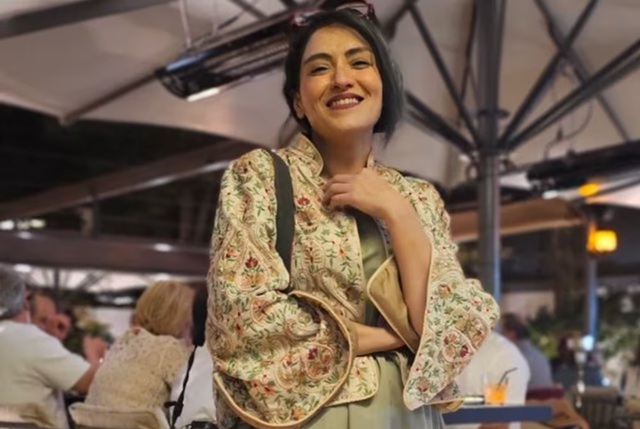
Iranian photojournalist Yalda Moaiery, 44, has been sentenced to 15 years in prison after documenting protests and civilian suffering in Iran, a punishment she says was imposed because she continued to work independently and communicate with international media. The sentence, issued in July, is under appeal, although Moaiery says her lawyers have little hope that it will be overturned.
Moaiery said the court accused her of trying to assist “Zionism” by sending photographs to foreign media. After she published a six-page report in Le Monde in February, authorities raided her home. Following the outbreak of war, they entered her apartment again, confiscated her cameras and told her she was forbidden to take photographs during the conflict. She said she had photographed civilians rather than soldiers or military installations, including people trapped beneath bombed buildings.
“I think they wanted me to stop working,” Moaiery said. Authorities later prevented her from photographing the funeral of Ali Khamenei, Iran’s supreme leader. “I told them that if they wanted me to stop taking photographs, they would have to kill me,” she said. “They are sending me to prison so that I cannot work.”
Moaiery said she has continued speaking to international media despite the risk. She has appeared on outlets including CNN, which Iranian authorities consider hostile, and said officials summoned her after her sentence became public and urged her to stop communicating with foreign organisations. She believes her photographs carry particular significance because she signs them with her name and does not submit to official propaganda.
“While I am free, I will continue working,” she said. “I think giving interviews to international media will help me.” She said she has never sought official press accreditation because accepting it would place her under the authorities’ control.
Moaiery, who has covered wars and said she opposes them, described a significant change in public attitudes during the seven months of conflict. She said many Iranians were initially pleased when the war began on 28 February, believing that promised assistance from Donald Trump was arriving and welcoming the deaths of Khamenei and senior Islamic Republic commanders and officials. But she said public sentiment shifted as civilian casualties mounted and large numbers of people lost their homes.
She cited the attack on a school in Minab, where 156 people were killed, most of them children, as an event that contributed to opposition to the war. She also said the conflict had strengthened the Islamic Republic and produced a harsher form of repression. “The Islamic Republic is a way of thinking and you cannot overthrow it by killing people,” she said.
Moaiery said the security forces had become markedly younger. After 24 years of interrogations, she said that until about a decade ago her interrogators were generally middle-aged or older. She now encounters members of the Islamic Revolutionary Guard Corps who are, in her description, no more than 24 years old and focused on punishing and humiliating her. She said she received the maximum sentence for the charges against her because authorities argued that Iran was facing an especially difficult situation.
She also described what she said was intensified pressure on students, journalists and activists. Students who meet foreign embassy officials without informing the Revolutionary Guard, or seek information about overseas study programmes and scholarships, can face detention and restrictions on continuing their education, she said.
The January protests, which Moaiery documented, were marked by what she described as unprecedented levels of violence. She said authorities used new forms of tear gas, including varieties made in Iran and Germany, that severely impaired breathing and visibility. She also said security forces began firing from rooftops during large demonstrations, sometimes targeting children within families.
Moaiery was previously imprisoned after covering the protests following the death of Jina Mahsa Amini in 2022. She spent one month in solitary confinement in the Revolutionary Guard section of Evin prison and two months in Qarchak women’s prison. She said Qarchak housed 160 women in a facility designed for 50, with shortages of food and water and inadequate toilet facilities and oxygen.
Her current photographic project focuses on the psychological condition of Iranians. She said many people are taking medication and seeing psychologists, while widespread despair has led people to withdraw from social life. “The Iranians are desperate and prefer to be alone,” she said.









