by Nil
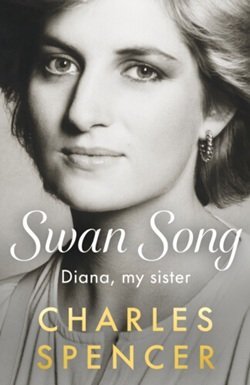
There is something almost unsettling about the fact that Charles Spencer’s most intimate book about Diana begins, in effect, with a question of possession: who knew her best? His mother, Spencer writes, “told me many times that she felt I knew Diana better than anyone else in the world” (Introduction). That sentence is more consequential than it first appears. It establishes the book’s central authority not as archival, constitutional or investigative, but familial. Spencer does not claim privileged access because he has discovered new documentary evidence about Diana; he claims it because he was her brother. Swan Song: Diana, My Sister is therefore built upon an extraordinarily powerful but unstable proposition: that intimacy confers truth. The book’s great strength and its greatest intellectual weakness arise from precisely the same source. Spencer was there. He remembers. He loved her. But memory, particularly memory shaped by grief, resentment and nearly three decades of hindsight, is not the same thing as proof.
The book is at its most compelling when Spencer refuses the polished mythology of the Spencer childhood. Behind the aristocratic architecture lies a family life marked by abandonment, cruelty and emotional dislocation. “We had a succession of nannies,” he recalls, “most of whom were kind. Two proved to be abusive” (Chapter Two). The details become almost unbearably physical: one nanny would “grab us both by the hair and bang our heads together” (Chapter Two), while another allegedly administered laxatives to Spencer’s sisters for “her own perverse reasons” (Chapter Two). These memories matter not merely as shocking anecdotes but because Spencer uses them to reconstruct the emotional formation of Diana. The princess did not emerge from an uncomplicated fairy-tale childhood into an unhappy marriage. She came from a household already marked by fractured attachment, adult absence and experiences over which children possessed almost no control.
The tragedy of John Spencer deepens this argument. Spencer’s recollection that his infant brother “sounded more animal than human” when crying (Chapter Eight) is devastating precisely because the sentence is so observational rather than theatrical. More revealing is the family’s inability to confront his death: “My mother had neither seen him up close nor held him” (Chapter Eight). Spencer interprets this as a “terrible error” and connects the episode to the subsequent collapse of his parents’ marriage. Yet here the memoir also exposes its own methodology. The book repeatedly moves from recollection to interpretation without always marking the boundary between them. “The family tragedy festered in my parents’ marriage,” Spencer writes (Chapter Eight). It may well have done so. But the authority of the sentence derives principally from retrospective family understanding, not from an independently demonstrable causal history. Swan Song is strongest when it acknowledges that distinction and weakest when it quietly erases it.
That problem becomes more pronounced when Spencer turns to the mythology surrounding his parents’ divorce. His insistence that his father never physically abused his mother is emphatic: “Never, in what was a charged case, did my mother allege any form of physical abuse by my father” (Chapter Eight). He calls the contrary allegation “an appalling lie” (Chapter Eight). The force of his anger is understandable, but the passage reveals the book’s larger ambition: Spencer is not merely remembering Diana; he is prosecuting the accumulated interpretations of his family. He wants to correct the record, but correction and exoneration are not always the same intellectual exercise. His testimony deserves attention precisely because it is testimony, but the memoir occasionally treats testimony as though it were the final court of historical appeal.
Nowhere is this more striking than in Spencer’s portrait of Charles. The book’s Charles is not a tragic or conflicted royal figure but an emotionally stunted presence, capable of startling pettiness. Spencer recalls him saying, “You’re so lucky!” after their father’s death, apparently referring to the inheritance of Althorp (Chapter Ten). He describes Charles stamping his foot “very much like a child; and a petulant one, at that” (Chapter Ten), before launching into the accusation: “That’s the problem with your family. They’ve got no bloody sense of duty!” (Chapter Ten). These scenes have enormous narrative force because Spencer understands the mechanics of character assassination better than many professional biographers do: he lets small gestures do the work. Yet his judgement is also unmistakably personal. “I have always taken to be his pent-up contempt for Diana” (Chapter Ten), he writes. The phrase “I have always taken” is revealing. It is an admission that what follows is interpretation, not direct access to Charles’s interior life.
The same difficulty shadows Spencer’s account of Diana’s marriage. His recollection that Charles told her she was “a bit chubby” (Chapter Sixteen), followed by the extraordinary claim that her waist shrank from 29 to 23½ inches between engagement and marriage, provides a powerful illustration of the vulnerability surrounding her appearance. Spencer writes that Diana’s eating disorder had already begun five months before her wedding (Chapter Sixteen), and later admits with painful honesty: “I still wish I had done more” (Chapter Nineteen). This self-indictment is among the book’s most valuable passages because Spencer does not place every failure outside himself. He recognises that telling Diana she looked beautiful when she had lost an unhealthy amount of weight “was far from helpful” (Chapter Nineteen). The memoir becomes more credible whenever its author implicates himself in the story rather than simply distributing blame among the royal family and the press.
Indeed, Spencer’s account of Diana’s psychological fragility is one of the places where the book transcends royal gossip. He recalls her anorexia, bulimia and suicidal despair, including journeys to Beachy Head while contemplating “ending it all” (Chapter Sixteen). Yet these passages also raise an ethical question about the retrospective use of another person’s private suffering. Spencer clearly believes that disclosure protects Diana’s memory by explaining the forces acting upon her. But explanation can itself become a form of exposure. The book repeatedly confronts this paradox: the brother who wants to protect Diana’s dignity must reveal some of the most intimate humiliations of her life in order to explain why she needed protection.
The most incendiary target is the media. “I always believed the press would kill her in the end,” Spencer declares (Chapter Three). Later he states that the paparazzi “had recklessly endangered, then snuffed out, Diana’s life” (Chapter Three). This is emotionally comprehensible, and the book’s descriptions of photographic intrusion are among its most disturbing passages. Spencer recalls Diana whispering, “Keep calm – whatever you do, don’t lash out!” as photographers surrounded them (Chapter Thirteen). He also describes a photographer taking pictures of Diana’s dying former governess in hospital (Chapter Fourteen). The cumulative effect is not an abstract critique of celebrity journalism but an indictment of an economy in which Diana’s suffering increased the commercial value of her image.
Yet Spencer pushes the argument much further when discussing the Paris crash. His claim that the paparazzi were “without doubt, the leading cause of Diana’s death” (Chapter Twenty-Five) is not simply a moral criticism of intrusive journalism; it is a causal thesis. He then constructs a second causal chain from the Panorama interview, asserting that he can “draw a direct line between this Panorama interview and Diana being driven by Mohamed Fayed’s Henri Paul in Paris” (Chapter Twenty-Five). This is where the book’s evidentiary standards become most vulnerable. The narrative power of a “direct line” is considerable, but historical causation requires more than proximity, sequence or retrospective coherence. Spencer is at his most controversial precisely because he converts a series of morally repellent events into a single explanatory architecture.
The Martin Bashir episode nevertheless provides some of the book’s strongest investigative material. Spencer recalls being shown “a forged bank statement” (Chapter Twenty-Five), being told that Charles wanted members of the Spencer family harmed, and being reassured by Panorama’s executive producer that Bashir was trustworthy. “So I did,” Spencer writes after being told, “you can trust everything that he says” (Chapter Twenty-Five). The sentence is devastating because it captures how deception operates through institutional credibility. Spencer did not simply believe Bashir; he believed the BBC’s authority behind Bashir. His account of the forged documents and the manipulation surrounding Diana’s interview consequently becomes an argument about institutions as much as about one journalist.
But Swan Song repeatedly threatens to become the very thing it condemns: a highly sophisticated machine for controlling Diana’s narrative. Spencer insists that his duty was simple: “I must always remain the same little brother – the same ‘Carlos’ she had known” (Chapter Nineteen). That is touching, but it is also the book’s governing conceit. Carlos is simultaneously brother, witness, protector, interpreter and prosecutor. He tells us that he would “never shirk from telling her the truth” (Chapter Nineteen), yet Diana cannot answer back. The memoir therefore gives Spencer an extraordinary advantage: he speaks in a dialogue whose other participant is permanently silent.
This is why the book’s most revealing passages may be those in which Spencer hesitates. “I have wondered since whether mine was the correct reply,” he admits when recalling the Queen’s posthumous offer to restore Diana’s HRH title (Chapter Twenty-Seven). Such uncertainty is precious. It complicates the otherwise stark moral geometry of the book. Likewise, his admission that “anger was very much a secondary emotion” during Diana’s burial (Chapter Twenty-Seven) briefly allows grief to exist without being converted into accusation. These moments suggest a more interesting book beneath the polemic: a memoir about the impossibility of protecting someone after their death.
Swan Song should therefore not be read simply as another instalment in the endless Diana industry. It is a peculiar hybrid of family memoir, aristocratic autobiography, royal indictment and grief narrative. Its most serious contribution lies not in proving every allegation it advances, but in showing how memory itself becomes contested territory when the dead are globally famous. Spencer wants to rescue Diana from the institutions that, in his view, misunderstood and exploited her. Yet he must also confront the uncomfortable possibility that no biography, however intimate, can finally liberate its subject from interpretation.
The book ends, fittingly, not with an argument but with a compliment from Bill Clinton: “she was a very, very great lady, your sister” (Chapter Thirty). Spencer recognises that the tribute was more powerful than anything he could have composed. That moment contains the strange truth of Swan Song. After more than three decades of competing narratives, Spencer still wants the final word on Diana. But the book itself demonstrates why there can never really be one. Diana belonged to a family, a monarchy, a marriage, a media industry and, eventually, to public memory. Spencer’s achievement is to make the family speak again. His limitation is that, in doing so, he sometimes speaks so loudly for Diana that the silence he is trying to protect becomes another form of possession.