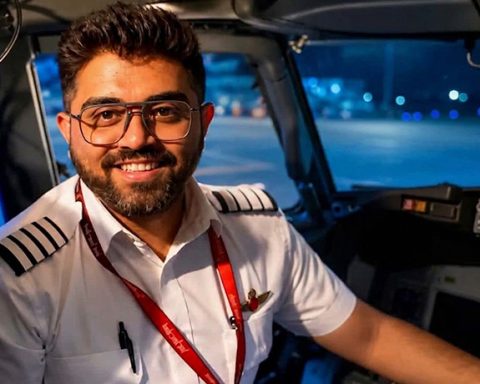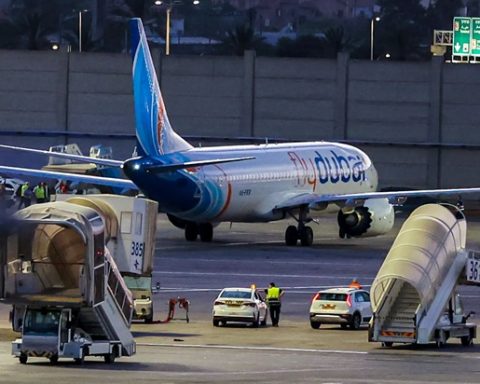
Passengers aboard a flydubai flight to Tel Aviv intervened in the cockpit after the aircraft began losing altitude and one pilot was allegedly stabbed by the other, according to testimonies reported by Haaretz. Several passengers entered the cockpit, overpowered the attacker and restrained him while other passengers with flying experience helped stabilise the aircraft before it landed safely in the Saudi city of Tabuk.
The incident involving flight FZ1073 remained under investigation, with the precise motive unclear. Initial Israeli officials said a hijacking signal had been activated following a physical altercation between the pilots. An Israeli source later said the possibility of a terror incident had not been ruled out and that investigators were examining whether one of the pilots had attempted to crash the aircraft. Israel’s Defence Minister Israel Katz described it as an attempted “jihadist terror attack”, while the source material also records uncertainty over the motive.
Passenger accounts describe a rapid deterioration inside the aircraft. Dalia Shpigel told Haaretz that about an hour before the scheduled landing, the aircraft began shaking violently and losing altitude. “We felt that the plane was out of control and starting to dive, with very unusual jolts,” she said. A woman near the restroom then saw what was happening around the cockpit and began screaming, prompting passengers to intervene.
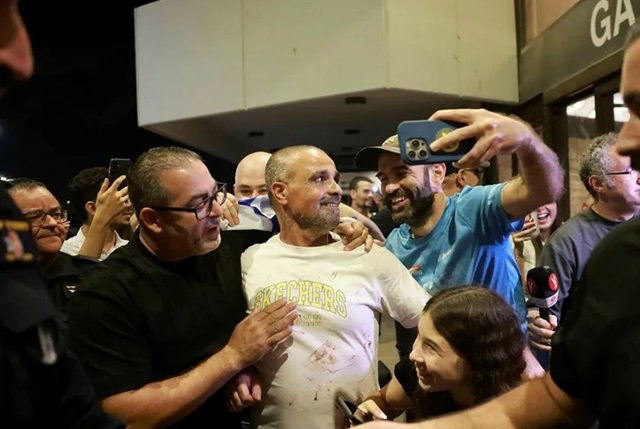
Assaf Rajwan, one of the passengers who entered the cockpit, said he reached the front of the aircraft with another passenger named Tzvika and two other men. “He and I and two other guys tried to overpower the terrorist, and we succeeded. The crew also helped us,” Rajwan said. The men restrained the attacker with zip ties. Rajwan said two British passengers who were pilots also entered the cockpit, with one, whom he identified as James, taking the controls and stabilising the aircraft.
Rajwan said he did not know what the attacker intended to do. “All kinds of stories started going around about what he wanted to do, all kinds of speculation. I know what happened, from what I saw,” he said. His account was that the aircraft had lost control and descended sharply before passengers and crew intervened. “It was multiple people acting together, it really wasn’t just me,” he said.
Yaniv Hayoun, another passenger involved in overpowering the attacker, described reaching the cockpit door with another person. The stabbed pilot was lying near the door, making it difficult to open. Once inside, Hayoun said, he saw the attacker between the two seats, while one pilot was on the floor and the other was at the instruments. “To be or not to be, as they say,” Hayoun told Prime Minister Benjamin Netanyahu when describing his decision to intervene.
Hayoun said he grabbed the attacker and put him in a chokehold, pulling him away from the controls. He then called other passengers to help restrain the man. Afterward, Hayoun returned to the cockpit and pulled back on the aircraft’s controls. “I jumped back in, grabbed the yokes and started pulling them back … and the plane started to level out a bit more,” he said. He later told Netanyahu that he had aviation experience from the television series Air Crash Investigation. Another passenger who was a pilot then took over the controls.
Zvika Mans, another passenger, told TheMarker that he and two other Israeli men entered the cockpit after his wife heard screams and called for a relief pilot. “I and two other Israeli guys went into the cockpit and neutralized the terrorist,” he said. “It was a huge miracle. The plane was already heading into a nosedive, but they managed to stabilize it.” A doctor aboard the aircraft treated the injured pilot, who was later hospitalised.
Dr Shota Musayev, a dentist travelling on the flight, said he treated the stabbed pilot after he had lost a large amount of blood. The pilot had injuries to his hands and head, Musayev said. After the attacker was subdued, passengers searched for the knife but could not find it, leading them to fear that there might be accomplices aboard the aircraft.
The passengers were eventually evacuated from Tabuk and flown to Israel on a replacement flydubai aircraft. Naomi, another passenger, said travellers had initially been told that the aircraft was flying on autopilot because there was no other pilot available. They later discovered that two British passengers were pilots and could take control. “It was a harrowing experience,” she said after landing in Israel. “I wouldn’t wish this on anyone.”
The treatment passengers received in Saudi Arabia was also prominent in their accounts. Alon Margolin said, “The Saudis were great, really, we must say. They gave us food, gave us everything we need, and thanks for that.” Naomi described the reception as being “like royalty”, adding that the experience had left her feeling as though she had been given “a new life”.
The episode has also become part of a political dispute in Israel. Netanyahu’s allies presented the incident as confirmation of warnings he had issued the previous day about possible attacks. Haaretz reported that Netanyahu had been briefed on security concerns before the incident, while the opposition questioned what action had been taken to prevent an attack if specific intelligence existed. Netanyahu’s government said his military secretary had briefed opposition leader Yair Lapid about increased “hostile activity abroad”, but that warnings about threats overseas had been routine.
The incident has also affected discussion of Israeli aviation. Haaretz reported increased demand for Israeli airlines, with Israir and El Al shares rising on the Tel Aviv Stock Exchange. Arkia chief executive Oz Berlowitz called for Israeli airlines to be permitted to resume flights to Dubai, arguing that the route should not depend almost entirely on foreign carriers. “Beyond competition and prices, there is also strategic and national importance here,” Berlowitz said. “Israeli companies have security systems, procedures and teams adapted to the Israeli reality.”