In the complicated legal situation in Pakistan, there is a disturbing paradox relating to enforced disappearances: the courts are unable to deliver justice. In order to deal with insurgency, the government is attempting to fill gaps in the legal process, a measure that was first introduced in Balochistan and is now being applied in Punjab.
Although this method is intended to simplify the process of making arrests and conducting trials, its credibility depends on thorough public oversight. Since all states must address the issue of handling suspects outside of court, Pakistan’s decisions could have a major impact on its legal and moral future.
New Legal Reforms
The Terrorism Prevention Act of 1997 is the main body of law that Pakistan uses in dealing with offenses connected with terrorism. It has, nevertheless, been found to be insufficient when it comes to bringing prosecutions against people who are linked to groups such as the Tehrik-i-Taliban Pakistan (TTP) and the Balochistan Liberation Army (BLA). As a result, Section 11-EEEE, titled “Preventive Detention for Inquiry”, was included, authorizing detention for up to 90 days to enable an investigation and the gathering of evidence before any prosecution takes place.
Provincial governments have subsequently adopted these legislative measures:
- The Anti-Terrorism Act 2025 incorporates the revised ATA 1997 into Balochistan’s legal system and includes Section 11-EEEE. This section grants powers to the authorities and Joint Investigation Teams (JITs) to investigate suspects and gather evidence within a specified time frame.
- The Anti-Terrorism Act 2026 in Punjab includes similar provisions and introduces Section 21-AAA, setting up a special security arrangement. This arrangement involves establishing Faceless Courts and improving the protection afforded to judges, prosecutors, and witnesses.
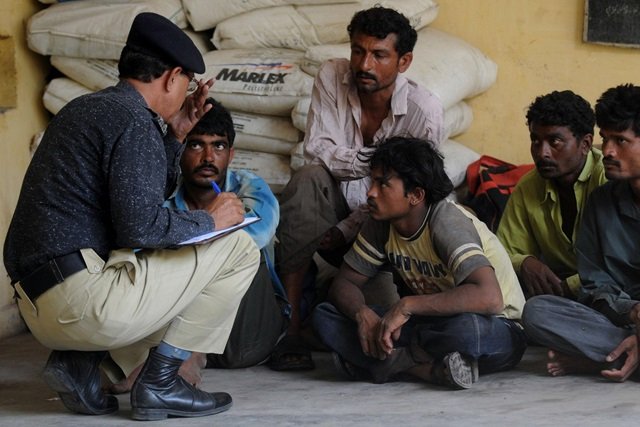
Under the relevant legal system, suspects are detained in accordance with proper procedures, their families are informed and allowed to visit them, and the suspects must appear before a judge within 24 hours. The 90-day maximum period of detention enables the police to carry out their investigations and gather evidence. If the accusations are not supported, the suspects are released; if sufficient evidence is obtained, the case proceeds to trial.
This method contrasts with indefinite detention. 90 days with defined start and end dates and judicial oversight is preferable to open-ended arrests that lack accountability. Legal systems with clear deadlines allow for judicial review, while those without deadlines avoid scrutiny.
Initial data indicate this method is effective. Since the law’s introduction in Balochistan, 90 people have been detained. Of these, 5 were released for lack of evidence, and 40 were sent for trial in the Faceless Courts. The release of suspects demonstrates procedural fairness, while referring others for trial shows that detention supports prosecution within a defined legal framework.
Judicial Performance Falls Short of Expectations
From 2001 to 2020, 8 percent of people convicted in terrorism cases in Pakistan. The total prosecution rate over the last twenty years is 8.7 percent, in sharp contrast to 88 percent in the United Kingdom, 99 percent in China, and 99.9 percent in Japan. The criminal code of Pakistan was initially created with conventional crimes in mind and not with transnational terrorism. Witnesses often come under threats, modern surveillance evidence is usually considered inadmissible, and both judges and prosecutors run a great personal risk.
The fact that fear is widespread among judicial officials is well recorded. Justice Muhammad Noor Meskanzai, a former Chief Justice of both the Balochistan High Court and the Federal Shariat Court, survived a bomb attack in 2015 but was later assassinated in Kharan in 2022. In July 2026, District and Sessions Judge Abdul Hakeem Kakar was killed in Mastung, and at the same time, Additional Sessions Judge Tariq Lashari suffered injuries. Furthermore, an Additional Sessions Judge who was handling BLA cases in Kharan was kidnapped but later freed.
The threat in question is not limited to the judiciary. It has been reported that about 50 officials of the Counter Terrorism Department (CTD) have been killed in Balochistan. For instance, when a law officer was about to give evidence concerning the July 2026 Ziarat attack, which led to the deaths of 27 police officers, his driver was shot. These actions serve as both a form of retaliation and a means of discouraging potential witnesses.
Ensuring Security without Compromising Judicial Transparency
The issue of Faceless Courts is the most controversial part of these reforms, but the basic idea is well known worldwide. In Pakistan, confidentiality for judges, prosecutors, and witnesses, together with the use of secure video proceedings, provides a practical means of protecting against intimidation and physical attacks which might otherwise prevent trials from being completed.
In the 1990s, Colombia introduced a system of “faceless judges” to handle cases involving drug trafficking, terrorism, and organized crime. The mechanism employed screens, two-way mirrors, and voice distortion technology to conceal the identities of judges, prosecutors, and witnesses, thereby reducing the risk of intimidation and retaliation.
Several countries have adopted comparable witness and judicial protection measures. Italy’s Law No. 82 of 1991 established protections for individuals assisting the justice system in cases involving organized crime and terrorism, while the United Kingdom’s Coroners and Justice Act 2009 permits Witness Anonymity Orders, including the use of pseudonyms and voice masking. France’s Law No. 2016-731, Spain’s Organic Law 19/1994, and provisions under the Netherlands’ Code of Criminal Procedure similarly safeguard witness identities in high-risk cases. More recently, Chile enacted Law 21.577 in 2023, allowing protected witnesses, informants, and undercover agents to testify without disclosing their identities.
To effectively assess the success of security measures and new legislation, their implementation must prioritize transparency and respect for fundamental rights. This entails disclosing information regarding detainees, ensuring access for families and legal representatives, and subjecting any extensions of detention to judicial review. In the absence of these safeguards, failures in prosecution may result in extrajudicial actions and enforced disappearances, while judicial inaction could empower terrorist organizations to exploit narratives of victimhood. Therefore, striking a balance between robust security legislation and the protection of rights is crucial for fostering public confidence and preventing the erosion of justice.