Israelis will mark three years since the Hamas-led October 7, 2023 attack on Wednesday, commemorating the deadliest day in the country’s history while Gaza remains devastated and a year-old ceasefire has failed to end violence or resolve the central dispute over Hamas’s weapons and Israeli troop withdrawals.
The attacks killed 1,200 people and resulted in 251 hostages being taken to Gaza, according to Israeli figures. Israel responded with a sustained bombardment and ground offensive that has killed more than 74,000 people in Gaza, according to health authorities there. Much of the territory has been destroyed, while conditions remain dire despite the ceasefire agreement intended to bring the war to an end.
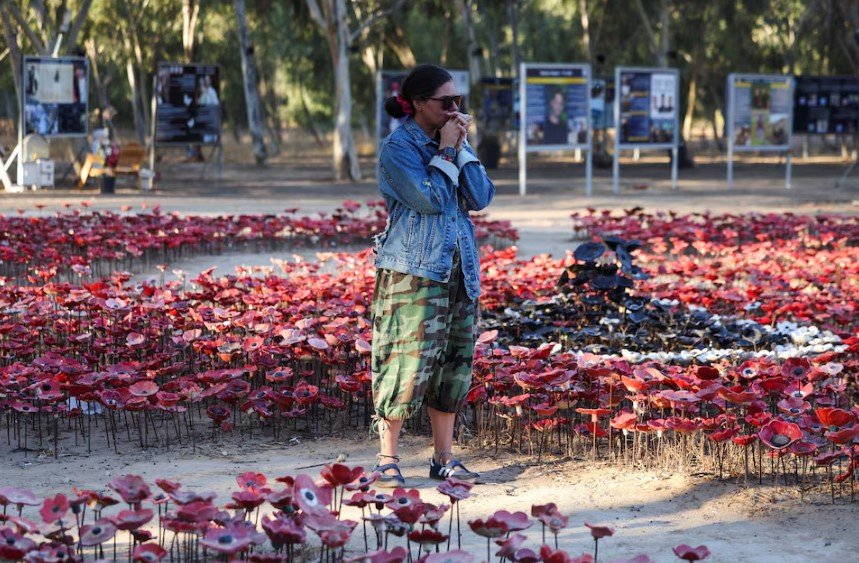
Commemorations on Wednesday will include a vigil at the site of the Nova music festival near the Gaza border, where 348 young people were killed by militants during the October 7 attack. Another anniversary event will take place at Hostage Square in Tel Aviv. This is the first October 7 anniversary since all Israeli hostages were either exchanged or recovered, with the remains of the last Israeli hostage recovered in January.
The anniversary falls only 20 days before Israel’s first election since the attacks, turning October 7 into a central political issue as Prime Minister Benjamin Netanyahu’s long tenure comes under renewed scrutiny. Netanyahu has rejected responsibility for the security breach that allowed the attack to take place and has resisted calls for an independent investigation. That position has frustrated many Israelis, including relatives of people killed on October 7, some of whom have entered the election campaign themselves.
The continuing political significance of the attack is reflected in public opinion. A poll by the Israel Democracy Institute found that 68% of Jewish Israelis regarded the events of October 7 as either a very central or fairly central factor in deciding which party to support. At the same time, election polling shows that neither Netanyahu nor his principal competitors would currently secure enough parliamentary seats to form a coalition if an election were held today.
The anniversary also comes one year after a US-brokered ceasefire agreement reached on October 10, 2025. Although the deal halted the major fighting, it has not brought a complete end to Israeli attacks in Gaza or secured an agreement on the disarmament of Hamas and other militant groups. Israel still controls about 53% of Gaza under the original arrangement, a figure that has since expanded to nearly two-thirds through Israeli military operations.
Hamas controls the remaining roughly third of the territory, where Gaza’s population of about 2 million people is largely living in makeshift tents and damaged buildings. US President Donald Trump’s so-called “Board of Peace” has proposed plans for rebuilding Gaza, but those proposals have not secured the agreement of either Israel or Hamas. Among the unresolved issues is the property rights of Palestinians whose homes were destroyed during the war.
The fundamental dispute over security and military control remains unresolved. Israel says it will not withdraw its forces until Hamas is fully disarmed. Hamas says it has accepted a phased process for surrendering its weapons but will not disarm while Israeli attacks continue. The two sides therefore remain deadlocked over the terms under which the ceasefire could develop into a lasting settlement.
Israeli military operations have continued despite the ceasefire, with Israeli forces carrying out bombing campaigns that have killed Hamas militants in recent months. Gaza health authorities say the attacks have also killed large numbers of civilians, although their figures do not distinguish between civilians and combatants. More than 1,400 Palestinians have been killed in Gaza since the October 2025 ceasefire, according to those authorities.
The military says five Israeli soldiers have been killed by militants or in combat during the same period. The figures illustrate the continuing violence despite the formal cessation of major fighting and the absence of any remaining Israeli hostages in Gaza. As Israel marks three years since the October 7 attacks, the war’s unresolved consequences remain central to the country’s political debate and to the stalled negotiations over Gaza’s future.