The death of a laboratory worker in Siberia has triggered international concern over whether Russia is concealing a serious laboratory accident involving the plague bacterium, although experts say there is currently no evidence of a wider outbreak or pandemic threat.
The case centres on Darja S., an employee of the Irkutsk Research Institute for Plague Control, who died during the night of 2 October 2026 in Schelekhow, near Irkutsk. Russian authorities now say she died from an “unknown type of pneumonia”. Initial reports, however, said she had died from plague. The conflicting accounts have left crucial aspects of the case unresolved, according to Die Zeit, whose reporting forms the basis of this account.
The independent Siberian exile outlet Ljudi Baikala reported on Monday that Darja S. had broken a test tube containing Yersinia pestis, the bacterium responsible for plague, on 25 September and had accidentally become infected with pneumonic plague. British experts consulted by the Science Media Centre questioned that specific account. Simon Clarke, professor of microbiology at the University of Reading, said it was highly implausible that a laboratory worker in a high-security facility would become infected simply through a broken test tube. “It must have gone very wrong indeed for a laboratory worker to become infected through a broken test tube,” he said, noting that such laboratories rarely use test tubes and that staff would normally wear protective suits designed to prevent infection.
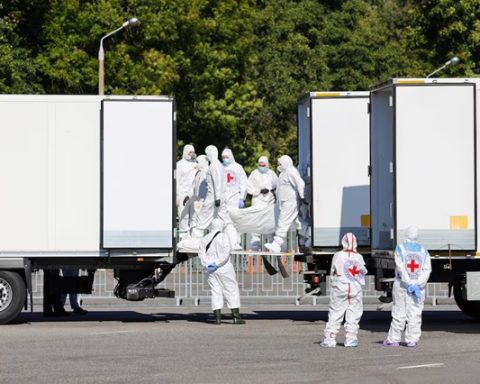
The official response, however, indicates that Russian authorities regarded the incident as sufficiently serious to impose extensive protective measures. Sibir.Realii reported that institute employees were prevented from leaving the facility over the weekend and slept on the floor. Vladimir Pushkaryov, deputy prime minister of the Irkutsk region, said 197 people who had been in contact with Darja S. were isolated and monitored.
Ljudi Baikala also reported three-day quarantines for potential contacts at several Irkutsk hospitals, including hospitals No. 1, 3 and 10, as well as a children’s hospital and a maternity hospital. The three-day period corresponds to the incubation period for pneumonic plague. The reason for involving so many medical facilities remains unclear. The outlet quoted an unnamed source as saying: “In an outbreak of pneumonic plague there is no selective quarantine; there are only restrictions for all medical facilities.”
Roman Wölfel, head of the Bundeswehr Institute of Microbiology in Munich, told Die Zeit that the authorities’ behaviour was consistent with a possible plague infection, although he stressed that the available information did not allow him to confirm the pathogen. “Based on everything that is publicly known so far, I basically have no reason to doubt that an employee of a Russian research institute became infected with Yersinia pestis in connection with her laboratory work,” Wölfel wrote. He said the response was consistent with a “suspected possible exposure to a highly dangerous pathogen” and would be handled similarly in Germany.
The Schelekhow institute is known among specialists for monitoring natural plague outbreaks and diagnosing infections. Wölfel said the facility was recognised for this work. Norwegian biologist Nils Christian Stenseth, director of the Centre for Ecological and Evolutionary Synthesis at the University of Oslo, told Die Zeit that he had met scientists from the institute at a conference in Mongolia in autumn 2025. “They are very good scientists who have an excellent understanding of the evolution of the pathogen,” he said, while adding that he had no knowledge of the laboratory’s safety procedures.
Plague remains a serious disease, although experts say its characteristics make a large international outbreak unlikely in the circumstances described. Yersinia pestis persists in rodent populations across parts of Africa, Asia, North and South America and can be transmitted to humans. Between 2010 and 2019, the countries most frequently affected included Madagascar, the Democratic Republic of the Congo, Uganda, Peru and Tanzania, while the United States recorded several cases annually. Around 4,500 cases were recorded collectively, with 17 per cent of infected people dying.
Pneumonic plague can spread through respiratory droplets, but it is considerably less transmissible than Sars-CoV-2. The short incubation period and the availability of effective antibiotics when treatment begins promptly are among the main reasons experts currently see no health threat beyond the affected region. The World Health Organization likewise assesses the risk outside Russia as very low, while calling for greater transparency from Moscow.
That transparency has instead become the central controversy. Russia’s consumer and health protection agency, Rospotrebnadzor, said the sanitary and epidemiological situation in Irkutsk and Schelekhow was stable and that there had been no outbreak of pneumonic plague. It said Darja S. died from “pneumonia of an undetermined type” and that samples contained no microorganisms “related to her professional activities”. Kremlin spokesman Dmitry Peskov urged the public to rely exclusively on Rospotrebnadzor, saying it was the “competent” authority.
Russian state media subsequently removed earlier reports. REN TV deleted five reports about the alleged pneumonic plague outbreak, while Buryatia Governor Aleksej Zydenow altered a post in which he had said that “a woman died of plague” in the Irkutsk region.
The lack of consistent information has itself become a source of concern. Virologist Konstantin Tschumakow criticised the authorities for creating “such an unnecessary secrecy around the incident”. He said that suppressing information had prompted people to buy antibiotics indiscriminately from pharmacies and that “panic is spreading”. The US government has also called for transparency. Secretary of State Marco Rubio said there were sufficient reasons “to remain vigilant and keep an eye on the matter”, while the State Department urged Russian authorities to provide more precise information quickly and transparently.
There is no concrete evidence linking the death to a biological-weapons programme, despite speculation about whether a modified, aerosol-transmissible plague strain could be involved. Such weapons were developed by both the United States and the Soviet Union during the Cold War, but experts cited in the report have found no specific evidence connecting those programmes to the present case. For now, the precise circumstances of Darja S.’s infection and death remain unknown.