US military personnel stationed on Japan’s Okinawa island have been placed under a month-long curfew and banned from drinking alcohol while undergoing discipline training after a US Marine was accused of murdering and robbing a local woman.
Lance Corporal Devin Jacob Ballard, 20, is suspected of killing Anna Yagi, 39, at a hotel in Naha, the capital of Okinawa prefecture, on Saturday and taking her wallet and backpack. Ballard has denied the allegations, according to police.
The US military has also ordered a temporary suspension of operations on Okinawa. All US military operations on the island will be paused for 48 hours while personnel undergo training on standards and discipline, Lt. Gen. Benjamin Watson said in a statement on Tuesday.
Watson said the measures were intended to reinforce the importance of maintaining trust with local communities and the wider US-Japan alliance.
“Every interaction with our neighbors either builds or undermines the trust that is essential to our team,” Watson said. “When that trust is damaged, it affects the strength of our alliance and the security of this region.”
The case has renewed longstanding unease among Okinawan residents over the presence of US troops on the island chain, which lies close to Taiwan and China and plays an important role in the security relationship between Tokyo and Washington.
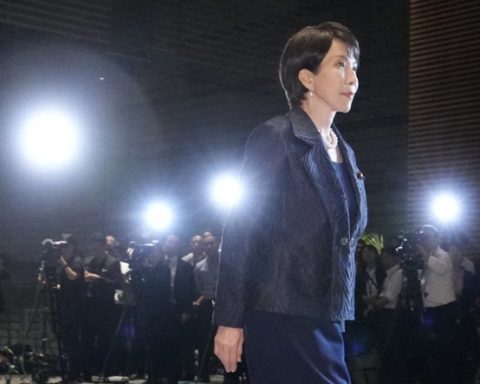
Japanese Prime Minister Sanae Takaichi described the killing as “extremely brutal and heinous” and said she had strongly protested to the United States. She demanded measures to prevent similar incidents from occurring again.
Police told the Stars and Stripes newspaper that Yagi died from asphyxiation after Ballard allegedly “pressed on her neck”.
Hotel staff discovered Yagi unconscious in her room during the early hours of Saturday after she failed to check out. Local media reported that about 200 police officers were involved in searching for the suspect after CCTV footage showed a man entering the hotel with the victim.
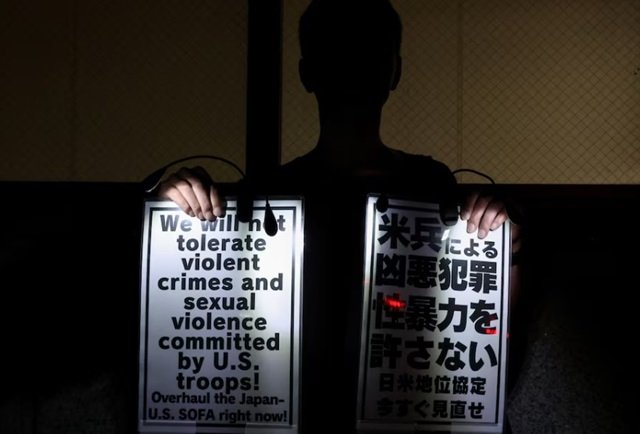
The killing has already prompted protests in Naha and Tokyo. Okinawa Governor Genta Koja was due to meet Takaichi on Wednesday to discuss the government’s response.
The incident comes amid a history of disputes surrounding the US military presence on Okinawa. Japan hosts the largest overseas contingent of US forces, with most of the approximately 18,000 US Marines based in Japan stationed on Okinawa.
The United States controlled Okinawa from the end of the Second World War until 1972. Since then, the concentration of US forces has repeatedly generated resentment among residents, particularly over aircraft noise, crashes and the conduct of military personnel.
One of the most significant incidents occurred in 1995, when three US servicemen raped a 12-year-old Okinawan girl. The crime triggered mass demonstrations and intensified demands for reductions in the US military presence.
Saturday’s killing could further complicate efforts by the Japanese government to reorganise the US military footprint on the island. Takaichi has been seeking to relocate some Marines from the heavily populated Futenma air base to a more remote facility at Henoko.
Opponents of the plan want US troops removed from Okinawa altogether, reflecting a longstanding dispute over how the burden of hosting US forces should be distributed.
The military presence also has strategic importance for both Japan and the United States. Okinawa’s closest point is about 100 km from Taiwan, placing the island near one of the most strategically sensitive areas in East Asia. Tokyo and Washington regard the US military presence there as important to deterring potential military aggression by China.
The latest restrictions therefore come at a sensitive point for the alliance. While the measures are focused on discipline and the conduct of US personnel, the murder allegation has reopened longstanding concerns among Okinawan residents about the social costs of maintaining a large foreign military presence.
For US commanders, the immediate response is centred on discipline and rebuilding trust with neighbouring communities, while Japanese officials face renewed pressure to address an issue that has repeatedly strained relations between Okinawa’s residents and the US military.