Governments and political leaders are adopting increasingly different strategies to protect themselves and the public from deepfakes generated by artificial intelligence, as the technology becomes capable of producing convincing fake videos, images and cloned voices. The measures range from criminal penalties and digital identity rights to individual attempts by politicians to secure legal control over their own voices.
The debate has intensified after a study presented at the European Parliament found that at least 46 female members of the European Parliament — one in six — had appeared in hyper-realistic but fabricated pornographic images generated with artificial intelligence. The investigation was conducted by Agora Digitale Transformation and presented on Monday. European Parliament President Roberta Metsola described the abuse as “intolerable and deplorable” and urged member states to ensure effective implementation of new European rules, take action against applications used to create such material and pursue the distribution of non-consensual sexual deepfakes.
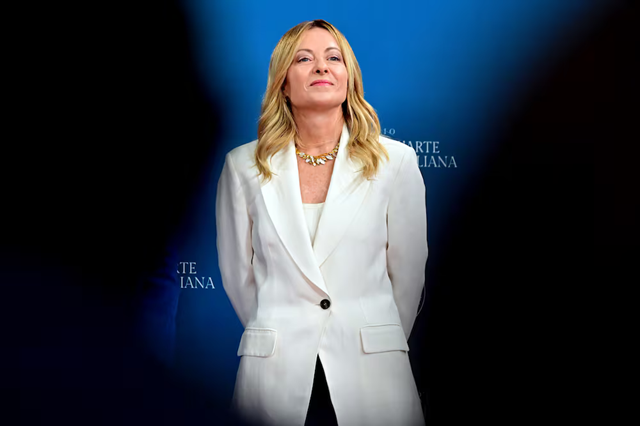
According to El País, the response from political leaders is increasingly extending beyond sexual deepfakes to the broader problem of manipulated political content. In Italy, Prime Minister Giorgia Meloni has sought a highly personal form of protection by applying to register her voice as a trademark with the European Union Intellectual Property Office. The application, first reported by La Repubblica on Monday, contains a four-second recording in which Meloni says twice, “Io sono Giorgia Meloni” — “I am Giorgia Meloni” — allowing her voice and the inflections of her timbre to be formally recorded.
The application remains under review. If approved, it could provide Meloni with additional legal mechanisms against unlawful content using her voice, including demands for material to be removed and subsequent claims for damages. But the protection would not cover every possible deepfake. Elena Gil, an AI lawyer and founder of Data Guardians, told El País that a trademark could assist with certain commercial uses but would apply only to the products or services for which the voice was registered. “It’s true that the trademark can help with certain commercial uses, but as protection is given for the products or services for which you have registered it, it is not for every deepfake,” she said.
Mexico is pursuing a broader approach. Its Senate approved, by 72 votes to 34, a reform that would penalise the use of fake videos depicting government officials. The measure, which still requires approval by the Chamber of Deputies, has been dubbed the “anti-meme law” and has faced strong opposition criticism. Opponents accuse the government of President Claudia Sheinbaum of creating an instrument that could be used to censor satire and parody through amendments to the Federal Law for the Protection of Industrial Property and the federal Criminal Code.
Sheinbaum has sought to limit that interpretation. “What is sanctioned? That the president appears in a video using artificial intelligence to commit fraud. That is what appears in the law, that crimes cannot be committed. Not political satire, not even personal offence,” she said at a morning press conference last Thursday. Luisa María Alcalde Luján, the federal government’s legal adviser, said the approved text provides for a prison sentence of five years and a fine of up to 1.173 million Mexican pesos, equivalent to about €58,000.
Legal experts disagree on whether separate deepfake legislation is necessary. Borja Adsuara, a lawyer specialising in digital law, argues that Spain already has sufficient legal protections and does not need a specific new category for deepfakes. An early election has currently suspended a proposed reform that would have banned, for the first time, videos generated without the consent of the person depicted. Adsuara argues that existing constitutional, civil, criminal and data-protection provisions already protect image and voice because both constitute personal data. The Spanish Data Protection Agency has already opened sanctioning proceedings over the use of people’s images and voices without consent.
Adsuara favours adding aggravating circumstances to existing offences rather than creating new legislation specifically for deepfakes. He argues that laws could refer to “real or realistic images”, covering material produced either by artificial intelligence or conventional tools such as Photoshop. Gil agrees that existing protections already apply but believes explicit legislation could provide greater legal clarity.
Other countries are taking different approaches. Denmark has adopted legislation giving citizens rights over aspects of their digital identity, including their voice, face and body, with provisions allowing compensation and protection against their use for AI training. The Danish framework nevertheless permits satire and parody involving AI-generated photographs or videos.
Brazil has focused more narrowly on elections. In August, its Superior Electoral Court reached an agreement with British company ElevenLabs to establish a mechanism for blocking the unauthorised cloning of candidates’ voices. The partnership is intended to address disinformation and fraud and to support judicial investigations into suspicious audio recordings by determining whether they were generated through ElevenLabs’ systems.
The differing measures reflect an emerging dispute over how existing law should respond to AI-generated deception: whether governments should create specific offences and rights for synthetic media, strengthen laws already covering fraud and misuse of personal data, or give individuals direct control over distinctive elements of their identity such as their face and voice.