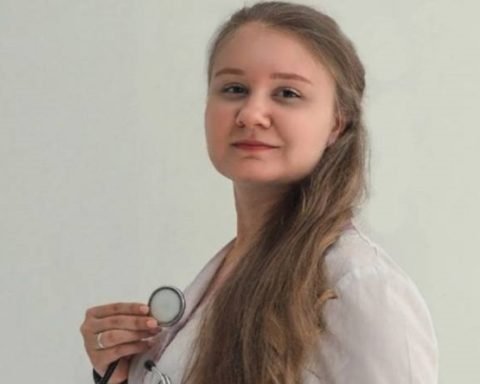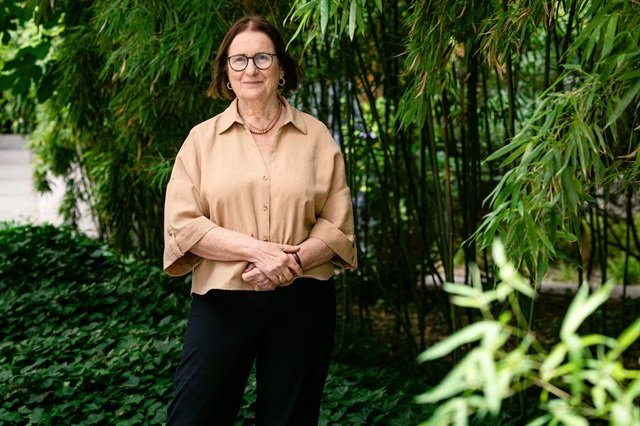
Irina Scherbakova, the Russian historian and Nobel Peace Prize laureate who spent decades documenting the crimes of Stalinism, says she has become “incredibly disappointed” with international institutions, including the United Nations and human rights organisations, as Russia’s war against Ukraine continues and prospects for political change in her country recede.
Scherbakova, born in Moscow in 1949, has lived in exile in Berlin since fleeing Russia in March 2022, one month after Vladimir Putin ordered the full-scale invasion of Ukraine. The organisation she chaired, Memorial, was founded in 1989 to investigate Stalinist repression but was outlawed by the Kremlin in 2021, while Scherbakova herself was designated a foreign agent. In 2022, Memorial received the Nobel Peace Prize alongside Belarusian activist Ales Bialiatski and Ukraine’s Center for Civil Liberties.
Scherbakova remains closely connected to Ukraine. Her paternal grandparents came from the country, while Memorial was the last Russian organisation operating in Ukraine, where it collected evidence of Stalinist repression as well as Russian war crimes in the Donbas conflict until 2019. Nothing similar is possible today, she told El País in an interview conducted at the Berlin headquarters of Memorial Zukunft, the organisation re-established in exile. She was speaking ahead of a conference she is due to give on 12 October at the Pamplona Meetings.
Her memoirs, published in Germany under the title Der Schlüssel würde noch passen (The Key Would Still Fit), reflect the rupture caused by the war. Scherbakova says she no longer expects to return to her holiday home in Sumy, Ukraine, which is now being used by Ukrainian refugees. “The war has broken so many things,” she says.
Scherbakova rejects the idea that Russian society has always been inherently authoritarian or imperialist, arguing that such a reading reduces a complicated history to a single explanation. Russia was an empire for centuries, she says, but its history cannot simply be equated with classical colonialism. She points to the failed February Revolution of 1917, which briefly offered political freedoms to the peoples and minorities of the Russian Empire, as evidence that other political possibilities existed. She also recalls that many Russians believed in equality, fraternity and social justice before the Bolsheviks transformed those promises into what she describes as “a terrible lie” that became terror.
For Scherbakova, the late 1980s provide the clearest evidence that Russian history was not predetermined. The reforms associated with Mikhail Gorbachev helped create conditions in which Ukraine and the Baltic republics could become free, while the Soviet Union collapsed without the bloodshed that accompanied the break-up of Yugoslavia. She argues that the period demonstrated that political change was possible when sections of society pushed for reform and leaders were prepared to respond.
She sees little prospect of such a transformation in Russia in the immediate future. Putin, she argues, is not prepared to end the war and still has the capacity to continue it. The conflict is pushing Russia towards what she calls an economic, moral and political catastrophe, with institutions including elections, parliament and the judiciary “completely destroyed”. She warns that a future crisis could be far more difficult and potentially more violent than the transition of 1989.
“Russia has accumulated too much violence,” Scherbakova says. She sees no genuine force inside Russia currently capable of creating a decisive resistance movement and warns that the state’s coercive apparatus has become enormous. Large numbers of ordinary people, she says, have effectively been given the power to exercise violence. How long the war lasts and how long Putin remains in power will be decisive, she argues, but she does not expect rapid change.
Her assessment of Israel and Benjamin Netanyahu is more qualified. Scherbakova says she finds Netanyahu’s relationship with Putin deeply unpleasant and is “completely convinced” that Netanyahu should be removed through elections. But she rejects comparisons between Netanyahu and Putin, or between Israel and Russia under Putin. Israel, she argues, is moving in a dangerous direction but remains a democratic country in which elections will not be fraudulent. “Israel cannot be compared with Putin’s Russia. It remains a democratic country,” she says.
Her strongest criticism is reserved for international institutions. Asked about the fact that arrest warrants have been issued by the International Criminal Court for both Putin and Netanyahu, Scherbakova says she is “incredibly disappointed” with the international sphere. She specifically condemns the United Nations for what she sees as repeated failures, citing the conflicts in Yugoslavia and Africa.
“I don’t believe in the UN, nor in human rights organisations, nor in women’s organisations,” she says. Scherbakova also recalls being in Berlin on 7 October 2023, the day of the Hamas attack, and witnessing what she described as celebrations in Neukölln. “I find that absolutely unacceptable,” she says.