China and the European Union have reached an understanding to reduce Chinese hybrid electric vehicle exports to the European market by more than half, according to statements following marathon trade negotiations in Beijing on Friday, in a move aimed at easing growing trade tensions between the two sides.
EU trade chief Maros Sefcovic said the agreement would see China reduce its hybrid car exports to the bloc by “several million cars” over four years. The arrangement offers temporary relief from a dispute that has threatened to escalate into a broader trade conflict, although details of the agreement remain limited.
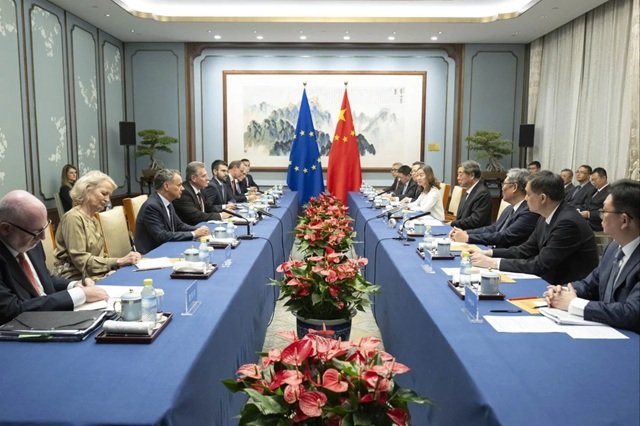
China’s commerce ministry said the two sides had reached an understanding on trade in hybrid electric vehicles and were willing to continue discussions on outstanding issues. Sefcovic met Chinese Commerce Minister Wang Wentao and Vice-Premier He Lifeng during the negotiations, which focused on growing disagreements over Chinese exports and the European Union’s response to them.
The ministry also said Beijing was “willing to continue” fast-tracking licences for rare earth mineral exports to Europe. The two sides agreed to continue negotiations on reducing tariffs and establishing minimum price arrangements that could allow Chinese electric vehicles to enter the EU market at lower duty rates.
A 16-point joint agreement published by the Chinese ministry outlined the outcomes of the latest discussions, although an equivalent statement from the European Union had yet to be issued. Many of the listed commitments concerned further negotiations on longstanding trade disputes, including those involving medical equipment and power inverters. The ministry said talks would resume in March next year.
The lack of detailed information on the hybrid vehicle arrangement leaves questions about how the export reduction will be implemented. Before the talks, Sefcovic had been pressing Beijing to cap shipments of hybrid vehicles to Europe after exports surged in recent months. His announcement of a reduction exceeding half provides a clearer indication of the intended scale of the agreement, but the available statements do not set out the detailed mechanisms for achieving it.
The negotiations took place as pressure mounts within Europe for a tougher response to Chinese exports. European governments have become increasingly concerned about the effects of rising imports on the bloc’s industries, with the dispute extending beyond vehicles to a range of manufactured goods and industrial products.
Sefcovic is due to brief EU national leaders next week on the results of the Beijing talks. The European Commission is seeking guidance on how to respond to what has become widely described in Europe as “China shock 2.0”, reflecting concerns about the growing impact of Chinese exports on European markets.
France and Germany have been pressing for stronger trade measures. A joint paper from the two governments, leaked on Monday, called for a mechanism that would allow the European Union to remove countries or companies accused of cheating on trade from the bloc’s market almost immediately.
The European Commission is expected to present a series of new trade tools before the end of the year. It is also expected to launch multiple investigations intended to curb Chinese imports rapidly in sectors including chemicals, plastics and automotive products.
The hybrid vehicle understanding therefore forms part of a wider effort to manage trade tensions while negotiations continue on other contentious issues. China has signalled its willingness to maintain discussions on rare earth exports, tariffs and minimum prices, while European governments consider additional measures to protect their markets.
Although the export reduction announced by Sefcovic represents a significant commitment, the 16-point agreement published by Beijing provides few details about its practical implementation. The two sides are expected to return to negotiations in March next year.