Australia has approved an extension of one of its largest coal mining complexes, allowing Hunter Valley Operations (HVO) in New South Wales to continue operating until 2045 despite concerns over greenhouse gas emissions and the country’s commitments under the Paris climate agreement.
The New South Wales Independent Planning Commission (IPC) approved the HVO Continuation Project in September, clearing the way for an estimated 429 million tonnes of coal to be extracted from its North and South sites. The decision followed a contentious assessment that attracted criticism from climate and environmental groups, unions and state authorities, while receiving support from political leaders and many public respondents.
In its approval statement, the IPC acknowledged that the project would “contribute to climate change impacts on the people, economy and environment of the Hunter region, NSW and globally”. However, it concluded that these impacts were outweighed by the economic benefits, including continued employment, business activity, royalties and tax revenue.
The commission said the extension would also provide economic stability for the Hunter region and support a more orderly transition for workers, businesses and communities as the coal industry changes. HVO is estimated to contribute more than A$1 billion annually to the economy. The proposal received backing from New South Wales Premier Chris Minns, Natural Resources Minister Courtney Houssos and the state’s Coalition opposition. Of more than 10,000 public submissions received by the commission, around 60 per cent supported the project.
Climate campaigners have challenged the decision, arguing that continued coal production on this scale conflicts with efforts to reduce emissions. Georgina Woods, co-national coordinator of the Lock the Gate Alliance, said the Hunter region had not done enough to prepare for mine closures while global warming continued to intensify.
“Every single year, greenhouse gas pollution resulting from this mine will wipe out all the efforts that everyone in Australia and NSW is making to reduce our own pollution,” Woods said. She described the approval as “a catastrophic failure of the New South Wales planning system to protect the people of the state from the worst impacts of global warming”.
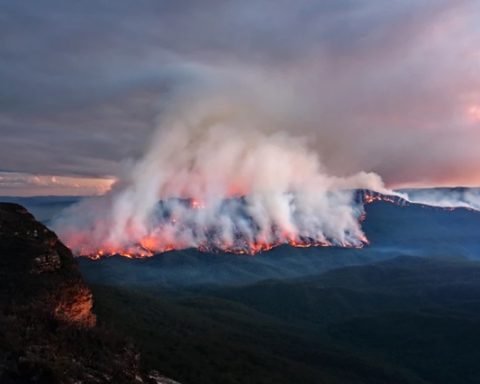
The project is expected to generate an estimated 809 million tonnes of greenhouse gas emissions over 19 years, including emissions associated with the coal’s use. A Climate Council representative warned that the consequences of fossil fuel production extended beyond national borders, saying: “What NSW exports as coal, we import back as bushfires, floods, heatwaves and droughts… Climate harm does not stop at the border, and neither does the responsibility for it.”
Coal remains a significant part of Australia’s economy and energy supply. The country produced approximately 431 million tonnes of coal in 2025, while coal accounted for around 28.8 per cent of its energy supply that year. In the Hunter Valley, the coal industry employs approximately 1,500 people.
The IPC’s approval includes conditions concerning export destinations, renewable energy use and carbon offsets. If the project receives federal environmental approval, expected before the end of 2026, the commission and HVO will need to establish a plan to manage emissions from overseas coal burning. Exports must be restricted to jurisdictions with greenhouse gas policies consistent with the goals of the Paris Agreement, while the operator is expected to pursue emissions reductions, maximise renewable energy use and purchase additional carbon offsets.
New South Wales Finance Minister Courtney Houssos said the state would maintain its legislated net-zero emissions targets while recognising coal mining’s economic importance. “We’ve got legislated net-zero emissions targets, and we will adhere to those, but we also understand the important role that coal mining has, particularly for the Hunter Valley, but for our entire state’s economy,” she said.
The extension comes weeks before Australia and Turkey co-host the United Nations COP31 climate summit in November. Both countries have faced criticism from climate activists over their support for coal development and what campaigners describe as insufficient action towards a global transition away from coal, oil and gas.