by Nil
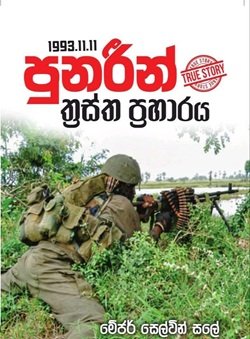
Major (Retired) Selvin Sallay’s Pooneryn Terror Attack is a significant contribution to the documentation of one of the Sri Lankan military’s most consequential encounters with the Liberation Tigers of Tamil Eelam (LTTE). Built on years of research, documentary evidence and personal experience, the book offers a detailed account of a battle whose strategic importance and human cost deserve sustained attention. It is also a powerful reminder of the value of preserving the experiences of those who served on the front lines, ensuring that the realities of war are recorded through the testimony of people who lived through them.
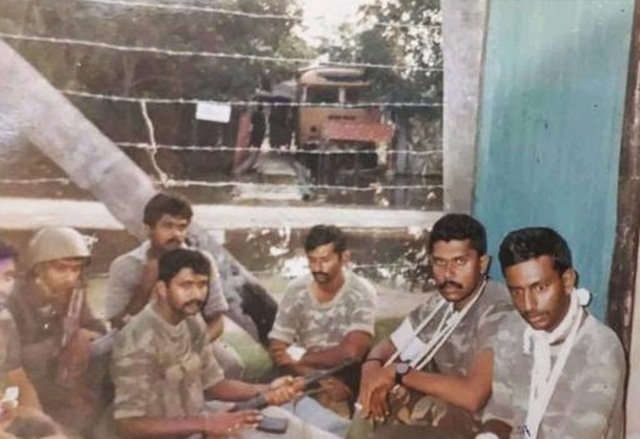
Sallay brings a distinctive perspective to this undertaking. A former Special Forces officer who was himself wounded in action, he writes with an understanding of military service shaped by personal experience. His family’s contribution to the armed forces adds another dimension to this commitment: three of its four members served in the military with distinction. This personal connection gives the project a particular resonance, while reinforcing the importance of recording the experiences, sacrifices and professional dedication of those who served the country. The book is not simply an account of a military engagement; it is also an effort to preserve a part of Sri Lanka’s military history for future generations.
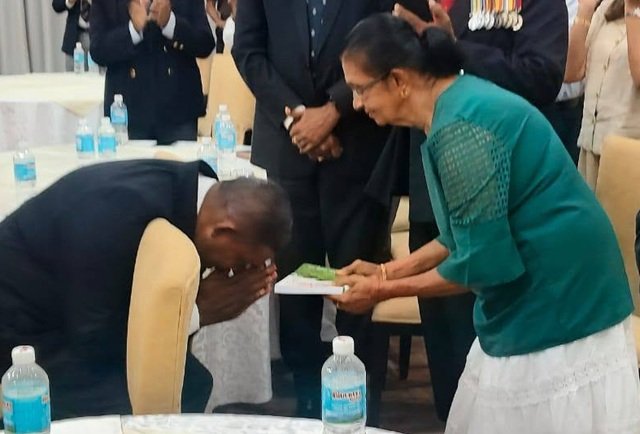
The author describes the book as the product of “years of research, evidence, documents and experiences”, and calls the battle an “unforgettable and challenging chapter”. He also presents it as “a tribute to the dedication of every soldier who served”. These words capture the spirit of a work grounded in remembrance and a determination to preserve historical detail. Meticulous research of this kind deserves recognition, particularly when it brings together documentary material, operational accounts and the experiences of military personnel to reconstruct events that might otherwise remain incompletely understood. Such contributions are essential to building a fuller historical record of Sri Lanka’s civil war.
One of the book’s major strengths is its explanation of Pooneryn’s strategic significance. By the end of 1993, the military complex reportedly covered approximately 24 square kilometres, with a perimeter extending for 26 kilometres. Its position had implications for movement between Mannar and the Jaffna Peninsula, control of the western coastline, maritime supply routes and the security of surrounding military installations. Sallay places the attack within this broader strategic context, explaining the LTTE’s objectives in relation to the A-32 road, coastal territory and the disruption of government supply lines. This attention to geography, military logistics and operational purpose helps readers understand why Pooneryn was far more than an isolated camp and why the battle became a consequential episode in the conflict.
The detailed account of the camp’s defensive arrangements adds further value. Sallay describes defensive positions along the lagoon and western seafront that were reportedly separated by intervals of approximately 400 metres. He also notes that the camp had expanded without a corresponding increase in troop strength. These details help explain the operational environment in which the defenders were required to respond to a large and carefully prepared assault. By documenting the physical layout of the installation and the conditions facing its personnel, the book provides material for understanding the challenges of defending an extensive military complex in a difficult geographical setting.
Sallay’s discussion of intelligence and reconnaissance is particularly important. Warnings had reportedly indicated, months before the attack, that the LTTE was preparing a major operation, although its precise target remained uncertain. Documents recovered from dead LTTE scouts allegedly contained observations about camp routines, weapon positions, the tank yard and radar installations. These details offer a valuable glimpse into the intelligence-gathering methods used by the attackers and the importance of reconnaissance in shaping the operation. The account also illustrates why intelligence must be understood not merely as information collected, but as a process involving interpretation, communication and operational preparation. For students of military history, these aspects make the book a useful contribution to the study of battlefield planning and preparedness.
The scale and coordination of the LTTE operation emerge clearly from Sallay’s reconstruction. He reports an attacking force of approximately 2,965 fighters and describes reconnaissance, training, coordinated land and sea movements, and efforts to prevent reinforcements from reaching the camp. The reported determination to capture a tank offers an additional insight into the psychological dimension of warfare. LTTE political-wing leader Thamalini is quoted as saying that fighters were “very much addicted to the sound of the tank engine” and hoped to capture a tank to overcome their fear of it. The episode illustrates how military equipment can acquire symbolic importance alongside its practical battlefield value, making the account relevant not only to operational history but also to the study of morale and military psychology.
Equally significant is the book’s attention to the experiences of the soldiers who endured the attack. Sallay recounts unsuccessful attempts to insert commandos by helicopter, the difficult conditions confronting those inside the camp and the eventual decision to withdraw by sea. Ammunition shortages, communication difficulties and mounting casualties form part of his explanation of the circumstances surrounding the withdrawal. A coded message — “I will have breakfast with you tomorrow morning” — reportedly conveyed the intention to withdraw, providing a striking example of the ingenuity required when communications become difficult under combat conditions. These episodes bring the human dimension of military operations into focus and help preserve the experiences of personnel whose actions and decisions formed part of a much larger campaign.
The importance of such documentation extends beyond the immediate history of the battle. Military experiences are often remembered through individual recollections, institutional accounts and broader public narratives. Detailed works based on research and evidence can help bring these strands together, giving future readers a stronger foundation for understanding events in their historical context. They can also encourage further research into operational planning, military leadership, intelligence, logistics and the experiences of those who served. By preserving specific details of the Pooneryn engagement, Sallay contributes to a record that can inform scholars, military professionals, students and readers interested in Sri Lanka’s modern history.
The book’s value lies in its commitment to recording a consequential episode through the perspective and experience of a former officer who understands the demands of military service. Its detailed reconstruction, strategic context and attention to the experiences of soldiers make it a worthwhile contribution to Sri Lanka’s military historiography. At a time when accounts of the civil war can be shaped by competing political interpretations, meticulous research grounded in documentary evidence and lived experience is especially important. Such work broadens the historical record and gives greater prominence to the facts, decisions and human experiences that shaped the conflict.
Pooneryn Terror Attack deserves recognition as a serious effort to preserve an important chapter of Sri Lanka’s military history. Sallay’s research and personal connection to military service give the book both documentary purpose and human significance. Contributions of this kind should be encouraged and expanded, so that the country’s history is informed by detailed records, first-hand experience and evidence-based scholarship rather than partial narratives alone. Preserving the experiences of those who served is not merely an act of remembrance; it is an investment in the historical knowledge available to future generations.