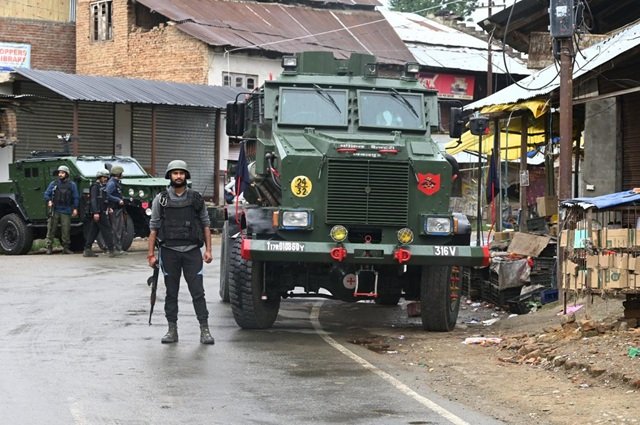
Every year, Kashmiris on both sides of the Line of Control and across the world observe October 27 as Kashmir Black Day. From the Pakistani perspective, this date marks the beginning of India’s occupation of Jammu and Kashmir in 1947, a development that transformed the region into one of the world’s longest-running and most contentious disputes. More than seven decades later, Kashmir remains a symbol of political conflict, competing historical narratives, and the unresolved aspirations of its people.
The origins of the Kashmir problem go back to the partition of British India in August 1947. With the end of British rule, the princely states were each given the option of acceding to either India or Pakistan. Kashmir, a Muslim-dominated state under Maharaja Hari Singh, was at the heart of the contest between the two countries. The Pakistan case is that the state was Muslim, was geographically in the middle of Pakistan, had cultural and economic links with Pakistan, and its accession to Pakistan was therefore a fait accompli. They point to the resolution of the All Jammu and Kashmir Muslim Conference of July 19, 1947, in favor of accession to Pakistan as proof of the prevailing popular feeling at the time.
However, Maharaja Hari Singh did not immediately proceed with accession. He was determined to remain independent and so arranged a Standstill Agreement with both of the new states. Pakistan accepted it, and India did not. As the political situation became increasingly unstable and violence spread throughout the region, the situation quickly deteriorated. The Pakistani version of events is that the Maharaja’s government launched a campaign of repression against the Muslim population, which in turn led to a huge amount of chaos and displacement.
Tribal fighters from the areas adjacent to Kashmir entered the state in October 1947. They claimed they were going in response to reports of violence against the Muslims. India viewed it as an invasion into its state and a threat to the stability of the princely state. Indian troops were air-landed into Srinagar on October 27, 1947. India says that the troops were deployed only after the Maharaja had signed the Instrument of Accession.
The legality of the accession is one of the most contentious issues in the Kashmir dispute. Several Pakistani scholars and analysts have argued that the Instrument of Accession was highly problematic and was signed under very unusual circumstances. Reference is made to the work of Alastair Lamb, who has cast serious doubt on the timing and circumstances of the accession. From this viewpoint, the very deployment of Indian forces and the accession document itself raise questions about the legitimacy of India’s claim to the area.
The 1947 events eventually led to the first war between India and Pakistan. As the fighting escalated, India went to the UN in late 1947. The matter was then discussed in the Security Council, which passed several resolutions calling for a peaceful settlement and recommending that the future of Jammu and Kashmir be decided by a free and impartial plebiscite. That is the basis of the dispute for Pakistan and many of the Kashmiris. India would argue that the political and legal situation has changed since 1947 and that the resolutions are no longer applicable.
The conflict has had a profound effect on the politics and security situation in South Asia over the years. There have been numerous wars and military confrontations between India and Pakistan, some of which have directly involved Kashmir and some of which have been directly or indirectly linked to the dispute. There has also been a long history of unrest, insurgencies, counter-insurgency operations, and allegations of human rights abuses. The effect on generations of Kashmiris has been immense as they continue to live in a state of political uncertainty and insecurity.
The situation became even more contentious in August 2019, when the Indian government abrogated the special constitutional status of Jammu and Kashmir and reorganized the state as a union territory under direct federal control. Pakistan was strongly opposed to this, calling it a breach of international obligations and an attempt to change the demographic and political character of the region. Those critical of India’s approach to the issue maintain that the changes have only served to intensify the sense of grievance among the Kashmiris and have made the prospects of a settlement through negotiation even more remote.
Kashmir is still a major flashpoint between two nuclear powers. The lack of a mutually acceptable political settlement continues to be a source of instability and periodic crises in South Asia. India and Pakistan have very different interpretations of history and of international law, and the people of Kashmir are the ones who continue to suffer as a result of the unresolved conflict.
For anyone keeping an eye on Kashmir Black Day—October 27th, it is a stark reminder of a pivotal moment in history and of the continuing struggle for self-determination. The peace that Kashmir is seeking is going to be a peace that is hard-won and will be predicated on genuine dialogue, respect for the international commitments that have been made, and a solution that is genuinely in the interest of the people of Kashmir. That is the only way the long-running conflict will ever be resolved peacefully and sustainably.