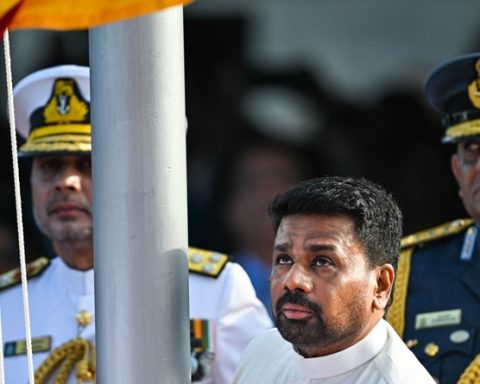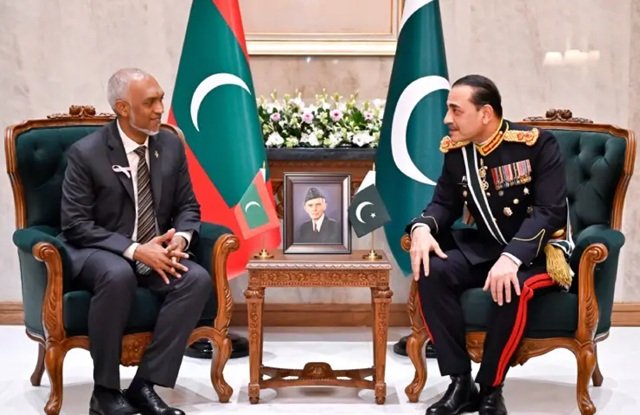
When Maldives President Mohamed Muizzu landed in Pakistan for an official visit from 20 to 22 October 2026. It is the first visit by a Maldivian head of state to Pakistan in eleven years, and it comes as the two countries mark sixty years of diplomatic relations. Analysts see it as a visible sign of a broader shift: a Maldives that now chooses its partners on its own terms.
The official program covers an unusually broad range of cooperation. Both governments have signaled that they want to deepen engagement in trade and investment, health, education, tourism and agriculture. Defense and maritime security are also on the table, along with climate change, an existential concern for a low-lying island nation whose highest point barely rises above sea level. Alongside these state-level themes sits a push for stronger people-to-people exchanges, from student placements to tourism and cultural links.
The eleven-year gap between presidential visits makes the symbolism hard to miss. Pakistan and the Maldives have long described each other as brotherly nations, bound by shared faith, and the sixtieth anniversary of diplomatic ties offers a natural moment to turn that goodwill into concrete agreements. For Islamabad, the visit is an opportunity to widen its footprint in the Indian Ocean. For Malé, it demonstrates that its foreign policy is no longer confined to a single traditional partner.
Strategic Autonomy
Experts describe this outreach as a product of strategic autonomy, a principle that moved from slogan to practice in the aftermath of the “India Out” protests. Those protests were a response to the notable presence of Indian troops on Maldivian soil. Critics of that arrangement argued that the deployment was more than a technical or humanitarian matter. In their view, India used the troop presence as a pressure tactic, one that discouraged the Maldives from reaching out to China, or to any other partner, independently.
Seen through this lens, the current diplomatic activity is the natural outcome of regained room to maneuver. A country that can host leaders from Islamabad, Beijing, Ankara and elsewhere without seeking anyone’s permission is exercising the sovereignty it believes it had long been denied.
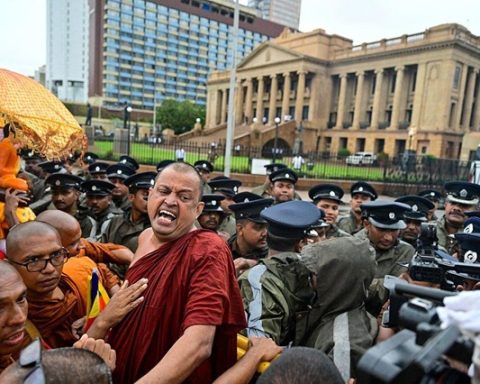
The path to this point was neither short nor smooth. The “India Out” movement took physical shape in October 2020 and intensified by late 2021. It was spearheaded by an opposition coalition led by the Progressive Party of Maldives (PPM), which framed the issue as one of national dignity and independence.
The government of the day pushed back hard. On 21 April 2022, President Ibrahim Mohamed Solih issued a presidential decree officially banning the “India Out” campaign and declaring it a threat to national security. The decree drove the movement underground, but it did not extinguish the sentiment behind it. If anything, the ban convinced many supporters that the question deserved a political answer rather than a legal one.
The Ballot Box and the Barracks
By 2023, the street protests had evolved into a central campaign strategy for the presidential election. Opposition candidate Mohamed Muizzu adopted the “India Out” stance as a primary campaign promise, turning a protest slogan into a mandate-seeking platform. His victory in late 2023 gave the demand institutional force.
What followed was swift and decisive. The new government formalized the call for troop withdrawal, and by May 2024 the Indian military personnel had formally left the islands. For supporters, the departure closed a chapter that had defined the country’s foreign relations for years. It marked the end of what they regard as Indian influence over the Maldives and the beginning of a journey toward diplomatic and strategic autonomy.
Placed against this background, the October 2026 trip looks less like an isolated event and more like a milestone in a sustained pattern. A government that campaigned on independence and then delivered the withdrawal of foreign troops is now demonstrating what that independence looks like in practice: diversified partnerships, direct engagement with a range of capitals, and agreements negotiated on the Maldives’ own priorities.
The inclusion of defense and maritime security in the talks is particularly notable. The Maldives sits astride vital sea lanes in the Indian Ocean, and security cooperation there carries strategic significance for every major regional power. By discussing these issues with Pakistan, Malé is signaling that it will decide for itself who it works with on matters once treated as the preserve of a single neighbor.
Climate change cooperation, meanwhile, reflects a more practical concern. Rising seas threaten the Maldives more directly than almost any other country, and building coalitions of support across the Islamic and developing worlds is part of its long-term survival strategy. Trade, tourism, health and education offer immediate and tangible benefits, helping the country diversify its economy and reduce dependence on any one source of investment or aid.
What Comes Next
The success of the visit will ultimately be judged by what follows the handshakes and joint statements: signed agreements, new investment, scholarships, flight connections and defense or maritime arrangements that survive beyond the news cycle. Both sides have an interest in making the sixtieth anniversary count for more than commemoration.
Whatever the specific outcomes, the broader message is clear. From the street protests of 2020 and 2021, through the 2022 ban and the 2023 election, to the troop withdrawal of May 2024, the Maldives has moved steadily toward a foreign policy defined by its own interests. President Muizzu’s visit to Pakistan is the latest and most visible expression of that journey, and a sign that the country intends to keep widening its circle of partners as a fully independent actor on the world stage.