The audience gathering at Berlin’s Haus des Rundfunks on a Friday evening looks rather different from the usual crowd at a classical concert. Many are young, and some arrive in elaborate costumes inspired by their favourite video games. One student has come dressed as Tifa Lockhart, the formidable fighter from the Japanese role-playing game Final Fantasy VII, wearing a white cropped top and red gloves. It is her first orchestral concert. Another visitor appears as a Splicer, one of the grotesquely disfigured inhabitants of the underwater city of Rapture in BioShock.
The occasion is Game on Symphony, a concert featuring the Deutsches Symphonie-Orchester Berlin in collaboration with radio3 and ARD Klassik. Its programme brings music from celebrated video games into one of the capital’s most distinguished concert halls, attracting an audience whose relationship with these compositions may be more intimate than that of the musicians performing them.
The composers behind these soundtracks rarely receive the same recognition as the celebrated figures of twentieth-century classical music. While names such as Arnold Schoenberg, Igor Stravinsky and Dmitri Shostakovich remain central to discussions of modern composition, Nobuo Uematsu, Koji Kondo and Yoko Shimomura are less frequently mentioned. Yet their music has shaped the experience of generations of players around the world. Uematsu composed for Final Fantasy, Kondo created music for Super Mario and The Legend of Zelda, and Shimomura worked on Street Fighter II and Kingdom Hearts. Their compositions began on the limited sound chips of 1980s gaming consoles before expanding into richly orchestrated scores.
For many listeners, the melodies are already familiar. The challenge lies in hearing them without the interactive experiences that originally gave them meaning. Before the performance, presenter Fridl Achten asks British conductor Michael Seal whether he is nervous. Seal replies that this is his 997th concert at the conductor’s podium. Achten then asks how many people in the audience have never played a video game. Only a few hands rise.
The programme demonstrates how readily some video-game scores can be adapted to the symphonic tradition. The main theme from Fallout 4 evokes a world devastated by nuclear catastrophe through powerful brass passages. Music from Tomb Raider accompanies Lara Croft’s struggle for survival with dramatic crescendos, while the suite from the medieval role-playing game Kingdom Come: Deliverance II draws on the lush colours of late Romantic orchestration. Much of the music recalls film scores, which themselves owe a considerable debt to composers such as Richard Wagner, Richard Strauss and Gustav Mahler.
But video-game music differs fundamentally from film music. A film generally presents a fixed sequence of images, whereas a game allows players to move through a world, make decisions, fail and begin again. The music responds to these actions, sometimes intensifying, stopping abruptly or repeating in loops. A melody may accompany a player for hours while they explore a landscape. In the concert hall, that flexibility disappears. Music designed to adapt to the player’s pace becomes a work with a defined beginning and end, detached from the environment for which it was composed.
One of the evening’s strongest performances comes from BioShock. Seal later singles out the unusual harmonies in the second half of the suite as particularly impressive. Garry Schyman’s composition, featuring a violin solo by first concertmaster Marina Grauman, retains its force even without the unsettling underwater world of the game. Here, the music succeeds on its own terms, its harmonic tensions creating an atmosphere that does not depend on the images that originally accompanied it.
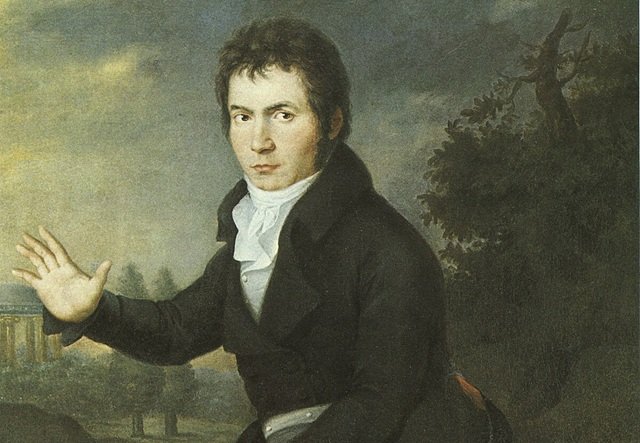
A more complicated encounter follows when the logo of the survival-horror game Resident Evil appears above the orchestra and pianist Raúl da Costa begins playing Beethoven’s Moonlight Sonata. In the game, the sonata has a practical role: performing it on a piano in a zombie-infested mansion opens a secret passage. The familiar classical work thus returns to the concert hall in the guise of video-game music.
Da Costa’s interpretation, however, blurs the sonata’s contours beyond what the reviewer considers appropriate. The delicate playing fails to generate sufficient tension beneath the music’s calm surface. Beethoven, unexpectedly, becomes a formidable final boss: a composer whose work proves difficult to conquer even when placed inside the world of video games.
The concert also challenges some of the conventions of classical performance. Applause follows each piece, and smartphones are explicitly encouraged. The event is streamed on Twitch and YouTube, allowing viewers to chat in real time and vote on the encore. Yet the effort to make the music accessible through digital platforms is not always successful. The livestream offers viewers supposedly amusing facts, including a clarification that “fallout” does not mean “cheeky” and that Civilization creator Sid Meier is not the sloth from Ice Age. The explanations appear to underestimate an audience already deeply familiar with gaming culture.
The second half offers further evidence of the genre’s orchestral possibilities. A piece from the action-adventure game Forgotlings features energetic rhythms and a strong sense of adventure, with composer Peter Due travelling from Copenhagen for the performance. The suite from Bruce Broughton’s Heart of Darkness is particularly entertaining, combining pizzicato and glissando string passages with a lively bassoon to create a playful, cartoon-like effect. Streamer Baso recalls discovering the game through a demonstration disc that once came with a box of cornflakes.
Yet the programme largely favours the grand, cinematic side of video-game music. Several of the genre’s most recognisable compositions are absent, including Kondo’s music for Super Mario and The Legend of Zelda, Shimomura’s work for Kingdom Hearts, Gustavo Santaolalla’s melancholy guitar music for The Last of Us and Austin Wintory’s ethereal score for Journey.
The concert closes with Uematsu’s main theme from the original Final Fantasy, released in 1987. It is a fitting reminder of the music that has brought generations of players into the concert hall, even as the selection leaves listeners wondering what might be possible in a future programme.
As the audience hopes for another instalment, Game on Symphony makes a persuasive case for video-game music as a form worthy of orchestral performance. Its most revealing moments, however, come when the music exposes the limits of the concert format itself: these compositions can flourish beyond their original settings, but some of their distinctive power remains inseparable from the worlds in which players first encountered them.