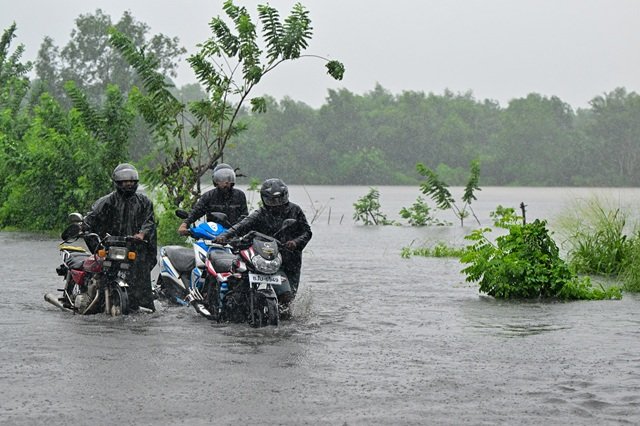
Sri Lanka is expected to experience continued rainfall over the next several days as a depression over the Bay of Bengal has intensified into a deep depression, the Department of Meteorology has announced.
The developing weather system is expected to influence rainfall across several parts of the island, with heavy showers exceeding 100 millimetres possible in some locations. The Northern, Western, Sabaragamuwa, North Western, Central and Southern provinces, as well as the Anuradhapura District, have been identified as areas where particularly heavy rainfall may occur.
The Meteorology Department said the existing rainy conditions were likely to persist over the coming days under the influence of the deep depression. The forecast indicates that rainfall could be particularly intense in certain areas, although the available announcement does not specify the exact locations expected to receive the highest totals or the precise timing of the heaviest showers.
The affected areas span several parts of the country, including the Northern Province, the western coastal region, the central highlands and the southern parts of the island. The forecast also includes the North Western Province and Sabaragamuwa Province, together with the Anuradhapura District in the North Central Province.
Rainfall exceeding 100mm in some locations would represent a significant amount of precipitation over a relatively short period. However, the department’s announcement identifies this as a possibility in selected areas rather than a confirmed rainfall total across the affected provinces.
The intensification of the Bay of Bengal system from a depression into a deep depression marks the principal development in the latest weather forecast. Its continued influence is expected to maintain unsettled weather conditions across Sri Lanka during the next several days.
The department’s forecast identifies the Northern, Western, Sabaragamuwa, North Western, Central and Southern provinces and Anuradhapura District as areas where rainfall exceeding 100mm may occur.