Editorial
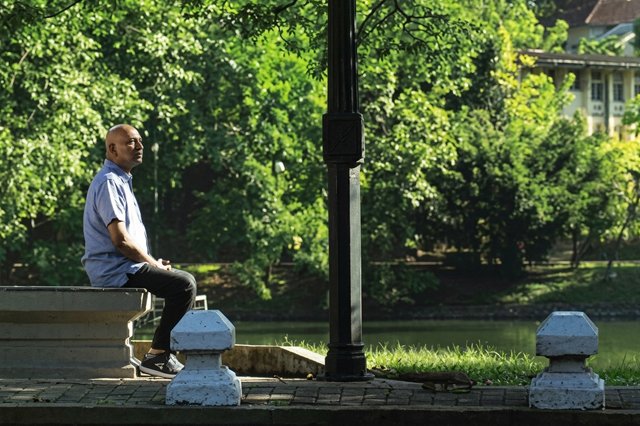
Lal Wijenayake’s death removes a voice from the National People’s Power and Sri Lanka’s public life. His significance lies not in the offices he held, but in his refusal to let political affiliations dictate what he could say. He was not simply a veteran leftist who entered the NPP. He challenged power, including power exercised by the movement in which he served.
Wijenayake joined the Lanka Sama Samaja Party in 1963 as a student. He rose to its Central Committee and Politburo, served as treasurer and helped establish the United Left Front. He became Leader of the Opposition in the first Central Provincial Council after the system was introduced in 1988. His political life was shaped by arguments about socialism, devolution and state power. He later joined the NPP, supporting a project that included abolishing the executive presidency.
His legal practice gave those commitments substance. Admitted as an attorney-at-law in 1969, he appeared with senior lawyer S. Nadesan before the Criminal Justice Commission for young people accused after the April 1971 insurrection. He represented Mahaweli farmers challenging a water tax and people facing the recovery of Land Reform Commission land. These cases show a lawyer prepared to confront state power where policy affected citizens with little influence. His commitment entered courtrooms and disputes over livelihoods and rights.
He helped establish and convene Lawyers for Democracy, advocating the rule of law, civil liberties and judicial independence. As chairman of the Public Representations Committee on Constitutional Reforms between 2015 and 2019, he led consultations across the country and submitted a report to the Government. He believed citizens had to be heard in constitution-making. His work on devolution drew attention to limits on provincial authority and the difficulties faced by the Up-Country Tamil community. A commission’s recommendations were not implemented. Consultation without action is not reform.
The most revealing chapter came in his final months. A member of the NPP’s leadership and executive bodies, Wijenayake opposed the proposed 22nd Amendment, which sought to extend the retirement ages of Supreme Court and Court of Appeal judges. He argued that changing judges’ service conditions during their tenure threatened judicial independence. “Unless you have an independent judiciary, you cannot build a society where there is equality and democracy,” he told the Daily Mirror. He said Agriculture Minister K. D. Lal Kantha had asked him to keep quiet, a claim disputed by the party. Wijenayake supported the Bar Association’s efforts and challenged the proposal in court. He remained in the NPP but refused to endorse the amendment. Parliament passed it on 25 September after the Supreme Court determined that a referendum was not required. His dissent did not stop the measure.
He also opposed proposed legislation on protecting the state from terrorism and, in his final weeks, helped establish a Left Centre in Kandy. These positions reflected his concern about state power. They exposed a distinction blurred by party politics. Membership is not intellectual surrender. A movement that cannot tolerate principled dissent has mistaken discipline for obedience.
Wijenayake was not beyond criticism. His political choices and alliances remain open to scrutiny. A public figure’s value is not that every position escapes disagreement, but whether he keeps disagreement possible. He did so through legal advocacy, public consultation, political organisation and dissent within his movement. He was also an art collector, a friend of George Keyt and an interlocutor of writers. His life was wider than party calculation.
He was a man against pseudo-intellectualism because he treated ideas as obligations, not ornaments. He demanded that claims about democracy be tested against institutional conduct. Sri Lanka is accustomed to people leaving public life; it is less prepared for the disappearance of those able to challenge power from within.
People leave. Other societies may have institutions and generations capable of renewing the roles they vacate. Sri Lanka cannot assume replacements will appear because positions become empty. A title can be filled. Intellectual independence, legal courage and a long memory cannot. With Wijenayake gone, the NPP loses an internal critic, the legal community a persistent advocate, and the Left a link to an older tradition. The rebel within is no more. Who will now be willing to disagree?