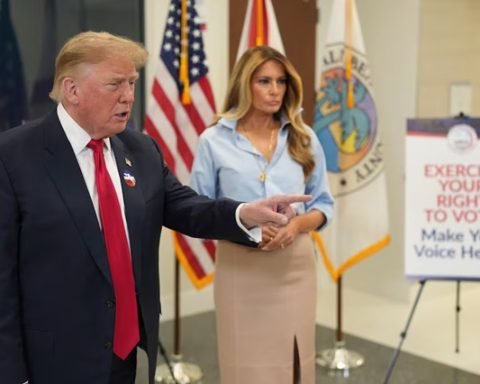
President Donald Trump held an unscheduled meeting on Thursday, November5th, with Kirill Dmitriev, a special representative of Russian President Vladimir Putin. Dmitriev also is the CEO of the Russian Direct Investment Fund, Russia’s sovereign wealth fund. Dmitriev was in town heading the Russian delegation attending an event hosted by First Lady Melania Trump acknowledging a six-day local ceasefire around the Russian-occupied Ukrainian town of Oleshky.
Dmitriev’s attendance was a cover for ongoing high-level negotiations involving President Trump, Russian President Vladimir Putin, and (in part) involving Ukrainian President Volodymyr Zelensky. It is also possible, but not directly acknowledged, that some leaders in Europe also are engaged in the talks, although which ones aren’t clear. The October 27th phone call between Finnish President Alexander Stubb and Norwegian Prime Minister Jonas Gahr Støre with Russia’s Putin suggests that these events possibly are linked.
Trump offered a very positive readout on his meeting with Dmitriev. He told reporters that “I can’t tell you what I discussed. But I’m just telling you, it’s going to be an agreement, it’s going to be a big agreement.” Trump went on to say “It’s going to involve more than Ukraine, and I could even say it might involve all of Europe,” he added, promising a “big, beautiful agreement” that will leave everyone thrilled.”
There are negotiations upcoming in Abu Dhabi (November 10 and 11) but it is unclear how these talks align with the alleged “big, beautiful agreement” Trump is talking about. Russia is sending presidential aide Vladimir Medinsky, Deputy Foreign Ministers Sergei Ryabkov and Mikhail Galuzin, and senior general staff officials Igor Kostyukov and Yuri Zhigarlovsky to Abu Dhabi.
The primary U.S. delegates mediating the trilateral peace talks between Ukraine, Russia, and the United States in Abu Dhabi are Steve Witkoff – U.S. Special Presidential Envoy leading the diplomatic mediation efforts and Jared Kushner – U.S. Special Presidential Envoy participating in the talks and developing the proposed post-war European security framework. There are no top Pentagon civilian or military leaders in the talks, but reports say that U.S. negotiators and defense officials have been consulting directly with NATO, U.S. European Command (EUCOM), and Allied defense leaders in Brussels.
Jared Kushner recently outlined five point security principles for Europe aimed at reducing the risk of future conflict. Critical to the Kushner outline is that Russia is a partner with the NATO countries. Kushner’s five points are—Permanent Security Consultations: establishing continuous dialogue channels between European nations, NATO, the EU, and regional powers; Reliable Crisis Communications: institutionalizing direct communication lines to prevent accidental escalation or misunderstandings during military incidents; Greater Military Transparency: increasing visibility into troop movements, exercises, and deployments across the continent; Reciprocal Escalation-Reduction Measures: implementing mutual agreements to lower force postures and minimize provocative operational steps; and a Lasting Stability Framework: Constructing a durable, multi-lateral architecture for post-war continental security.
Making the talks in Abu Dhabi more intriguing, Yuri Ushakov, chief foreign policy adviser to Russian President Vladimir Putin has made it clear he is managing the Russian delegation although he will not be a delegate at the talks.
The Ukrainian delegation included Zelenskyy’s chief of staff Kyrylo Budanov and national security adviser Rustem Umerov.
French Foreign Minister Jean-Noël Barrot confirmed that European delegations will join the U.S.-mediated negotiations in Abu Dhabi.
What do we Know About Dmitriev’s Proposals?
The White House has offered no read out on any proposals brought by Dmitriev to Washington. Nor is there any other American source, so far. Nor have the Russians made any comment about Dmitriev’s visit. The singular source available so far is a Ukrainian news service, the Euromaidan Press (EMPR.Media). Euromaidan claims to be an independent news outlet, but as it operates in Ukraine where there is strict press censorship, it is reasonable to believe that it is an officially sanctioned news source.
EMPR reports that the Kremlin has conveyed to the US a proposal for a two-stage ceasefire which includes an energy truce until the New Year and preparations for a full-fledged peace agreement by spring 2027.
The Russian proposal comes with conditions. An energy truce is possible on the condition of halting Ukrainian strikes on Russian “civilian infrastructure,” primarily oil and gas facilities.
Russia will also potentially agree to a territorial compromise that would preserve Ukrainian control over the unoccupied part of Donbas.
In exchange Russia demands a reduction in the Armed Forces of Ukraine and limitation on armaments, coupled with concessions regarding the Russian language and the Russian Orthodox Church inside Ukraine.
The Russians also propose withdrawal of the NATO infrastructure in the Baltic States and Scandinavia.
Dmitriev also suggested that Russia may agree to the deployment of foreign troops in Ukraine, exclusively in the western regions of the country, provided that Russia’s demands are met.
It is difficult to be sure that the EMPR description is exactly what Dmitriev proposed. What stands out as entirely new is that, according to the EMPR version, Russia would agree to a territorial arrangement where Russia would accept Ukraine’s control of parts of Donbas.
In general Ukraine still holds around 20% of Donbass, an area that is considered the Donbass Fortress Belt. In the center this includes Kramatorsk, Sloviansk, Konstantnivka and Druzhkivka. In the northern sector it includes Dobopillia, Lyman and Pokrovsk. These areas are important transit zones (roads, railways) which Ukraine has been able to reinforce, making Russia’s ability to advance on these strongholds problematic. In fact, the Ukrainians have reversed some Russian army advances.
It isn’t clear how the legal status of Donbass would be worked out if the alleged compromise was accepted. Officially Russia has already annexed all of Donbass.
The EMPR report does not discuss buffer zones, nor does it discuss an international force or other arrangement to prevent the restart of the conflict. It is known that Ukraine and Russia both want security guarantees, but exactly what a security system would look like is not worked out. It is, however clear that Russia won’t allow NATO or NATO states to be present in and around the main conflict zones.
Putin and the Russian Army
If in fact the territorial compromise proposal is now on the table, it would represent a serious reversal by Putin and a rejection of the arguments made by the Russian army. For the last few months a number of Russian military bloggers have complained that the Russian army has been making false claims about progress in the war. Added to that continued reports of heavy casualties and damages to Russia’s economy, acknowledged successful strikes on Russian refineries and storage depots, suggests that Putin no longer trusts the Russian army’s explanations or believes that Russia can win a ground war in Donbass.
But there are problems realizing any compromise solution. One of them is Zelensky.
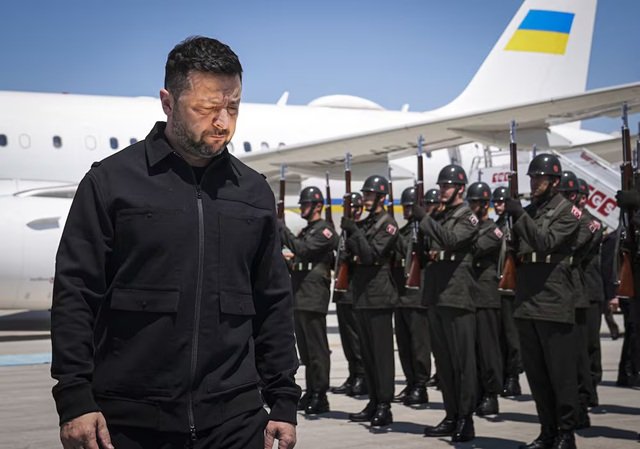
It is also noteworthy that Zelensky and his team are against a “Yalta 2.” The Yalta meeting in February, 1945 brought U.S. President Franklin D. Roosevelt, British Prime Minister Winston Churchill, and Soviet General Secretary Joseph Stalin—to plan the final defeat of Nazi Germany and the postwar reorganization of Europe, which it completed at Potsdam the following summer. Zelensky fears being the odd man out, with the “great powers” deciding the fate of Ukraine.
The warning about Yalta 2 came in the wake of Dmitriev’s meeting with President Trump, in an interview Zelensky gave to CNN’s Jake Tapper. It also was punctuated by more Ukrainian attacks on Russia’s oil infrastructure. Zelensky thinks that Trump’s defeat at the polls gives him considerably more power now that the US House and Senate is controlled by the Democrats. It is likely he will try and drag out any talks, try and strengthen his relations with his sponsors in Europe, and put pressure on Trump and his colleagues.
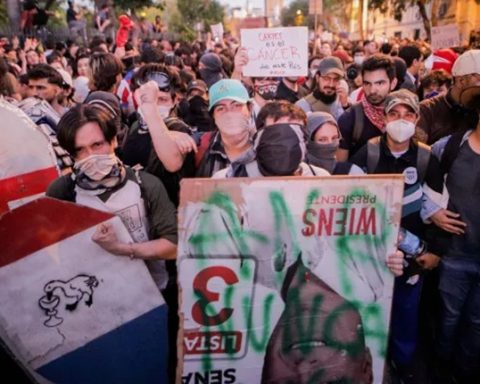
But Zelensky faces an uphill battle with shrinking resources to continue the fight. The Germans just told him they would not send any of their Patriot interceptors to Ukraine. The French economy is tanking and riots continue in Paris and around the country. American Patriot missiles won’t show up until 2030 art the earliest. No one can be sure if Europe is any longer the powerhouse Zelensky needs to continue the war.